Lam Dong Province remained the locality with the highest prices, with purchasing agents offering around VND92,700 (US$3.52) per kilogram, up about VND400 per kilogram. In Dak Lak and Gia Lai, prices also increased by VND500 per kilogram, currently trading at around VND92,500 (US$3.51) per kilogram.
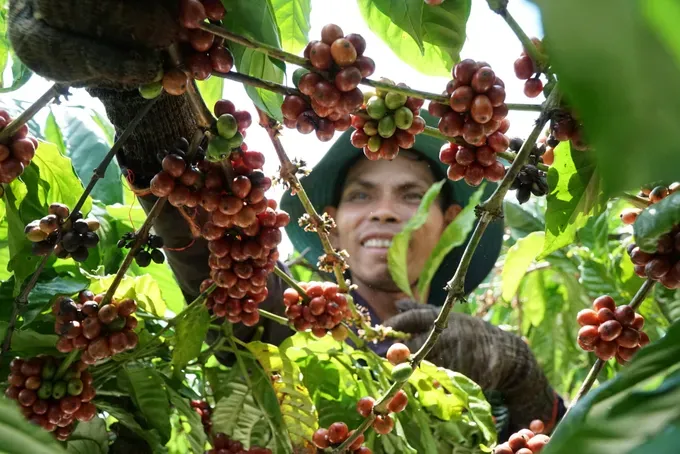
On the London exchange, robusta coffee futures for May 2026 rose by 1.47 percent, equivalent to an increase of US$52 per ton compared to the previous session, reaching US$3,579 per ton. The July 2026 contract also climbed 1.1 percent, equvilent to US$ 38 per ton to US$ 3,481 per ton. The stronger increase in near-term contracts compared to longer-term ones indicates improving short-term demand.
According to agricultural experts, global coffee prices have rebounded due to a combination of supply-demand dynamics and geopolitical risks affecting global supply chains. Tensions in the Middle East have pushed up logistics, insurance, and fuel costs, leading to increased buying activity on futures exchanges.
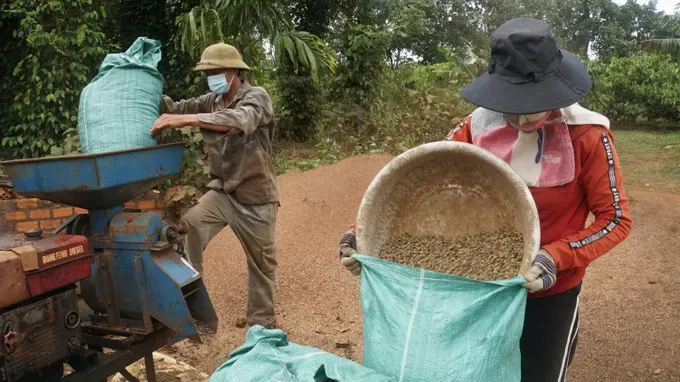
Post-February 2026 price adjustments, increased restocking by roasters and investment funds has strengthened demand, supporting the recent recovery in coffee prices amid uncertain global supply and stable consumption.
For farmers in key coffee-growing areas in the Central Highlands, prices nearing VND93,000 (US$3.53) per kilogram present a “golden” opportunity to lock in profits, as the 2025–2026 harvest season has just concluded after the Lunar New Year.
Leaders of the Vietnam Coffee–Cocoa Association recommend that farmers refrain from bulk selling or stockpiling in anticipation of price increases, and instead adopt a phased selling strategy to optimize profits and mitigate risks from abrupt shifts in international speculative capital.
For purchasing and exporting enterprises, the wide price fluctuations call for heightened caution. This is a time to carefully consider forward contracts to safeguard cash flow and maintain commercial credibility.
According to data from the Department of Customs under the Ministry of Finance, in the first two months of 2026, coffee exports reached 367,300 tons worth US$1.76 billion, up 14.5 percent in volume but down 1.3 percent in value year-on-year due to lower export prices. Exports to major markets such as Germany, Italy, Spain, Russia and China recorded positive growth.






)