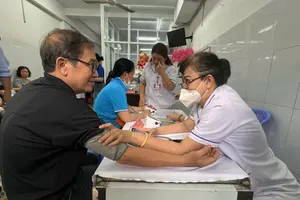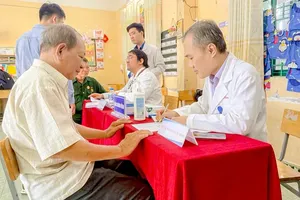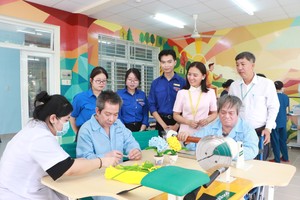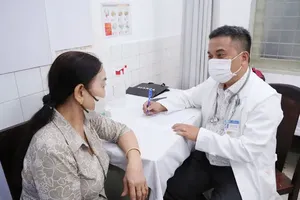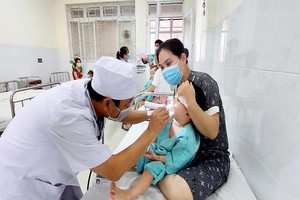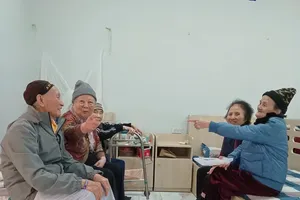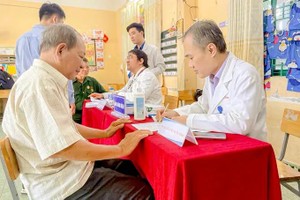
As population aging is an inevitable trajectory, Deputy Director of the HCMC Department of Health Nguyen Van Vinh Chau, MD PhD, stresses the necessity to develop a multi-tiered nursing home system utilizing the community as the foundation and grassroots healthcare as the fundamental pillar, unless Vietnam’s social security framework wants to shoulder more pressure.
This constitutes a strategic choice to ensure that every senior citizen receives care tailored to their specific needs, lives securely, and remains an active community participant. Ultimately, this fortifies the bedrock of social welfare against the backdrop of increasingly pronounced demographic aging.

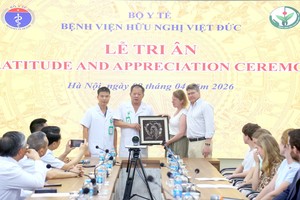
Deputy Director of the National Geriatric Hospital Tran Viet Luc, MD PhD, shared that to effectively implement the Politburo’s Resolution No. 72/NQ-TW on breakthrough solutions to enhance the protection, care, and improvement of public health, fortifying the geriatric network at the grassroots level must be designated as a top priority.
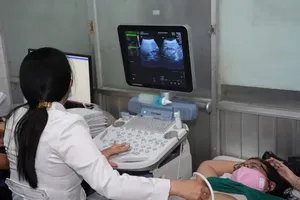
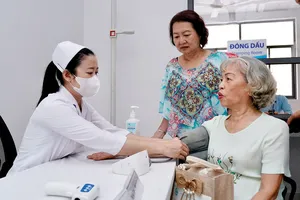
Instead of placing the entire burden on already overwhelmed central-level hospitals, training commune and ward medical staff on common geriatric pathologies is the key to early detection and efficient treatment. Notably, the development of geriatric human resources is no longer confined exclusively to physicians but has expanded to encompass nurses and rehabilitation technicians.
The new policy also incentivizes the mobilization of social resources, urging enterprises to invest in training and providing professional nursing services, ultimately spawning a novel labor market dubbed the “care economy.”

Deputy Director Pham Binh An of the HCMC Institute for Development Studies voiced that one of the most formidable contemporary hurdles is the absence of concrete planning for the system of nursing homes and elderly healthcare facilities. The failure to clearly determine land funds, locations, and functions within urban planning creates significant friction for private enterprises seeking investment permits, thereby diminishing the sector’s appeal.
Furthermore, land accessibility remains a persistent bottleneck. Businesses struggle to acquire suitable land parcels, while mechanisms for utilizing public land for collaborative ventures are not yet sufficiently transparent or streamlined.
To foster an effective elderly care system, comprehensive and synchronized solutions are imperative, ranging from urban planning, land allocation, financing, to human resource training. Dismantling these bottlenecks will cultivate a more fruitful environment for private sector participation, consequently elevating the public’s accessibility to these vital services.

48-year-old Tran Thi Thuc Anh from Trang Dai Ward of Dong Nai Province expressed her wish to live long and healthily when entering old age.
Reality dictates that for a substantial number of workers, reaching the retirement threshold coincides with a marked decline in health, stemming from prolonged occupational stress and the accumulation of chronic illnesses over the years. Consequently, the wish for “enjoying one’s golden years” is drastically curtailed, often forcing them to allocate the majority of their time to medical treatments.
Considering flexible adjustments to the retirement age or permitting certain demographics to retire earlier transcends mere labor and employment discourse; it serves as a critical solution granting citizens the opportunity to proactively manage their health.
If permitted to retire while still in relatively robust health, the elderly can engage in physical healthcare activities or rehabilitation and better manage chronic conditions, thereby alleviating the long-term burden on the healthcare system.
From a social welfare perspective, affording citizens more time for health maintenance is fundamentally an investment in the population’s overarching quality. An aging yet healthy society is vastly more sustainable than one where the elderly live long but remain frail and dependent.
Therefore, alongside policies on long-term care, nursing home expansion, or grassroots healthcare, the narrative surrounding retirement age must be contextualized within a broader paradigm of how to ensure that each individual not only lives longer but also thrives healthily as they cross the threshold into old age.

Voicing a highly practical wish, Vu Dinh Dong from Lam Dong Province noted that elderly care facilities primarily cluster in major metropolitan hubs, leaving areas like Da Lat with a completely negligible supply. Operating in the demanding service sector, his family travels very frequently, significantly constraining their capacity to directly care for his aging parents in their twilight years.
Amidst rapidly escalating professional pressures, he would gladly utilize adequate local facilities if they existed today. Ideally, he prefers a semi-boarding or daycare model, allowing him to drop his parents off each morning and collect them by evening. This optimal setup ensures that throughout the day, his parents receive professional care and enjoy crucial social interaction with their peers. Subsequently, they can still gather warmly with their children and grandchildren at night, perfectly balancing essential medical support with profound family connections.
HCMC's path forward
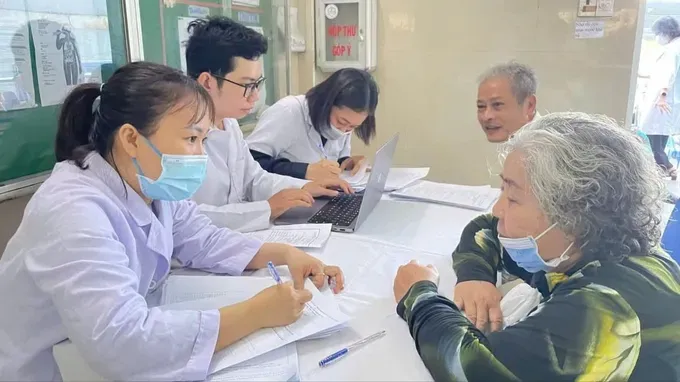
According to the HCMC Department of Health, elderly care initiatives across the city are currently being scaled up, featuring 102 “seniors helping seniors” clubs and 102 volunteer groups. These attract thousands of participating members and provide critical support to over 4,000 senior citizens in disadvantaged circumstances.
Concurrently, geriatric treatment capacity is being incrementally upgraded across all clinical tiers. The HCMC healthcare sector aims to achieve the following by 2030:
- Establish over 30 elderly care facilities utilizing a hybrid model encompassing public, private, and public-private partnerships (PPP);
- Construct a network of 168 community care points across its wards, communes, and special zone;
- Train approximately 2,500 personnel equipped with specialized geriatric care and nursing skills.