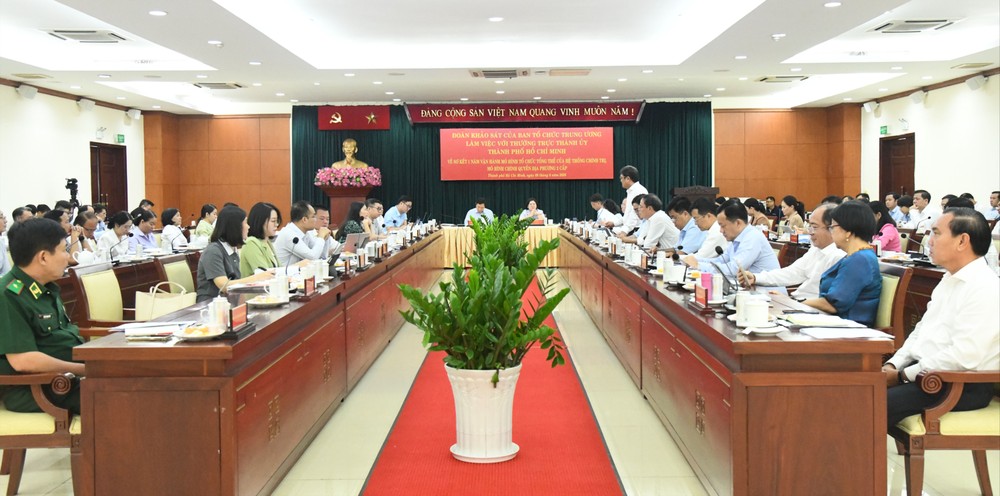
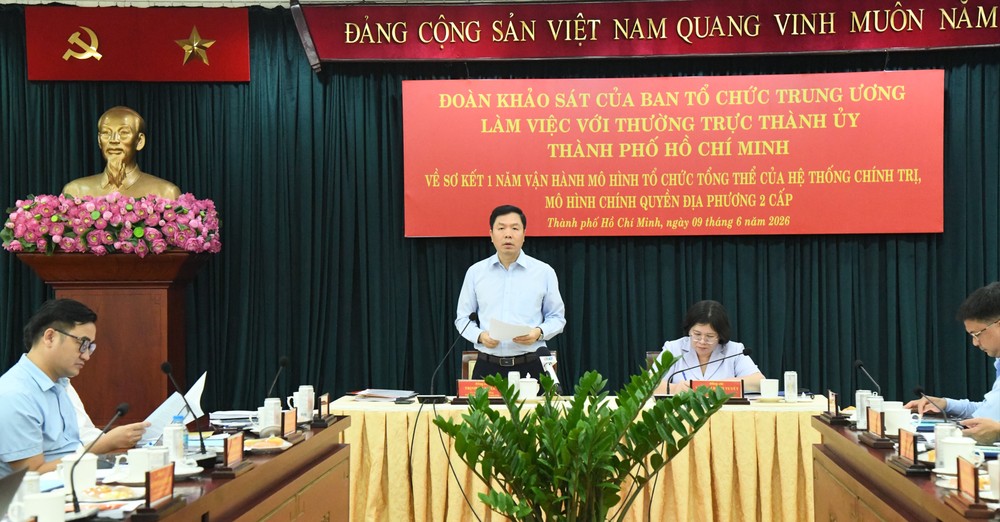
A delegation from the Organization Commission of the Central Committee of the Communist Party of Vietnam held a working session with the Standing Board of the HCMC Party Committee to review the first year of operation of the political system's organizational model and the two-tier local government structure on the morning of June 9.
The meeting was chaired by Mr. Trinh Manh Linh, Member of the Party Central Committee and Deputy Head of the Organization Commission. HCMC leaders attending the session included Ms. Van Thi Bach Tuyet, Deputy Secretary of the HCMC Party Committee; Mr. Nguyen Manh Cuong, Vice Chairman of the HCMC People's Committee; and Mr. Pham Thanh Kien, Head of the HCMC Party Committee's Organization Commission.
Mounting pressure from staffing shortages
During the meeting, representatives from localities highlighted practical challenges that have emerged during implementation of the new governance model.
Mr. Nguyen Van Dong, Secretary of the Party Committee of Di An Ward, said the ward serves more than 250,000 residents and nearly 4,000 Party members, creating an enormous workload. While local authorities have managed to maintain service delivery and keep administrative work on schedule, the number of specialized civil servants remains insufficient to meet actual demands.
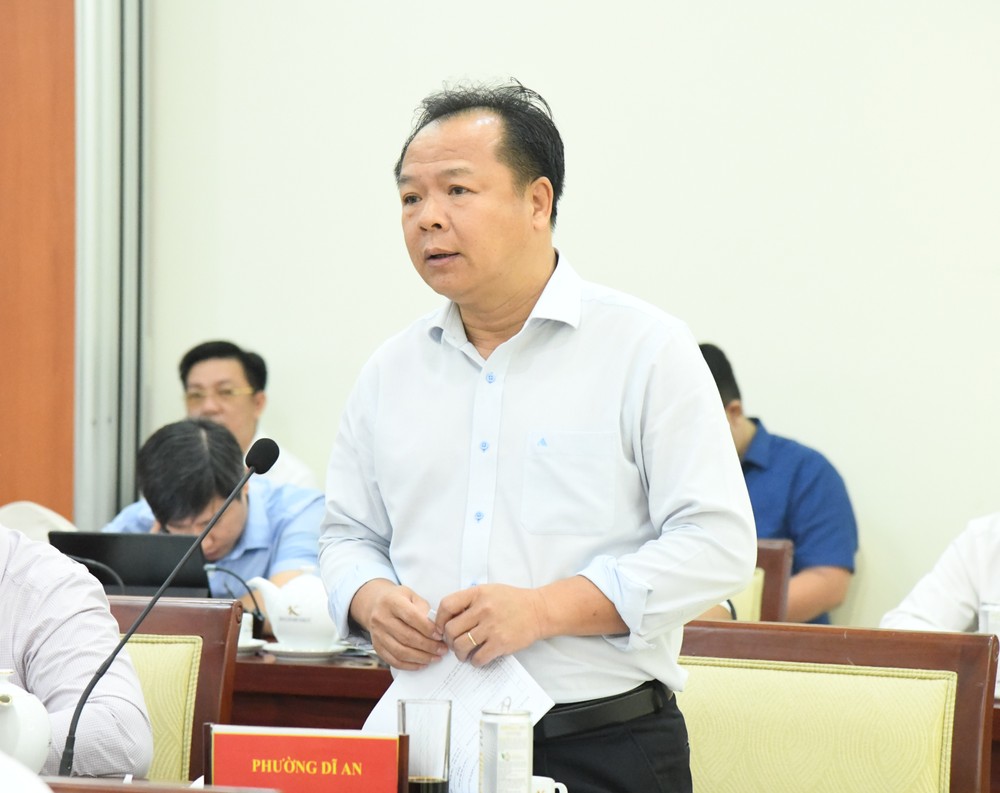
Di An Ward proposed that staffing allocations be determined based on population size, workload, and local characteristics. The ward also suggested restructuring certain professional divisions to reduce pressure on frontline administrative units and improve advisory and public service functions.
Representatives from Phu My Ward, Binh Quoi Ward, Tan Nhut Commune, and An Nhon Tay Commune raised similar concerns, citing shortages of specialized personnel and calling for additional training programs and support staff. Some localities also urged the early introduction of legally supported artificial intelligence tools to assist officials in handling administrative tasks more efficiently.
According to Ms. Pham Thi Thanh Hien, Director of the HCMC Department of Home Affairs, the city processed approximately 2.4 million administrative applications during the first five months of 2026 alone. The massive volume of paperwork has placed significant pressure on agencies responsible for serving residents and businesses.
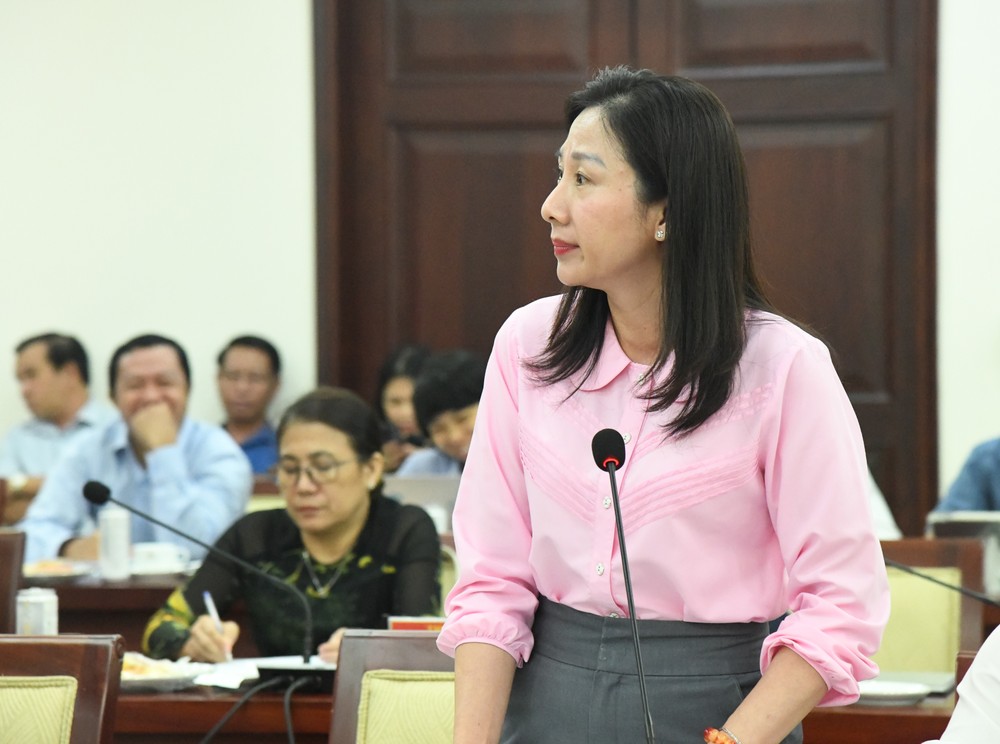
She noted that the primary challenge stems from human resource shortages, particularly as decentralization and delegated authority continue to expand. The department proposed adjusting staffing quotas based on population size and service demands to better meet public needs.
Vice Chairman Nguyen Manh Cuong said the two-tier local government model requires a high degree of specialization in each position. When staff members are absent or positions remain vacant, finding qualified replacements becomes difficult, especially in highly specialized fields.
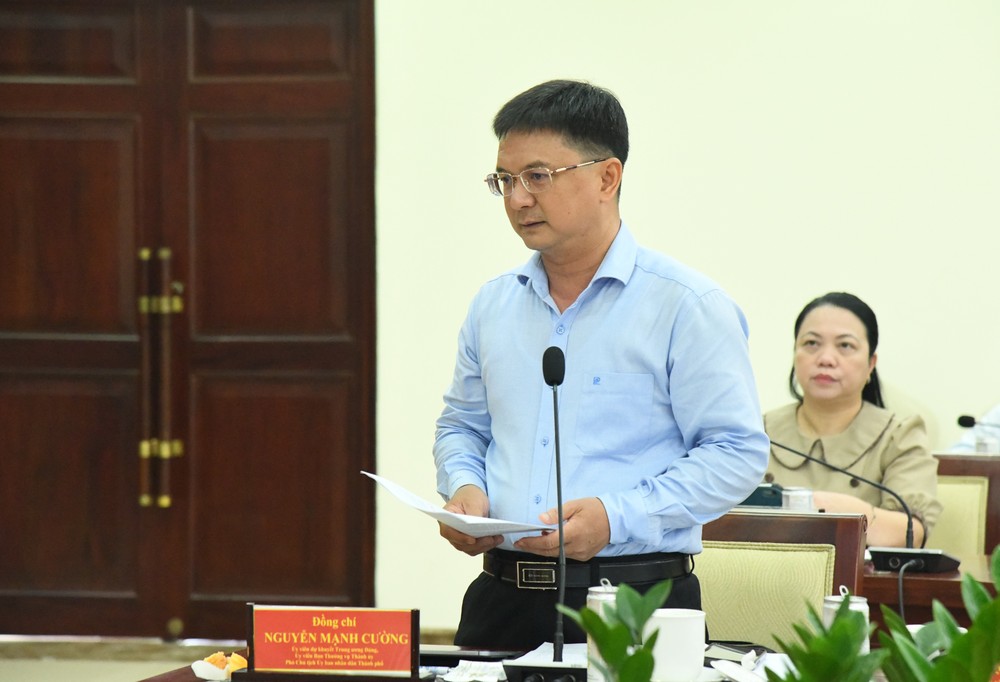
He emphasized that local officials increasingly need multidisciplinary knowledge rather than expertise in a single area. HCMC therefore requires additional time to train, retrain, and reorganize its workforce. Staffing structures, he added, should be calibrated according to population size, workload, geographic conditions, and management responsibilities.
Human resources remain the greatest challenge
Addressing the delegation, Deputy Secretary Van Thi Bach Tuyet said the two-tier local government model has operated relatively smoothly since its introduction and has contributed to stronger Party leadership and more effective local administration.
However, she identified human resources as the city's most pressing challenge.
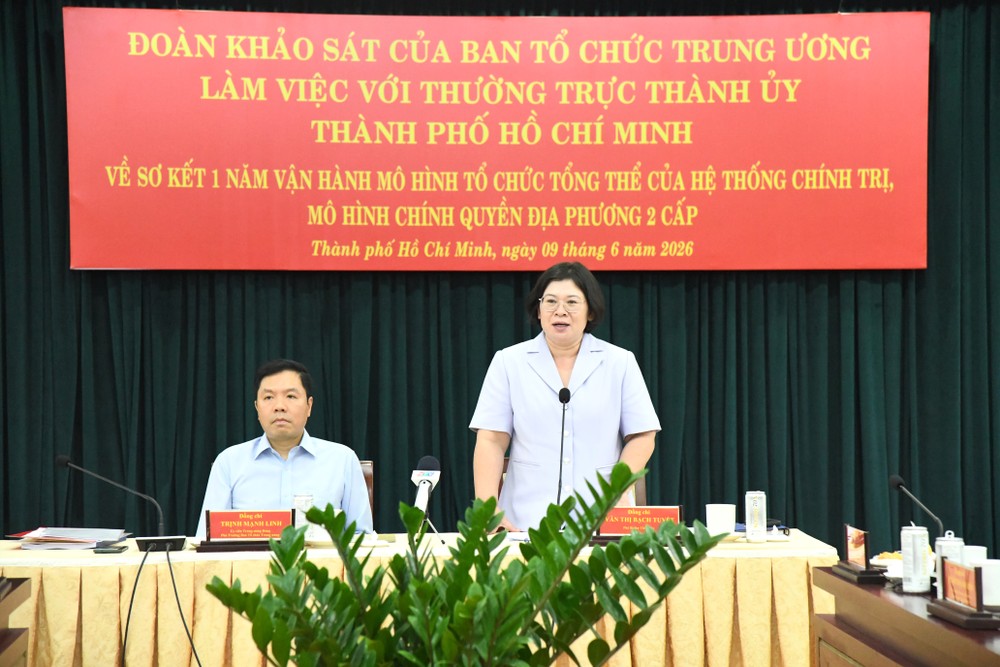
Following the merger of three local administrative units, geographical factors and commuting difficulties prompted a number of officials and civil servants to seek transfers back to their home localities. As a result, the actual workforce in many municipal departments is significantly smaller than authorized staffing levels.
According to Ms. Van Thi Bach Tuyet, the current workforce, drawn from multiple sources, is only sufficient to meet the immediate requirements of the transition period. If staffing shortages persist, the city could face difficulties implementing major development objectives, particularly its ambition to achieve double-digit economic growth and sustain development momentum through the remainder of the term.
To address these challenges, HCMC has intensified training programs linked to specific job positions. The city has also assigned leaders, specialists, and officials from departments and advisory agencies to directly support grassroots authorities in handling individual administrative cases.
At the same time, the city is developing recruitment mechanisms aimed at attracting outstanding graduates to public service, organizing competitive selection processes for leadership positions, and continuing to restructure management personnel to ensure the right people are assigned to the right jobs.
Ms. Van Thi Bach Tuyet proposed that central authorities allow greater flexibility in staffing arrangements, particularly in densely populated localities. She also called for clearer guidance regarding the roles and working relationships of organizations within the Fatherland Front and mass organizations at the commune and ward levels, while urging continued administrative reform within Party agencies, accelerated digital transformation, and expanded decentralization.
Concluding the session, Mr. Trinh Manh Linh commended HCMC's efforts and achievements during nearly one year of implementing the two-tier local government model.
Based on reports from the city, he stressed the importance of modern governance thinking, emphasizing that innovation in leadership methods must go hand in hand with innovation in implementation, particularly at the grassroots level.
He said data and digital transformation should become fundamental pillars of governance reform, helping compensate for staffing shortages, geographic distances, and operational pressures.
Mr. Trinh Manh Linh also underscored the need for flexibility in institutional design. While clear regulatory frameworks are necessary, he argued that local governments cannot be managed through a rigid, one-size-fits-all model.
Instead, communes and wards should be classified according to governance scale, workload, degree of urbanization, land area, population, and local characteristics. Staffing levels, organizational structures, and budget allocations should then be tailored accordingly.
He further emphasized the need to continue reforming personnel management, with a focus on training and enhancing the professional capabilities of grassroots officials to meet the demands of the new governance model.
Mr. Trinh Manh Linh said the survey delegation had recorded HCMC's difficulties, concerns, and recommendations and would compile them into a report for competent authorities, enabling timely solutions to support the city in the next phase of development.







)




