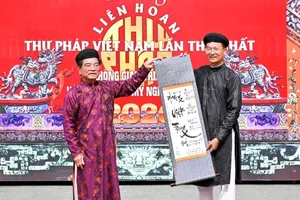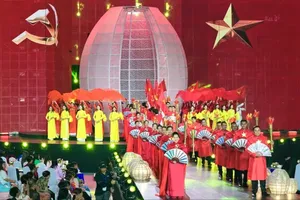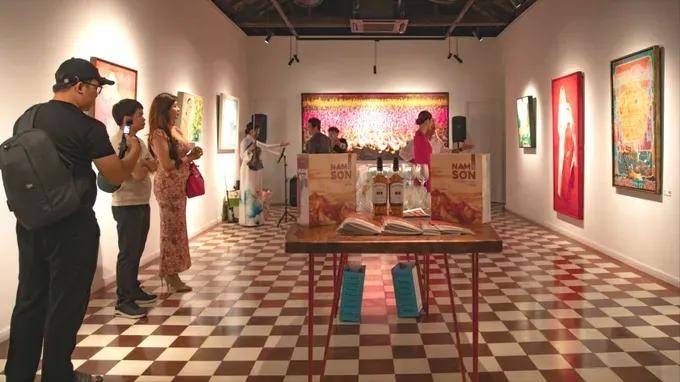
The “Xuoi Dong Song Thu 2026” (Down the Autumn River 2026) charity exhibition, organized by the Giao Nha Gat Nha (Build Homes, Harvest Homes) Fund, has recently concluded in Ho Chi Minh City, raising nearly VND450 million (US$17,074) for charitable activities. Beyond being a philanthropic art event, the exhibition also highlighted a broader issue within Vietnam’s fine arts market: the significant regional disparity in development.
For many years, Vietnam’s art market has operated under a “dual-pole” structure, centered around the country’s two major economic and cultural hubs—Hanoi and Ho Chi Minh City. Hanoi holds advantages in academic depth, a long-established community of traditional collectors, and an early-developed gallery network.
Meanwhile, Ho Chi Minh City has emerged as a more dynamic marketplace, supported by a younger generation of entrepreneurs who view art not only as a cultural pursuit but also as a long-term investment channel. Representatives of the Gieo Nha Gat Nha Fund noted that after a decade of organization, the “Xuoi Dong Song Thu 2026” (Down the autumn river 2026) charity exhibition has become a reputable charitable fine arts event, bringing together many prominent painters. However, the program has so far only been held in Hanoi and Ho Chi Minh City and has yet to expand to other localities.
Even in Da Nang — considered a bright spot in Vietnam’s art market thanks to its thriving tourism sector and growing community of young creatives — the market scale remains relatively modest. Art audiences there still tend to embrace a “viewing for awareness” mindset rather than purchasing and collecting artworks.
Vietnam is not alone in this regard. In many Southeast Asian countries, the fine arts market is likewise concentrated in only a handful of major urban centers. Thailand’s art market revolves mainly around Bangkok; Indonesia’s is centered in Jakarta and Bali, while the Philippines’ market is largely concentrated in Manila.
However, the key difference is that these countries have established systems of art fairs, investment funds, and connectivity mechanisms linking artists with businesses. Such ecosystems enable artists, regardless of their location, to showcase, promote, and sell their works, thereby helping the art market operate in a more stable and sustainable manner.
In recent years, Vietnam’s fine arts market has shown several encouraging signs. Independent art fairs, private creative spaces, and hybrid models combining fine arts, cafés, and tourism have created new channels for public engagement with art. Nevertheless, the country still lacks a synchronized ecosystem spanning aesthetic education, policies supporting artistic spaces, the promotion of cultural industries, and the cultivation of art appreciation and collecting habits within the community.
Under such circumstances, the development of the art market cannot depend solely on the passion of artists or isolated efforts by galleries and art funds. What is needed are concrete policies from relevant authorities, along with stronger participation from the domestic fine arts community itself. Only when nurtured through supportive policies, community engagement, aesthetic education, and a well-developed art market can Vietnam’s fine arts sector achieve sustainable growth and create opportunities for artists regardless of where they are based.