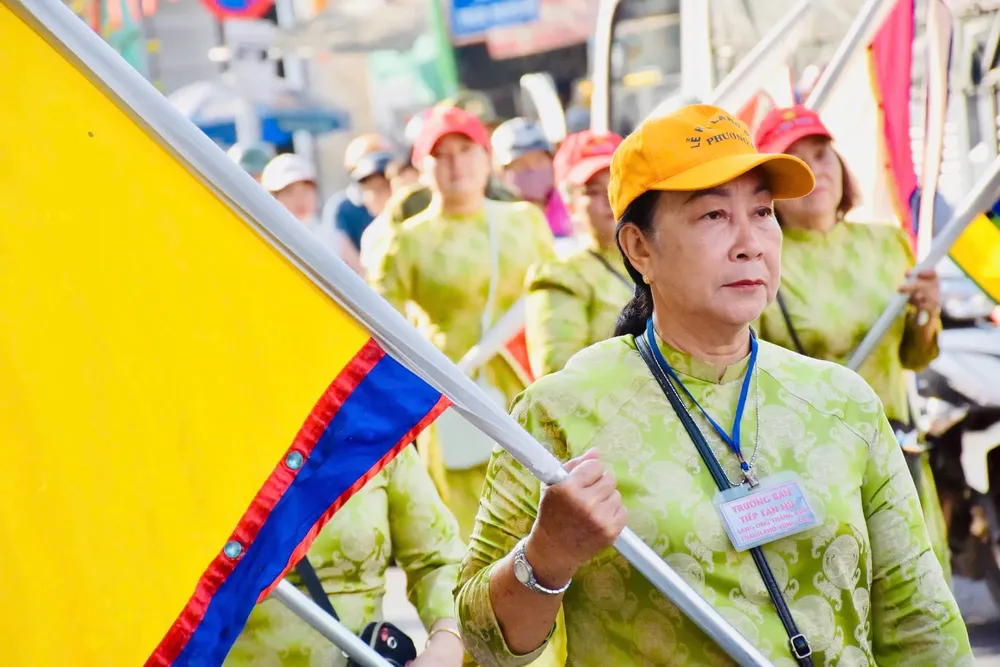
From the early morning of May 9 (the 23rd day of the third lunar month), hundreds of residents, fishermen, and visitors gathered at Nam Hai Thang Nhi Whale Temple in Vung Tau Ward, Ho Chi Minh City, to participate in the Nghinh Ong (Whale Worshiping) Festival, a key ritual in the main worship ceremony dedicated to Ong Nam Hai (also known as the Whale God).
From early morning, the area surrounding the Whale Temple was filled with the vibrant sounds of drums, gongs, and ceremonial music, blending with the excitement of coastal residents.
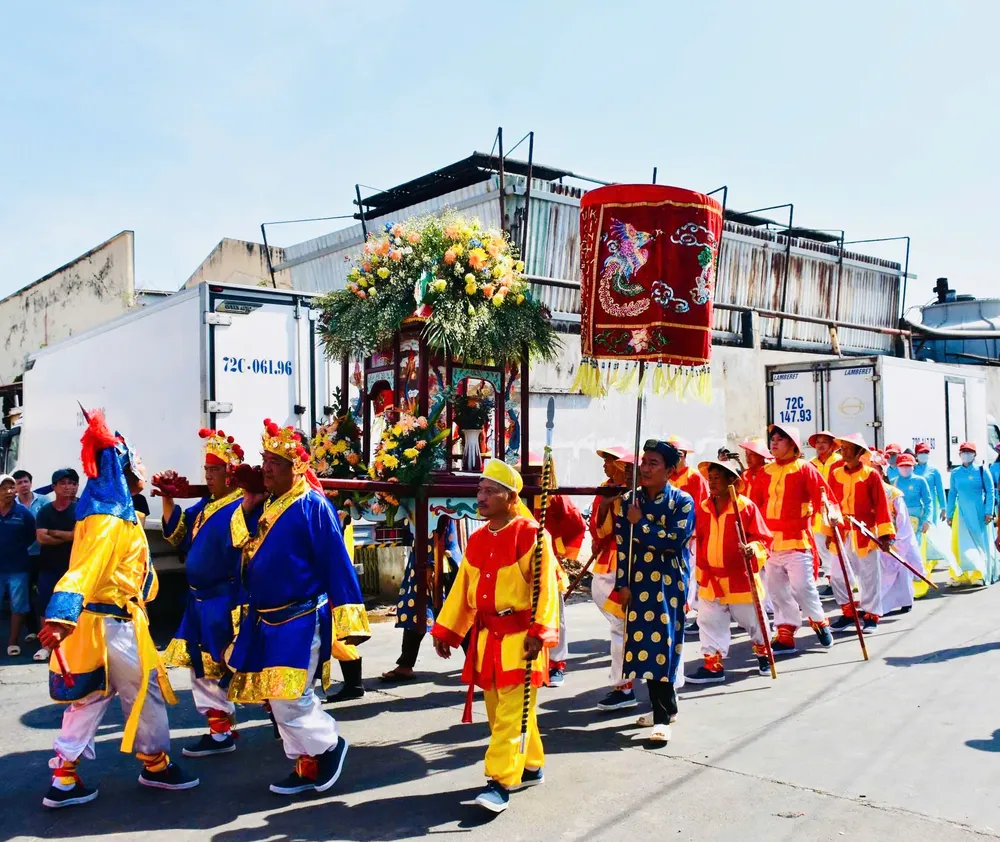
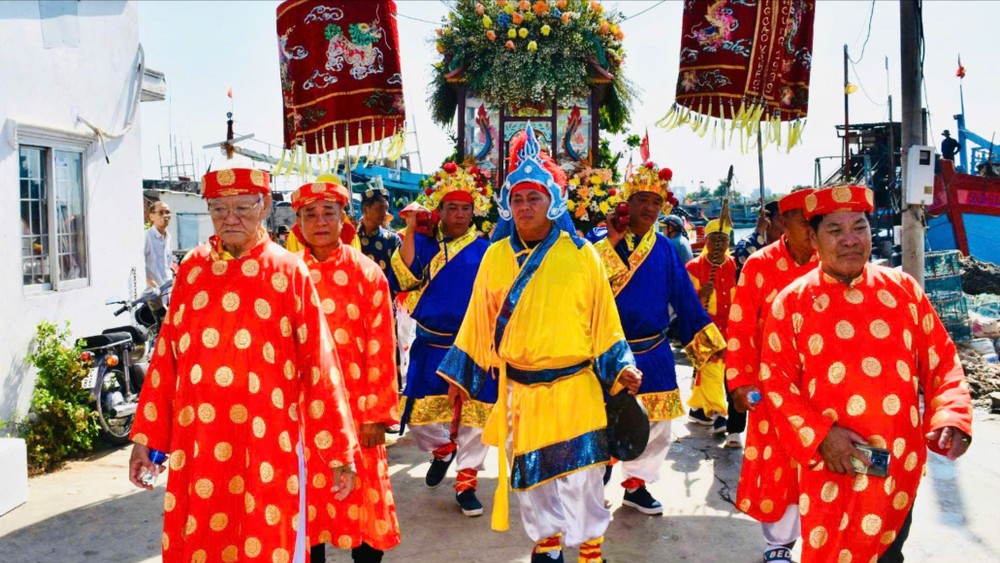
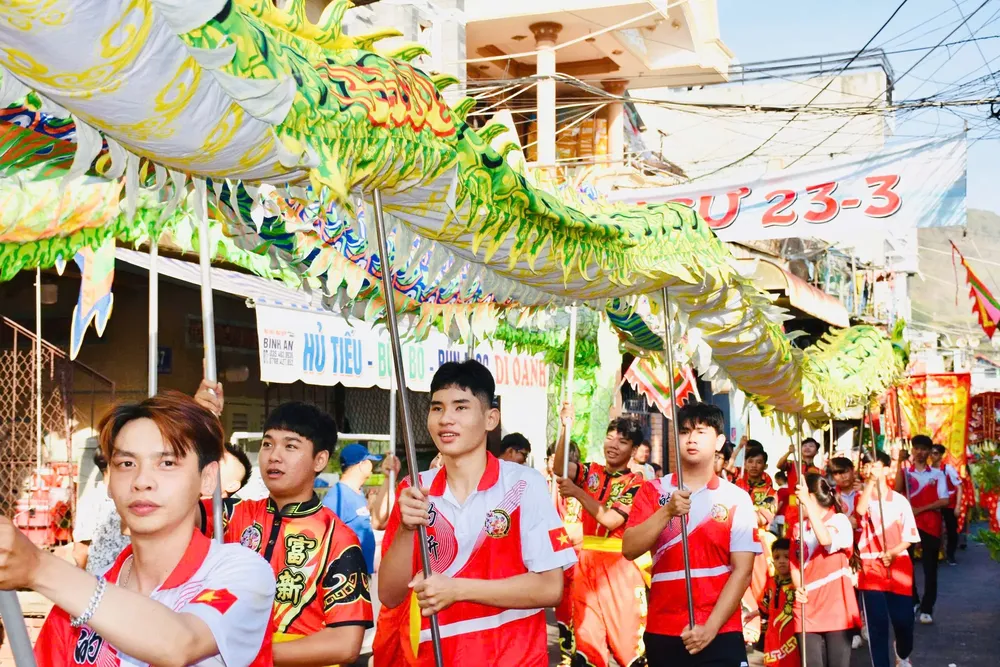
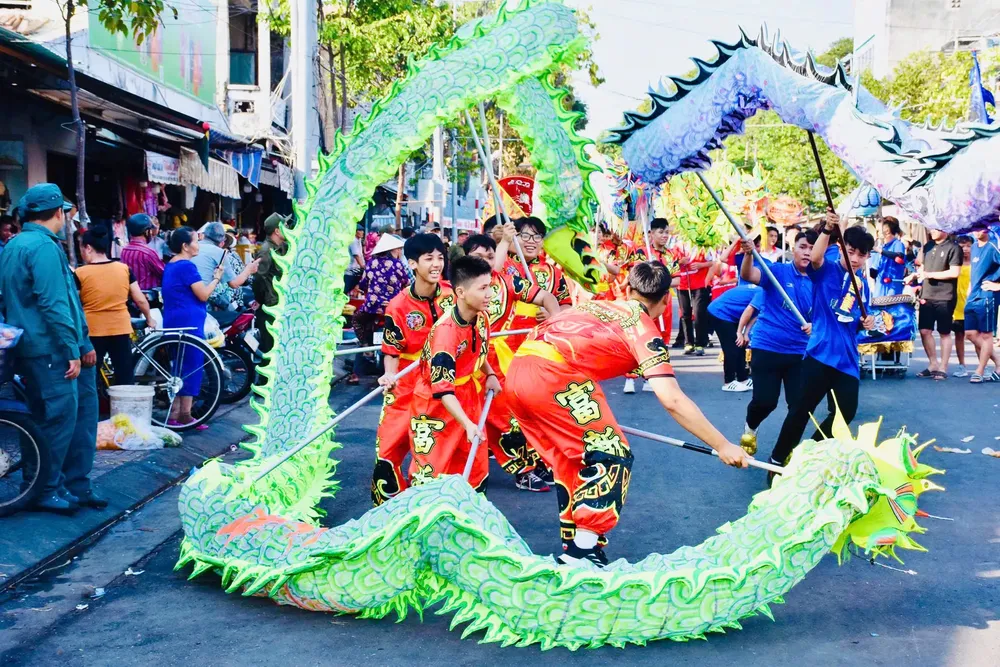
At 7 a.m., the procession — stretching nearly 300 meters and adorned with colorful banners, parasols, and traditional ceremonial objects — departed from the Whale Temple. Led by a kylin, lion, and dragon dance troupe, the procession moved through the Ben Dinh Market area, along Tran Phu Street, and headed toward Ben Da Wharf on a route of more than two kilometers.
Upon reaching the seashore, the ceremonial board performed traditional rites to pray for national peace and prosperity, favorable weather conditions, and safe, successful fishing voyages for fishermen venturing offshore.
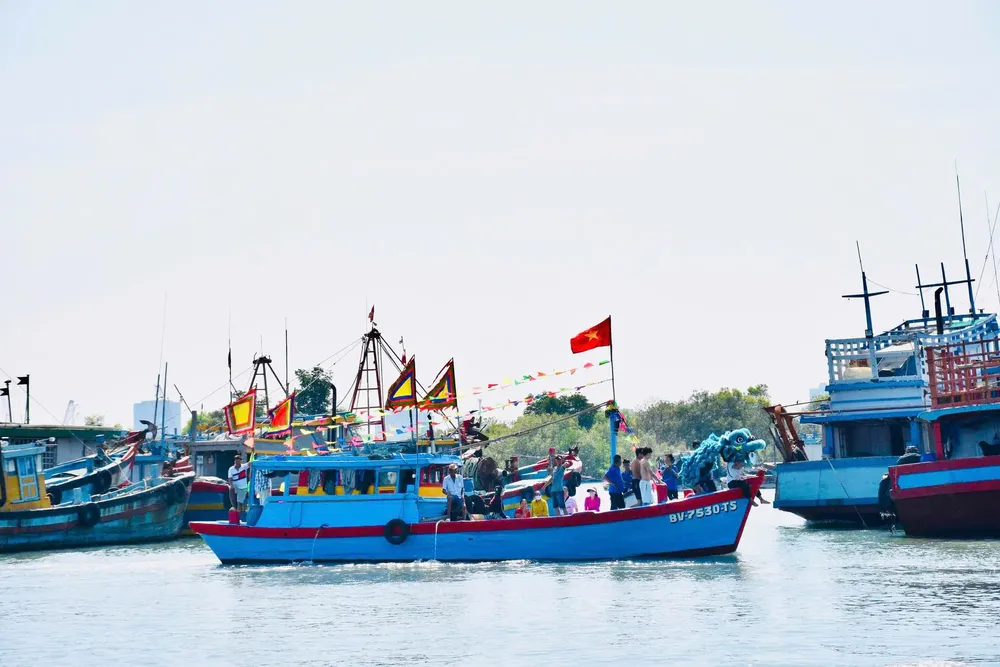
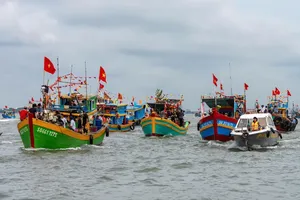
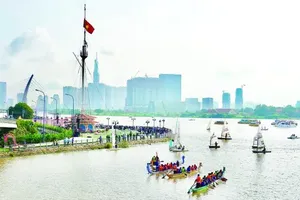
Following the rituals, a flotilla of ceremonial boats and fishermen’s vessels—lavishly decorated with colorful flags and flowers—slowly approached the shore from offshore amid cheers from the crowd and the resounding beats of drums and gongs.
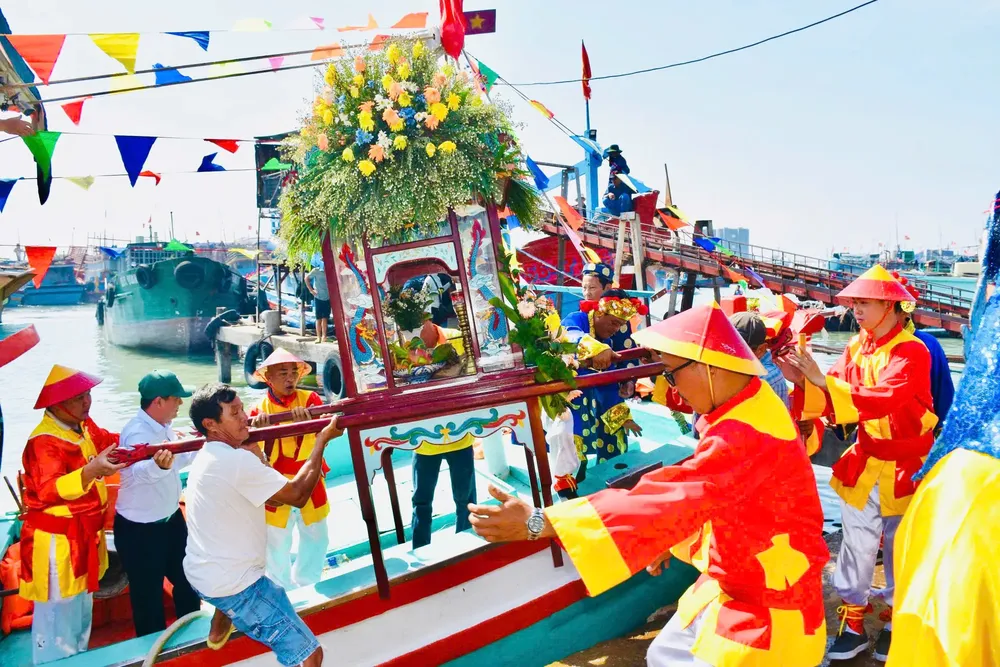
The palanquin carrying Ca Ong (also known as the Whale God) was ceremoniously escorted from the boat ashore amid the deep reverence of residents before being brought back to the Nam Hai Thang Nhi Whale Temple for enshrinement and the continuation of traditional worship rituals.
The Nghinh Ong Nam Hai Festival is a long-standing folk belief practice of coastal fishing communities, reflecting their faith, reverence, and gratitude toward the Whale God, regarded as the guardian deity protecting those who make their living on the sea.
Over hundreds of years, beyond its original spiritual significance of praying for favorable weather, safe voyages, and abundant catches, the festival has gradually become a distinctive cultural feature of coastal residents.