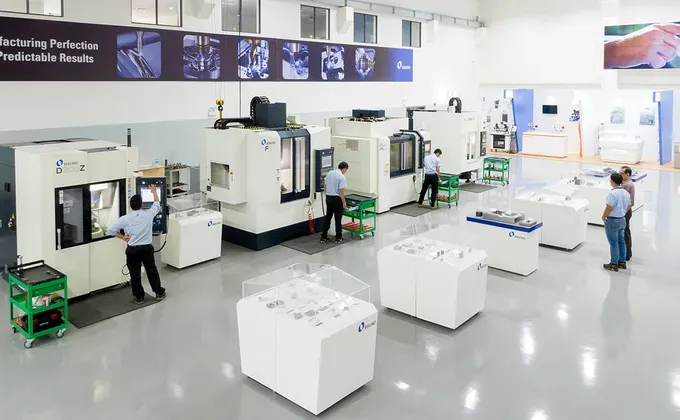
General Director Nguyen Phuoc Tan of An Duong Automatic Technology Co. Ltd. commented that adopting automation systems and digital platforms has markedly improved operational efficiency. Standardized processes reduce human dependency, enhance transparency, and elevate control capabilities. Numerous production stages previously requiring a substantial workforce now only necessitate a single supervisor.
Thanks to robotics and automated controls, systems operate continuously. Simultaneously, data digitization enables leadership to grasp current business situations, making faster, more precise decisions. Notably, domestic technological solutions have been localized to align with local demands at a fraction of the cost of imported systems.
This unlocks opportunities for Vietnamese enterprises to approach digital transformation without prohibitive barriers, constituting the foundation for boosting productivity, optimizing costs, and fostering sustainable development.
Meanwhile, digital and green transformations are becoming imperative requirements to optimize costs, enhance operational efficiency, and adapt flexibly to market dynamics, shared Chairwoman Lam Thuy Ai of the Board of Directors of Mebifarm JSC.
These transformations commence from management, process digitization, and operational cost reduction to investments in modern production technology. The enterprise has boldly invested in livestock and processing technology, steering towards automating virtually the entire production line.
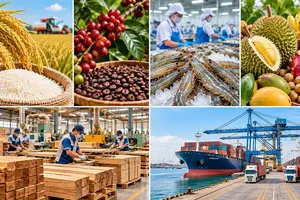
Beyond production, brand building is a crucial step to elevate product value. Chairman Phan Minh Thong of Phuc Sinh Group argues that enterprises must produce what the market demands. Therefore, businesses must fundamentally restructure entire production chains, from raw material zones to brand development and distribution networks.
Concurrently, his enterprise has implemented Environmental, Social, and Governance standards since 2008. By investing in deep processing technology and enforcing quality control from cultivation areas, they established an international ecosystem. Consequently, their products meet stringent European requirements, amplifying commercial value, introducing Vietnamese agriculture into 120 countries, and generating US$350 million in revenue.
When Vietnamese enterprises shift from a volume-oriented mindset to a value-oriented one, transitioning from raw exports to deep processing, and evolving from a passive to a proactive market stance, not only is the product value enhanced, but the enterprise’s position is also transformed.
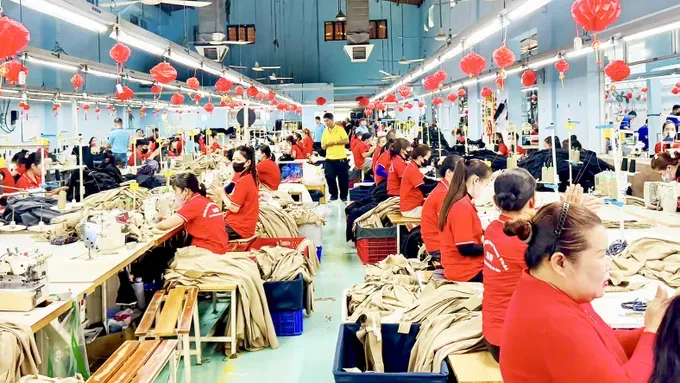
Experts in the field claimed that Vietnam’s double-digit economic growth target for the 2026-2030 period is a formidable challenge, yet it remains within reach. Therefore, to achieve success, it’s vital to identify crucial new growth drivers such as science and technology, guarantee the efficient utilization of capital resources, and stimulate more robust participation from the private economic sector.
Dr Can Van Luc, a member of the Prime Minister’s National Financial and Monetary Policy Advisory Council, voiced that attaining the two digit economic growth objective between 2026 and 2030 requires total societal infrastructure investment exceeding US$260 billion, heavily favoring energy and sustainability.
Moreover, education, healthcare, science, and technology sectors demand sharply increased capital to elevate human resource quality and innovative capacity, establishing a vital foundation for the new growth model. This concurrently implies that securing diverse channels to successfully mobilize sufficient medium and long term capital plays a truly paramount role.
Public investment allocated lately for sustainable development objectives in Vietnam hasn’t received adequate emphasis and remains deficient compared to actual demands. Besides, capital utilization efficiency, as reflected by the Total Factor Productivity (TFP) index, remains relatively low.
Therefore, Dr Can Van Luc commented that the current core issue is the necessity to alter the public expenditure structure to serve the objective of in-depth growth. Specifically, it’s imperative to adjust the public investment capital structure by reducing the investment proportion for transportation and energy infrastructure from the current 80 percent to approximately 50-55 percent of the total public investment capital.
Concurrently, expenditure for TFP-generating sectors like education and training must be substantially increased to roughly 20 percent of total capital, approaching international standards, while simultaneously boosting healthcare investment to 10-12 percent.
The success of several Asian economies vividly illustrates the role of science and technology in propelling growth. Therefore, if Vietnam aspires to go far and fast, it must rely heavily on science, innovation, and digital transformation.
Assoc Prof Dr Nguyen Thuong Lang from National Economics University states that this is a favorable moment to implement these initiatives vigorously to avoid squandering a golden opportunity. Intensifying technological investment drives growth, develops high quality human resources, and attracts external resources. Future developmental focus must pivot towards smart models aligning with global trends.
Chairwoman Lam Thuy Ai argued that if enterprises strictly engage in outsourcing, they’ll inevitably rely on market price fluctuations and suffer from low profit margins. Conversely, by developing proprietary branded products, they can proactively dictate selling prices, stabilize output, and augment product value.
This constitutes the trajectory that helps Vietnamese products escape the “outsourcing trap,” enabling them to progressively participate more deeply within the global value chain.