At the second session of the Central Steering Committee on the development of Vietnamese culture, Party General Secretary and State President To Lam laid out a highly specific requirement. He emphasized that the development of the cultural industry can’t continue in a scattered manner, where every locality tries its hand at multiple sectors but ultimately lacks products attractive enough to leave a lasting mark.
Each key locality should, instead, selectively focus on a mere handful of sectors, featuring no more than three flagship projects. Furthermore, every single project must clearly pinpoint its end product, the implementing enterprises, capital sources, target markets, and intellectual property, along with its tangible contributions to economic growth, job creation, exports, or tourism.
For HCMC, this is a golden opportunity to smoothly transform its cultural and creative advantages into genuine competitive prowess.
The city undeniably boasts a massive market, a fiercely dynamic business community, and a vast army of artists, designers, filmmakers, tech experts, and media professionals. Moreover, HCMC naturally serves as a bustling hub where diverse cultural streams, contemporary lifestyles, and fresh consumer trends beautifully intersect.
However, these inherent advantages only truly mean something when they’re carefully organized into a complete value chain, ultimately creating branded products that command a market and boast solid export potential.
Thus, HCMC doesn’t need to pile on an endless array of fragmented, small-scale ventures; instead, it must purposefully select projects massive enough to successfully lead an entire ecosystem.
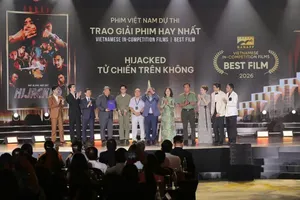
Firstly, the metropolis could heavily prioritize the construction of a cutting-edge hub for digital content creation and the entertainment industry. Cinema, music, video games, animation, advertising, and audiovisual products are rapidly opening up a remarkably expansive market.
HCMC already possesses the requisite human resources, ambitious enterprises, and an eager public; yet, what’s glaringly missing is modernized production infrastructure, specialized investment funds, practical testing mechanisms, and a highly methodical intellectual property strategy. In the end, this creative hub must introduce products capable of fiercely competing across the region, rather than merely existing as a symbolic, trendy workspace.
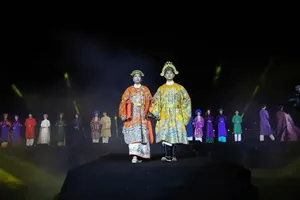
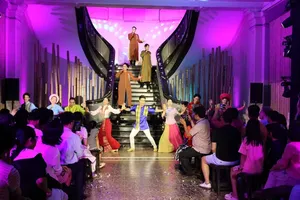
Additionally, the city urgently needs to develop a world-class complex explicitly dedicated to performing arts, major events, and the nighttime economy. The city pulses with a vibrant rhythm of life, wielding massive purchasing power and a remarkable capability for seamlessly weaving culture together with tourism, commerce, gastronomy, and retail.
A large-scale artistic program doesn’t just rake in direct ticket revenue; it simultaneously drags along the robust development of local hotels, aviation, transportation, and hospitality services while significantly helping to broadcast a glittering urban image. To pull this off, the city desperately requires standardized performance spaces, highly professional operational mechanisms, and a rock-solid, year-round event calendar.
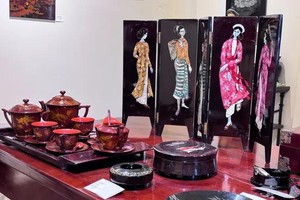
Another highly promising trajectory is the creative resurrection of urban heritage sites into dynamic innovation spaces. Antiquated factories, aging docks, historical architecture, old quarters, and the deeply ingrained memories of Saigon – HCMC collectively serve as an exceptionally rich cultural resource.
If effectively exploited through a modernized mindset, these forgotten spaces could effortlessly morph into bustling design centers, living museums, sprawling art zones, creative flea markets, and magnetic tourist destinations. Hence, preservation is no longer about stubbornly keeping an old structure standing; it’s about actively breathing life back into the heritage so it continues to thrive and generate fresh value.
Consequently, the strict mandate to firmly designate land funds for these cultural industry zones and centers before October 2026 must be viewed as a strategic decision. This land fund must be inextricably linked to crystal-clear functions, identified investors, highly efficient governance models, and strong infrastructural connectivity. Authorities shouldn’t blindly set aside land and only later brainstorm what to do with it; even more crucially, they shouldn’t lazily copy-paste the developmental models of other localities.
Throughout this complex process, the private sector must undeniably be treated as the primary forefront force directly crafting the products and determinedly conquering the market. Meanwhile, the State is tasked with forging the general institutional framework, preparing the vital infrastructure, mitigating initial risks, and strictly guaranteeing a flawlessly transparent competitive environment.
Every single project must be thoroughly measured by its hard revenue, job creation, visitor footfall, export value, and the sheer volume of intellectual property generated, rather than merely being judged by its physical scale or the astronomical amount of invested capital.
Historically, HCMC has always been a city defined by an unyielding spirit of dynamism, a daring “think big, act boldly” mentality, and a relentless drive to pioneer novel models. If the city wisely selects the right flagship projects, concentrates its resources, and perseveres to the bitter end, it won’t just gain a few more cultural monuments; it could remarkably birth entirely new economic sectors.
Ultimately, when that happens, culture will genuinely transform into a formidable productive force, an irresistible urban magnet, and a powerful developmental engine for HCMC in this brand-new era.