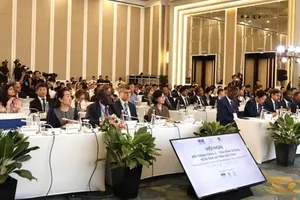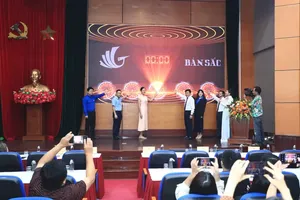
At a seminar on "Artificial Intelligence, Digital Technology and Intellectual Property Protection in Cinema" held on June 30, speakers highlighted how data and technology are becoming new pillars of soft power while emphasizing the urgent need to safeguard intellectual property rights in the digital environment.
AI transforms the film industry
Artificial intelligence (AI) is fundamentally changing the way the film industry operates while creating new opportunities for emerging film markets to strengthen competitiveness and expand internationally.
According to Associate Professor Nguyen Thi Thu Phuong of the Vietnam Institute of Culture, Arts, Sports and Tourism under the Ministry of Culture, Sports and Tourism, AI and digital technologies are not only transforming production processes but also reshaping cultural industries and the balance of cultural influence among nations.
In this context, she said, the value of cinema extends beyond finished films to include the ability to reuse, distribute and amplify their influence, making film data itself a new form of asset and soft power.
Countries that control data and effectively tell their national stories will enjoy a competitive advantage in soft power, she said. While South Korea, Japan and China have integrated cultural industry development with data, technology and communications strategies, Vietnam still faces limitations in systematically building its national image and narrative.
Vice President Nikey Kim of the Korea Association of Public Relations and director of the Korea Character Association said the cinematic experience should evolve into an emotional and economic ecosystem centered around films, with the development of loyal fan communities built on high-quality productions.
From that foundation, audiences can continue engaging with films through food, filming locations, music and related merchandise, extending the commercial and cultural value of each work. Vice President Nikey Kim said AI and short-form video are driving greater audience interaction and could even enable viewers to communicate with film characters. By making effective use of data and AI to better understand audiences, Vietnam's film industry could build a global fan ecosystem that extends beyond traditional filmmaking.
Copyright remains a major challenge
Chairwoman Ngo Phuong Lan of the Vietnam Film Development Association (VFDA) said major policies issued by the Party and State, particularly Resolution No. 57 on breakthroughs in science and technology, innovation and national digital transformation, together with strategies to develop cultural industries, have created both opportunities and new requirements for the film sector.
She said cinema is not only an art form but also a cultural industry in which creativity generates economic value, strengthens the national brand and enhances soft power.
According to the Chairwoman of the Vietnam Film Development Association, Vietnam's film industry has made notable progress in recent years, with a larger domestic market, stronger production capabilities and increased participation in international film festivals.
However, she said Vietnam must make better use of science and technology to narrow the development gap and integrate more deeply into global value chains if it is to build a modern film industry. The greatest challenge is protecting intellectual property in the digital environment, where content can easily be copied and distributed, while AI can generate new works using massive datasets, making intellectual property protection a critical issue.
Deputy Minister Nguyen Huy Dung of Culture, Sports and Tourism stressed that the film industry should not only adopt AI but also reorganize its entire ecosystem covering creativity, distribution, copyright management and data.
He proposed developing a national film database featuring digital profiles for every film, ownership identification systems, real-time box office data, a map of filming locations linked to tourism and a copyright database incorporating digital fingerprint technology.
According to Deputy Minister Nguyen Huy Dung, AI should serve as a tool to support rather than replace filmmaking. He said the future of Vietnam's film industry will depend on a coordinated ecosystem that integrates technology, legal frameworks, market development and creativity.