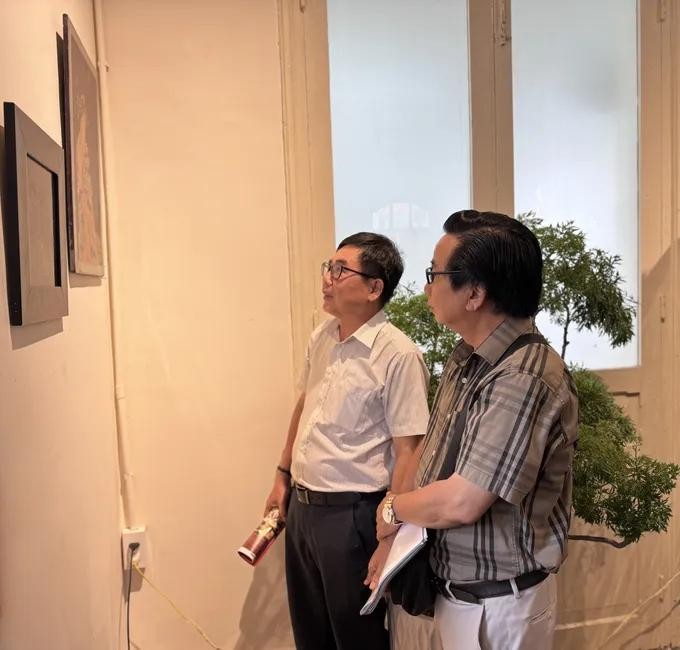
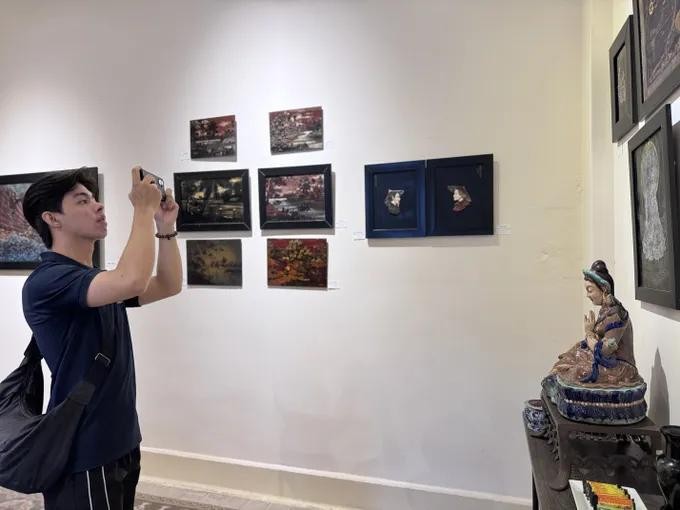
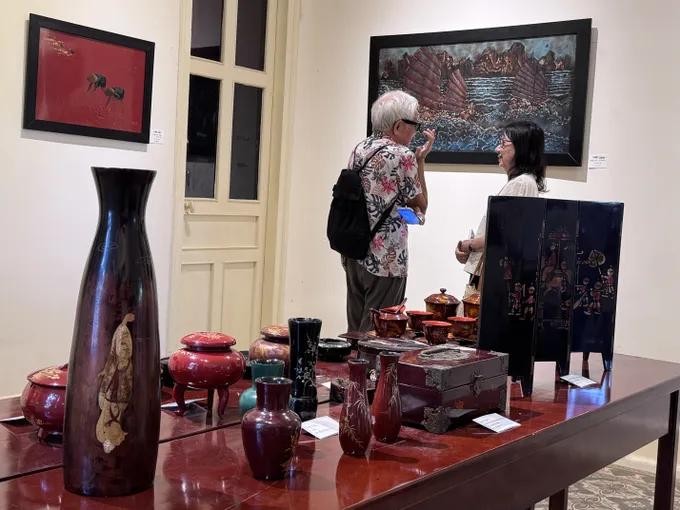
An exhibition of the "Chau Tat Binh Dan" lacquerware collection opened on July 4 at the Southern Women's Museum in Xuan Hoa Ward, Ho Chi Minh City, introducing the public to the distinctive values of Southern Vietnam's traditional lacquer craft through artifacts produced between 1950 and 1990.
The exhibition runs through Oct. 4. It is jointly organized by Huyen Duc Book Company, expert on lacquer art Pham Hoang Quan, who assembled the collection, and the Southern Women's Museum. The collection was selected from hundreds of lacquer paintings and lacquer handicrafts produced in Thu Dau Mot, Saigon and Ho Chi Minh City during the 1950-1990 period.
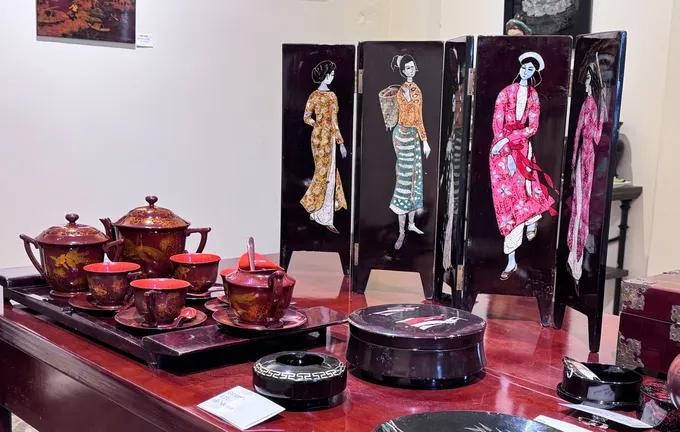
According to expert Pham Hoang Quan, the name "Chau Tat Binh Dan" carries multiple meanings. "Chau" refers to vermilion red, while "Tat" refers to the lacquer tree, the source of the raw material used to make traditional lacquer products.
The words "Binh Dan" honor the workers and artisans whose often-unrecognized efforts created lacquerware works, while reflecting the collection's focus on the value of labor and traditional craftsmanship.
The phrase "Chau Tat" is also a homophone of "Chu Tat" in Vietnamese, meaning to complete a task thoroughly.
According to the organizers, the exhibition not only presents traditional lacquer handicrafts but also recreates the image of a craft village that once flourished in Thu Dau Mot, Binh Duong and Saigon-Ho Chi Minh City. It also highlights the contributions of artisans, workshop owners and craftsmen to the development of a distinctive Vietnamese lacquerware tradition.
From the perspective of collectors, the exhibition also broadens research and exhibition approaches to handicrafts, which have previously received limited attention in specialized exhibitions.