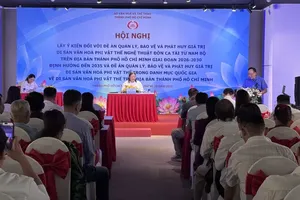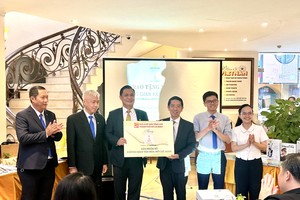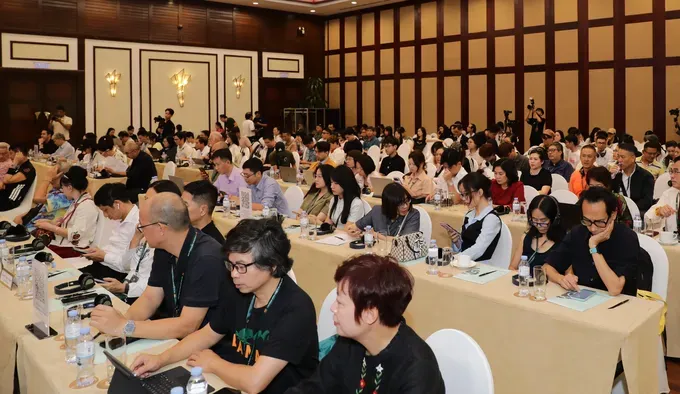
At the seminar, many participants shared the view that after nearly 40 years of the Doi Moi (Renewal) process, Vietnamese cinema has undergone significant transformations in its themes, approaches to portraying war, and artistic language.
According to director and People's Artist Huynh Hung, since 1986, the themes of national reconciliation and unity have become more prominent, taking two main directions: reconciliation between Vietnamese people and those who once stood on the opposing side during the war and unity within the Vietnamese community itself. He expressed hope that more cinematic works, particularly feature films, would be produced to help strengthen the great national solidarity of the Vietnamese people.
Associate Professor Dr. Hoang Cam Giang of the University of Social Sciences and Humanities, Vietnam National University-Hanoi, noted that Vietnamese cinema in the Doi Moi (Renewal) era has shifted from epic-style storytelling to exploring individual destinies, post-war experiences, and the long-lasting trauma of war. Many films have also broadened perspectives on women's roles, psychological trauma, and the relationship between humans and nature, contributing to the emergence of an "ecological aesthetics" in contemporary Vietnamese cinema.
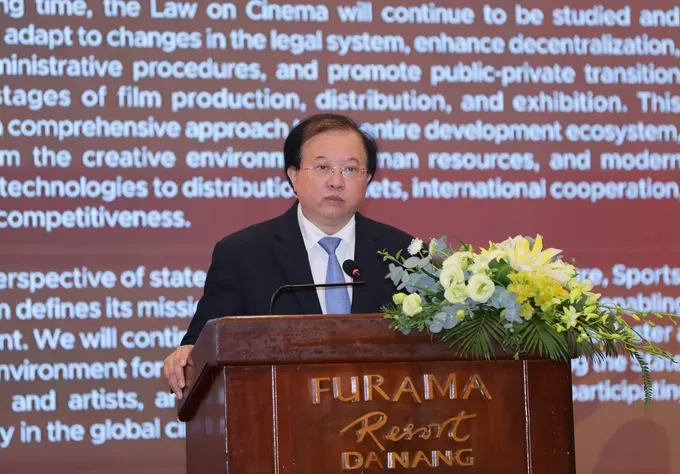
Associate Professor Dr. Ta Quang Dong, Deputy Minister of Culture, Sports, and Tourism, said that Vietnamese cinema has made significant progress in its institutional framework, creative environment, and international integration. Looking ahead, he emphasized that the industry should continue striving to strike a balance between ideological and artistic values and market demands, while telling Vietnamese stories through a modern cinematic language that can resonate with global audiences and preserve the nation's cultural identity and humanistic values.