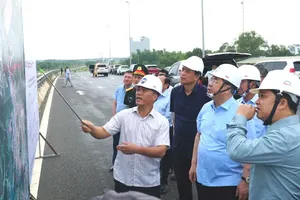
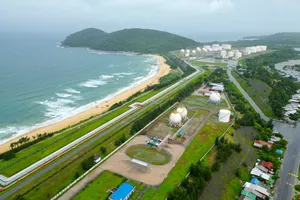
At the second plenum of the 14th Party Central Committee, held from March 23 to 25, 2026, the committee approved a policy to establish Dong Nai City as a centrally governed municipality. This move is expected to usher in a new phase of development for the province as it joins the nation in advancing toward a new era of prosperity.
Rising optimism among residents and businesse
The announcement that Dong Nai is preparing procedures to become a centrally governed city has generated strong enthusiasm among local residents and the business community.
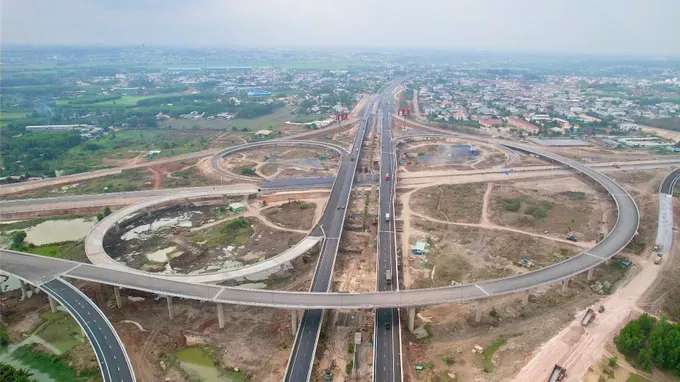
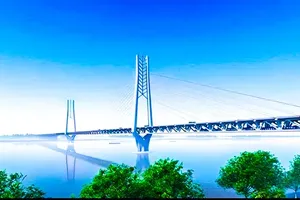
According to Mr. Doan Van Duc, a resident of Tran Bien Ward, the province is simultaneously implementing several major transport projects, including Ring Roads No. 3 and No. 4 of Ho Chi Minh City, as well as the Bien Hoa–Vung Tau Expressway. Once completed, these projects will turn the area into a key transit hub both domestically and internationally. Therefore, becoming a centrally governed city is seen as necessary, enabling Dong Nai to benefit from favorable conditions and special mechanisms similar to those granted to Ho Chi Minh City, thereby accelerating its development.
Mr. Nguyen Duc Cu, a resident of Long Thanh Commune, shared his excitement that the news has energized the local community in recent days. The province is transforming rapidly. Soon, Long Thanh will become an urban ward, taking on a new look as an international airport city. Residents here will be the first to benefit, with improved living standards and higher incomes as new service industries replace low-yield rubber plantations.
Mr. Nguyen Hoang Dat, Director of Vinahe Cashew Company, expressed hope that the centrally governed city status would give Dong Nai better policies and stronger investment resources, boosting businesses, key products and urban growth.
Strengthening links with major economic centers
Following the administrative merger, Dong Nai Province has recorded remarkable socio-economic progress. In 2025, the province’s GRDP grew by 9.63 percent, exceeding the Government’s target by 1.13 percentage points and marking the highest growth rate in a decade. Industrial production rose by 15.22 percent year-on-year. Export turnover was estimated at US$34.6 billion, up 16.23 percent, while imports reached US$23.8 billion, up 14.25 percent, resulting in a trade surplus of approximately US$10.7 billion.
These achievements, together with the expected completion of procedures to establish a centrally governed city and the planned commercial operation of Long Thanh International Airport in the second quarter of 2026, are set to create strong momentum for Dong Nai to achieve double-digit growth in 2026 and beyond.
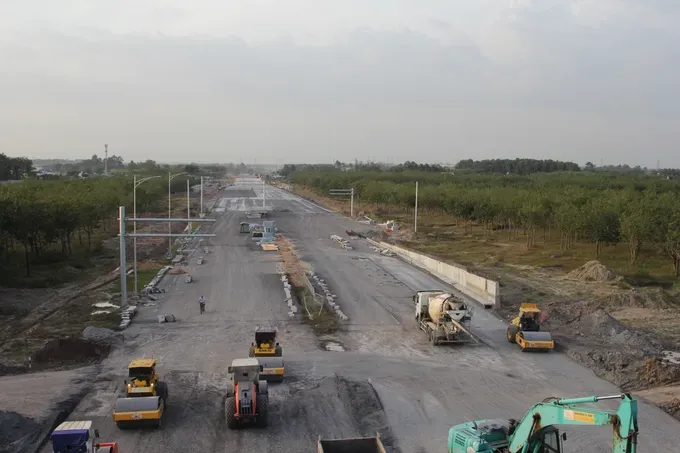
The Dong Nai Province People’s Committee is expediting the process of collecting public feedback on the proposal to establish Dong Nai City before submitting it to the provincial People’s Council for approval. The province aims to finalize all procedures and submit the plan to the National Assembly for approval by 2026.
This transformation is expected to meet socio-economic development demands, support the building of a modern and civilized urban area, and enable synchronized investment in strategic infrastructure. It will also help elevate Dong Nai’s position in attracting investment and strengthening linkages with major economic centers across the country, particularly Ho Chi Minh City, Tay Ninh, the Central Highlands and the South Central region, while creating spillover effects for the Mekong Delta.
Currently, a provincial delegation is conducting a study tour in China to learn about railway development technologies. In the near future, another delegation will visit Japan to explore modern urban railway systems, in line with directives to shorten travel time between Long Thanh International Airport and Ho Chi Minh City.
In 2025, Dong Nai Province’s GRDP exceeded VND677 trillion (US$26 billion), with state budget revenue reaching nearly VND103 trillion (US$3.9 billion). GRDP per capita stood at VND152.8 million (US$5,800) , making it the fourth-largest economy in Vietnam. After consolidation, the province has essentially met all seven criteria required for centrally governed city status, including large economic scale, fiscal self-sufficiency, modern economic structure, strategic location, regional connectivity role, emerging infrastructure system, and significant urban development potential.
According to Mr. Nguyen Kim Long, Standing Vice Chairman of the Dong Nai Province People’s Committee, the plan to establish Dong Nai as a centrally governed city reflects not only the aspirations of local authorities and residents but also recognition and strategic vision from the central government.
Looking ahead to 2026, Dong Nai will focus on three key pillars to drive breakthroughs. These include developing synchronized infrastructure with Long Thanh Airport as a strategic centerpiece; ensuring social welfare, particularly through social housing development linked with industrial and urban growth; and significantly improving the investment and business environment, with the goal of achieving sustained double-digit growth and solidifying its role as a major growth engine for both the region and the country.