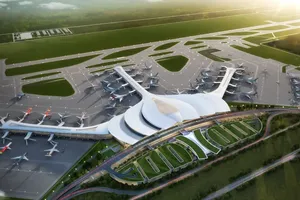
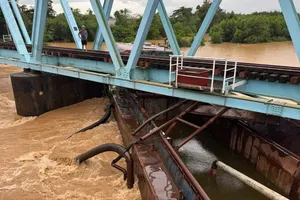
Positioned as the “heart” of Southeast Vietnam’s growth, Long Thanh International Airport relies on key “arteries” such as the Bien Hoa–Vung Tau Expressway and Ho Chi Minh City Ring Road 3. Ongoing delays are not only choking connectivity but also putting vast investment resources at risk.
Links to Long Thanh Airport remain unfinished
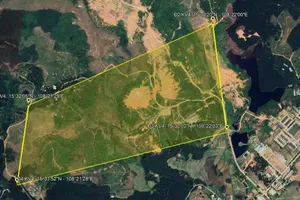
Under current plans, Long Thanh International Airport will be connected through a multimodal transport network comprising expressways, ring roads, national highways and railways. However, most of these projects are behind schedule, notably Component 1 of the Bien Hoa–Vung Tau Expressway through Dong Nai Province.
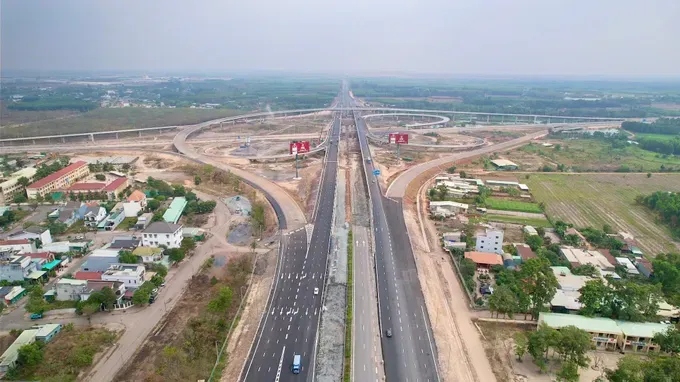
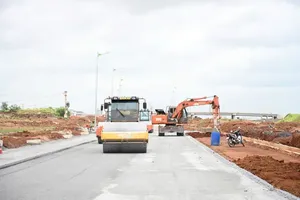
On-site observations in mid-March 2026 show construction sites still unfinished, with sections undergoing rock excavation, earthworks and overpass construction. Overall progress has reached just over 64 percent. Despite repeated directives from local authorities, the project missed its technical opening deadline of December 19, 2025, and subsequently failed to meet the revised target of January 15, 2026.
Meanwhile, Component 2 of the expressway has also fallen short of its planned completion by the end of 2025. The Ministry of Construction Vietnam pointed to disjointed planning, shortages of manpower and equipment, and mounting backlogs as the main factors behind the delays.
Similarly, Component 3 of Ho Chi Minh City Ring Road 3 through Dong Nai Province, spanning more than 11 kilometers, has faced repeated delays. Launched in June 2023 with a completion target in 2025, the project had reached just over 60 percent progress by early 2026. Key challenges include land clearance bottlenecks, shortages of construction materials, and limited contractor capacity.
Other major projects, such as the Ben Luc–Long Thanh Expressway and the expansion of the Ho Chi Minh City–Long Thanh–Dau Giay Expressway, have also been delayed, largely due to persistent land acquisition issues.
At present, access from Ho Chi Minh City to the airport depends largely on a handful of major routes, all of which are severely congested. National Highway 51 is operating at four times its capacity, with traffic exceeding 71,000 vehicles per day on some stretches, while the Cat Lai ferry and Nguyen Thi Dinh Street regularly face gridlock.
Such bottlenecks have limited socio-economic development, with the Cai Mep–Thi Vai port cluster failing to fully realize its potential despite significant investment.
Meanwhile, major infrastructure projects such as Cat Lai Bridge, Long Hung Bridge, the extension of Metro Line 1 from Ben Thanh to Suoi Tien toward Long Thanh, and Ring Road 4 remain in early stages, with completion targeted for 2029.
Risks of congestion and higher logistics costs
According to plan, Long Thanh International Airport is set to begin operations by mid-2026, with an initial designed capacity of tens of millions of passengers annually. However, with transport links still incomplete, the risk of significant socio-economic losses is difficult to avoid.
Traffic pressure is expected to intensify on existing routes such as National Highway 51, the Ho Chi Minh City–Long Thanh–Dau Giay Expressway and provincial road networks. Inadequate public transport infrastructure could also create bottlenecks right at the airport’s gateway, making it difficult for passengers and cargo to access the facility efficiently, leading to congestion, delays, reduced flight frequency and underutilization of designed capacity.
Beyond that, logistics costs are likely to rise. Mr. Nguyen Van Hung, a representative of a transport and warehousing company in the Cai Mep–Thi Vai port cluster area, noted that under current infrastructure conditions, longer travel times between the airport and Ho Chi Minh City and neighboring provinces will increase transport, fuel and labor costs. In an increasingly competitive global economy, even a small rise in logistics costs could erode the competitiveness of entire supply chains. Each year of delay in completing connectivity infrastructure represents lost opportunities for economic growth, job creation and budget revenue.
Recently, speaking at the groundbreaking ceremony of the Cat Lai Bridge project, Deputy Prime Minister Mai Van Chinh emphasized that although the Southeastern region has received significant investment in major infrastructure projects, transport connectivity remains a critical bottleneck. He highlighted the roughly 40-kilometer river corridor between Dong Nai Bridge and Phuoc Khanh Bridge, forming a natural boundary between Ho Chi Minh City and Dong Nai Province, as a key constraint. The launch of the Cat Lai Bridge project marks a step toward strengthening regional connectivity and linking the country’s largest economic hub with its eastern gateway.
Even a modern international airport could struggle to attract investment and boost tourism if transport links remain unsynchronized, with congestion and long travel times likely to leave a negative impression on global visitors and investors.
These challenges highlight the need to align the launch of Long Thanh International Airport with a fully integrated transport network. Seamless access is essential to maximize investment efficiency and fulfill its strategic role.
According to the Ministry of Construction, about 70 percent of travel demand to and from the airport will come from Ho Chi Minh City. Therefore, priority should be given to the Thu Thiem–Long Thanh light rail project, which would allow passengers to travel directly from the city center to the airport in just a few dozen minutes, significantly easing pressure on road infrastructure.