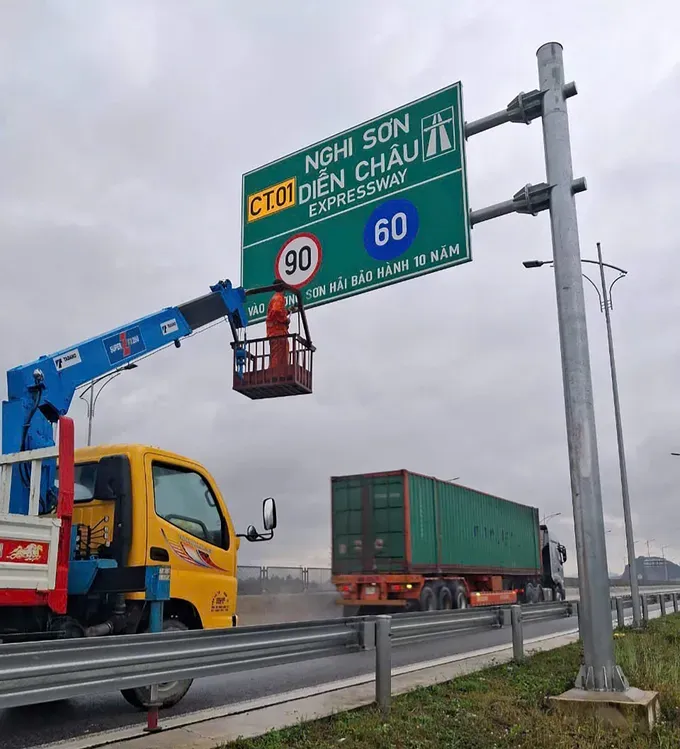
For Director Le Quyet Tien of the Authority for Construction Investment Economics and Management under the Ministry of Construction, Son Hai Group’s proposal to mandate a ten-year warranty for traffic infrastructure doesn’t just impact stakeholders, but profoundly affects the legal framework within the construction sector.
The Authority held meetings with Son Hai Group, related agencies, associations, and enterprises to evaluate this proposition. At the end of the day, review results indicate that the proposal simply lacks sufficient practical and technical grounds to get the ball rolling.
Currently, the law stipulates a minimum warranty period of two years for special-grade and Grade-I projects utilizing public investment capital. This is the timeframe when defects caused by construction errors typically surface, prompting requests for repairs. This regulation reportedly aligns seamlessly with international practices.
If the warranty period extends beyond the routine repair cycle, delineating responsibility between construction flaws and standard wear becomes difficult, which could spark disputes and affect maintenance. However, existing regulations don’t restrict extending the timeframe; parties can stipulate it within contracts. The Ministry consistently encourages voluntary extensions.
Voicing his perspective on this matter from an investor’s standpoint, Chairman Tran Chung of the Vietnam Association of Road Traffic Infrastructure Investors opined that if a rigid ten-year warranty is uniformly applied to all traffic projects, the costs for guarantees, insurance, risk provisions, and overall bid prices will inevitably skyrocket. It appears this pressure becomes even more overwhelming during the time when enterprises are already grappling with sharply rising fuel prices, transportation costs, and soaring interest rates.
On the flip side, this recommendation in fact doesn’t align with the prevalent management experiences of several countries within the region. Additionally, proposing to stretch the warranty period to a decade would overlap with the timeline for conducting routine repairs as mandated by maintenance procedures, which essentially contradicts the core nature of project warranties, namely rectifying defects that strictly fall under the construction contractor’s responsibility.
Numerous drivers have expressed keen interest in Son Hai Group’s proposal to prolong the warranty on traffic infrastructure. For Director Khuc Huu Thanh Hai of Dat Cang Trading and Service Transport JSC in Hai Phong City, the reality is that some newly built roads exhibit potholes, rutting, and haphazard patchwork after just a few years, or even immediately after the warranty expires.
This makes driving extremely bumpy, rapidly damages tires and undercarriages, and drives up maintenance costs, burdens that ultimately fall squarely on the shoulders of transport enterprises and drivers. Whether the warranty is two years or ten years is a matter for management agencies to deliberate, but the paramount concern for transport businesses is that the infrastructure must be durable, ensuring smooth and entirely safe circulation.
On May 14, Son Hai Group stated they don’t have any further comments regarding the Ministry of Construction’s response. The enterprise’s unwavering stance is that extending the project warranty period serves to save the state budget, bolster the rights of citizens participating in traffic, and significantly elevate the contractors’ sense of responsibility.
Echoing this sentiment, driver Pham Cuong from Minh Son Transport Company in Bac Ninh Province articulated that project quality must be evaluated by its actual operational lifespan, rather than merely relying on the warranty period stated in the paperwork. If they’re forced to bear longer-term responsibility for project quality, contractors and construction units will undoubtedly execute their work more meticulously and utilize superior materials, effectively preventing scenarios where roads start deteriorating the moment the warranty lapses.
“We hope management agencies will tighten contractors' responsibilities to build more durable roads, because the people directly affected every single day are the commuters themselves.”
Driver Pham Cuong from Minh Son Transport Company
From an expert’s vantage point, Vice President Tong Van Nga of the Vietnam Federation of Civil Engineering Associations noted that traffic projects utilizing concrete and cement typically boast a long service life and low maintenance costs, as they’re less susceptible to environmental impacts.
However, for infrastructure constructed with asphalt, stone, sand, and mineral powder, the degree of environmental vulnerability is significantly higher, especially for projects situated in the Mekong Delta region. Therefore, it’s crucial that management agencies conduct thorough research and carefully scrutinize the warranty and maintenance protocols for each distinct type of project.