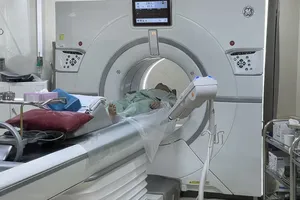
As the Tet holiday approaches, factories and construction sites across Vietnam are pushing through the final rush to meet year-end deadlines — but the surge in overtime work has also led to a sharp rise in serious workplace accidents.
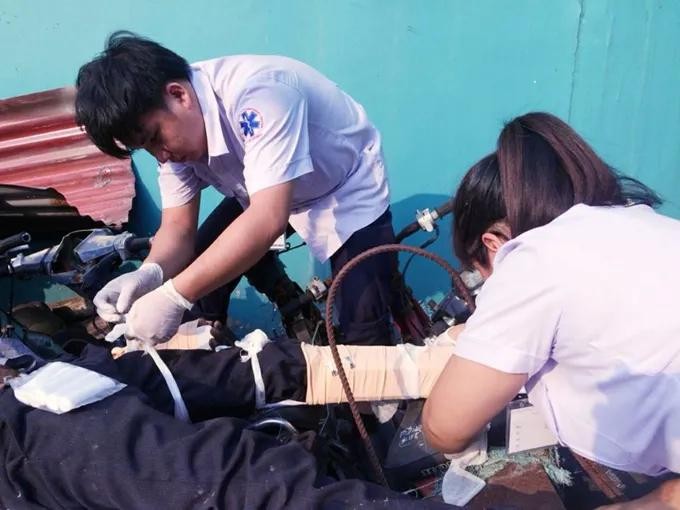
In the pre-Tet period, when projects and production orders enter the “final sprint,” workers are often required to work extra shifts to meet tight deadlines. This period also marks a significant increase in occupational accidents, causing devastating consequences not only for the victims but also for their employers and society at large.
Recently, Military Hospital 175 under the Ministry of National Defense performed emergency surgery on a 40-year-old man from Thanh Hoa who worked at a pork processing plant. His left hand became trapped inside a meat grinder. Because the bones were shattered and soft tissues crushed beyond repair, surgeons had no choice but to amputate the hand at the wrist.
Similarly, Ho Chi Minh City Orthopedic and Trauma Hospital treated a 37-year-old worker whose arm was pulled into a coconut shell crusher. Due to extensive damage, doctors had to amputate his arm above the elbow. Cho Ray Hospital also activated its “red alert” protocol to operate on two male patients including a 57 year old man from HCMC with a completely severed ankle, and another man, 46, from Vinh Long whose lower leg was cut off by a grass-cutting machine.
Data from hospitals across Ho Chi Minh City show that in the final months of the year, work-related injuries rise by 15 percent to 20 percent compared to other times. The most common accidents involve cutting, pressing, or grinding machinery used in mechanical workshops, wood and food processing plants, and construction sites. Many victims arrive at the hospital with severe injuries, sometimes requiring limb amputation. Experts say the causes often stem from workers' negligence in operating machines before power is fully off, skipping protective gear, or working while fatigued and stressed.
Dr. Tran Chi Khoi from Ho Chi Minh City Orthopedic and Trauma Hospital emphasized that occupational accidents reflect not only personal safety lapses but also management shortcomings. “When businesses chase deadlines and workers neglect safety or lack proper training, accidents are inevitable. Just one careless second can cost a lifetime of disability,” he warned.
According to medical experts, the initial response to an accident is critical and varies depending on the injury. Proper first aid greatly improves survival rates and limits damage. Most workplace accidents are preventable if safety regulations are strictly enforced. Machines should be regularly maintained, equipped with safety locks during cleaning or repairs, and workers should undergo frequent safety training using real-life scenarios. For those operating grass cutters, wearing protective footwear or rubber boots can help prevent severe injuries.
Above all, workers must always wear full protective gear and follow operational guidelines to avoid tragic outcomes.
Dr. Tran Phuoc Binh from Cho Ray Hospital noted that most recent cases occurred far from urban hospitals, leading to delays of four to six hours before patients received treatment. However, the “golden window” for reattaching a severed limb is only about four hours and only if the limb is properly preserved. Improper first aid can seriously compromise surgical outcomes. He advised that the severed part should be wrapped in a clean cloth (preferably sterile gauze), sealed in a plastic bag, and then placed in a mixture of ice and water - never directly on ice, as it may cause frostbite.
Dr. Binh emphasized that in any workplace accident, the priority is to swiftly and safely control bleeding at the injury site, then ensure the victim is taken to the nearest medical facility for immediate care before being transferred to a specialized hospital.
Dr. Nguyen Huu Tin from 115 People’s Hospital stressed that strengthening workplace safety awareness can prevent many avoidable tragedies. Companies should provide regular first aid training for workers and equip worksites with standardized first aid kits. Proper first aid doesn’t require complex techniques but it simply demands calmness, correct procedure, and the avoidance of instinctive and untrained reactions. Workplace accidents can happen in seconds, but the first response determines the consequences that may last a lifetime.