The “2026 Fine Arts Exhibition and Awards – Five Years of Ho Chi Minh City Sculpture” has helped sketch a portrait of the city’s contemporary sculpture scene, reflecting a creative community that remains stable while showing early signs of generational transition and expectations for future breakthroughs.
Diversity in creativity and expression
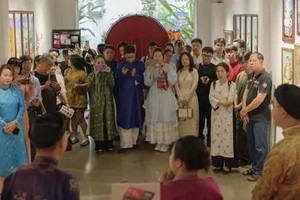
The “2026 Fine Arts Exhibition and Awards – Five Years of Ho Chi Minh City Sculpture,” organized by the Ho Chi Minh City Fine Arts Association in coordination with the Ho Chi Minh City Museum of Fine Arts, is a recurring event held every five years since 2001.
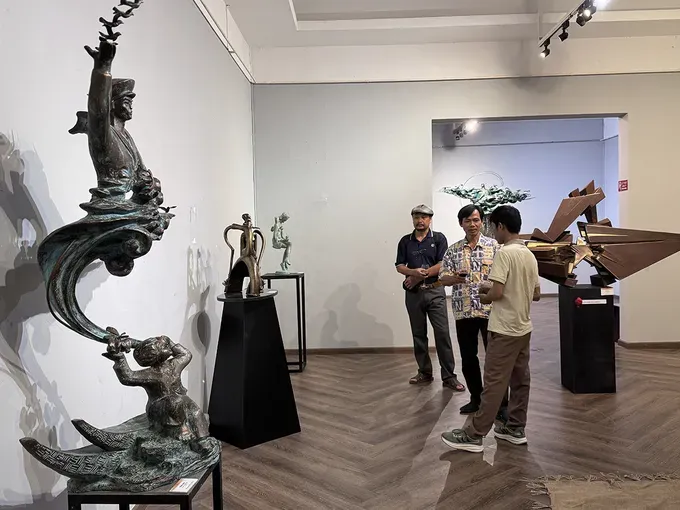
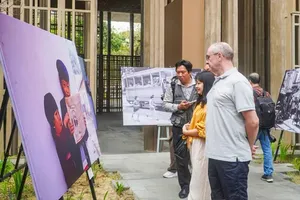
This year’s exhibition features 76 works by 59 artists, offering a relatively comprehensive overview of contemporary sculpture in Ho Chi Minh City.
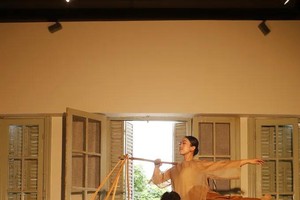
The exhibition space highlights a wide range of forms, from statues and reliefs to large-scale spatial installations. Traditional materials such as stone, wood, and bronze continue to be widely used alongside experiments with composite materials and industrial metals including iron, stainless steel, and aluminum.
The trend reflects an expansion in artistic practice, with sculptors moving beyond conventional techniques to explore spatial structure and audience interaction.
Sculptor Bui Hai Son, a member of the Art Council under the Ho Chi Minh City Fine Arts Association, said this year’s exhibition attracted a growing number of young artists and participants from outside Ho Chi Minh City, signaling the early stages of generational succession.
According to sculptor Son, many artists demonstrated strong command of materials while experimenting with contemporary forms and paying closer attention to durability and the long-term existence of their works.
The award results also reflected the overall quality of the exhibition. No first prize was awarded, while two second prizes went to “Nguoi Muon Mat,” a mixed-media work by Nguyen Kien Thuc, and “Vuon Uom,” an iron sculpture by Le Ngoc Thai.
The absence of a top prize suggested that no work emerged as a truly groundbreaking piece in terms of artistic language, material innovation, or spatial organization.
Even so, Ho Chi Minh City’s sculpture scene continues to maintain a steady creative momentum. Many works reflected artists’ sensitivity to contemporary social issues, boldly addressing themes ranging from urbanization and the environment to personal reflections in modern life.
Awaiting momentum from the next generation
Sculptor Huu Qui said younger artists are bringing fresh energy to the field with open-minded thinking and a willingness to tackle topical subjects.
He noted that technical skills, particularly in metalworking, have improved significantly, with many works achieving a high level of craftsmanship in bronze casting and the processing of stainless steel and aluminum.
Despite those positive signs, generational transition in Ho Chi Minh City sculpture remains gradual. Artists say this is characteristic of a discipline that requires years of accumulated experience, both in craftsmanship and artistic thinking.
According to industry insiders, developing a strong new generation of sculptors requires at least a decade of continuous growth and support.
Another issue drawing concern is the limited participation of graduation works by sculpture students, highlighting a gap between academic training and professional practice. The situation underscores the need for stronger connections between universities, professional associations, and exhibition spaces.
In that context, recurring exhibitions and awards play an increasingly important role, serving not only as milestones for artistic reflection but also as platforms to discover, nurture, and promote emerging talent.
Observers say Ho Chi Minh City sculpture is currently in a necessary “quiet phase” — a period marked by experimentation and efforts at renewal, but still awaiting a powerful catalyst capable of triggering a major breakthrough.
With technical foundations and material experimentation already firmly established, the next challenge lies in bold conceptual innovation and the emergence of artists capable of redefining the identity of urban sculpture.
Maintaining today’s creative momentum while patiently nurturing the next generation may ultimately provide Ho Chi Minh City sculpture with the foundation needed for deeper transformations in the years ahead.
One notable feature of this year’s exhibition is the increasingly visible presence of young artists. According to sculptor Nguyen Kien Thuc, the number of people pursuing sculpture, particularly students, is growing, with many young artists willing to invest in larger-scale works and experiment with new materials.
However, innovation in artistic content remains limited, as most works are still driven more by personal passion than by market orientation.
)