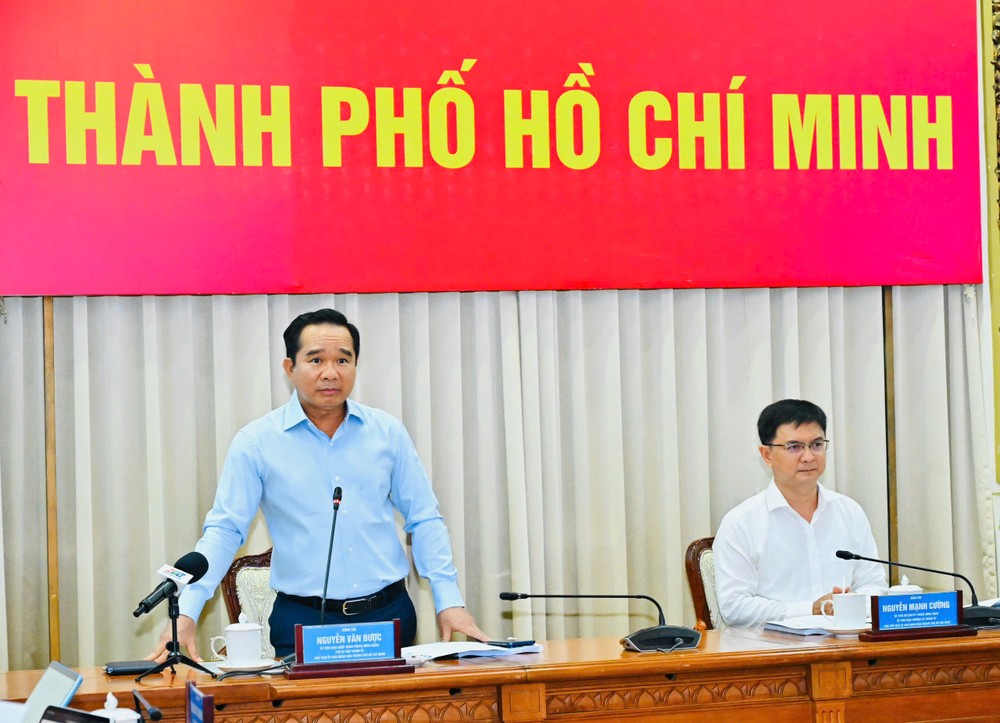
At a consultation workshop on the draft Law on Special Urban Areas on May 27, experts, investors, and business leaders proposed a wide range of solutions aimed at removing institutional bottlenecks, expanding interregional development space, and creating new growth drivers for HCMC.
Expanding urban development space
Speakers at the forum stressed that for HCMC to realize its ambitions following administrative restructuring and regional integration, the city must fundamentally rethink its governance model and the operation of its economic apparatus.
Addressing the orientation for the development of a mega-urban region, Mr. Nguyen The Duy, Vice Chairman of the Board and Deputy CEO of Becamex IDC, proposed that the draft law establish special mechanisms to strengthen State economic resources and strategic State-owned enterprises.
Under the proposal, the HCMC People’s Council should be empowered to decide which State-owned enterprises the city retains capital in and to approve State capital investments aligned with the city’s development strategy, without restrictions related to sectors, industries, or administrative boundaries.
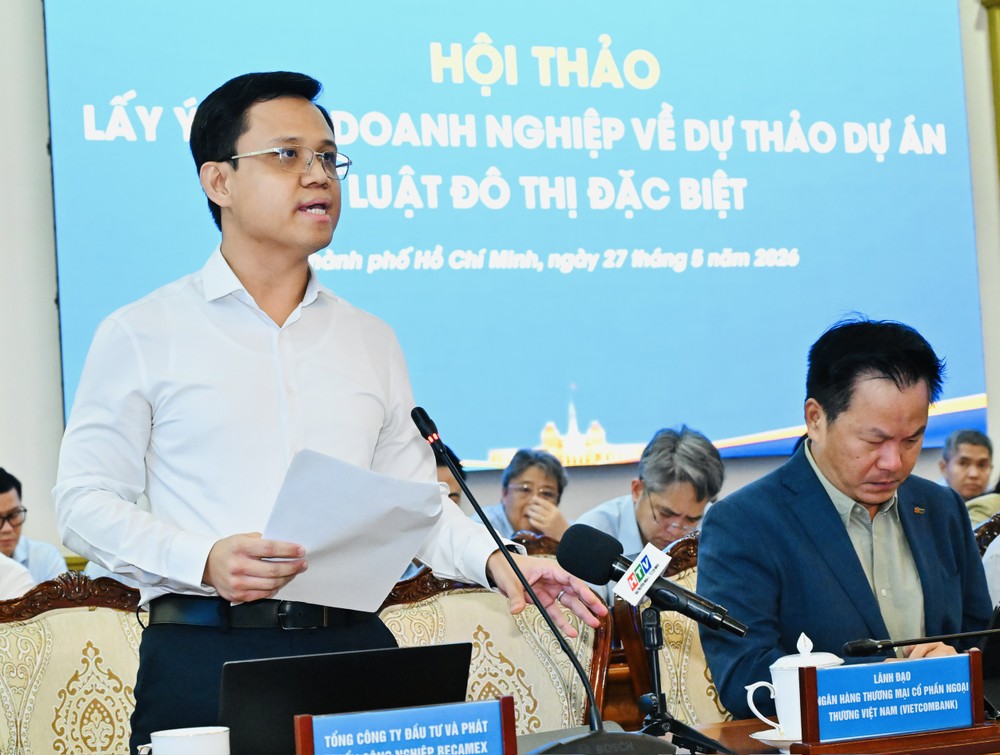
Beyond enterprise reform, Mr. Nguyen The Duy argued that transit-oriented development (TOD) should be viewed through a much broader lens. Rather than limiting TOD to urban projects surrounding metro stations, he said the framework should integrate logistics systems, urban railways, national railway infrastructure, and large-scale urban renewal.
For HCMC, TOD should function not merely as a transportation planning tool but as a mechanism to reorganize urban development space, modernize aging districts, and generate financial resources for infrastructure investment.
Representatives from Becamex also proposed that the draft law include a separate chapter dedicated to pilot zones for innovation in science, technology, and international education in HCMC.
According to the proposal, these zones should operate as a “national institutional laboratory,” governed under special mechanisms directly managed by the municipal government and overseen by a highly specialized management board capable of accelerating appraisal and approval procedures for high-tech projects.
The innovation zone could be developed in parallel with the planned Cai Mep Ha Free Trade Zone, creating a broader ecosystem for technology, logistics, and global investment.
Mr. Le Hoang Chau, Chairman of the Ho Chi Minh City Real Estate Association, suggested the draft law should more clearly define mixed-use investment models and mixed-function structures within TOD zones.
He cited examples where metro stations are integrated beneath commercial towers or residential complexes. Although these functions remain distinct, they could still be implemented by a single investor under a unified planning framework.
Instead of compensating TOD investors with land elsewhere, the city should allow them to jointly exploit multifunctional land directly associated with TOD projects, Mr. Le Hoang Chau said.
Such a mechanism would enable the city to generate dual revenue streams, collecting both land-use fees and taxes from commercial and service activities within the developments.
Removing legal bottlenecks in land and investment
Alongside long-term strategic planning, businesses also focused heavily on unresolved obstacles in investment procedures, land administration, and the real estate sector.
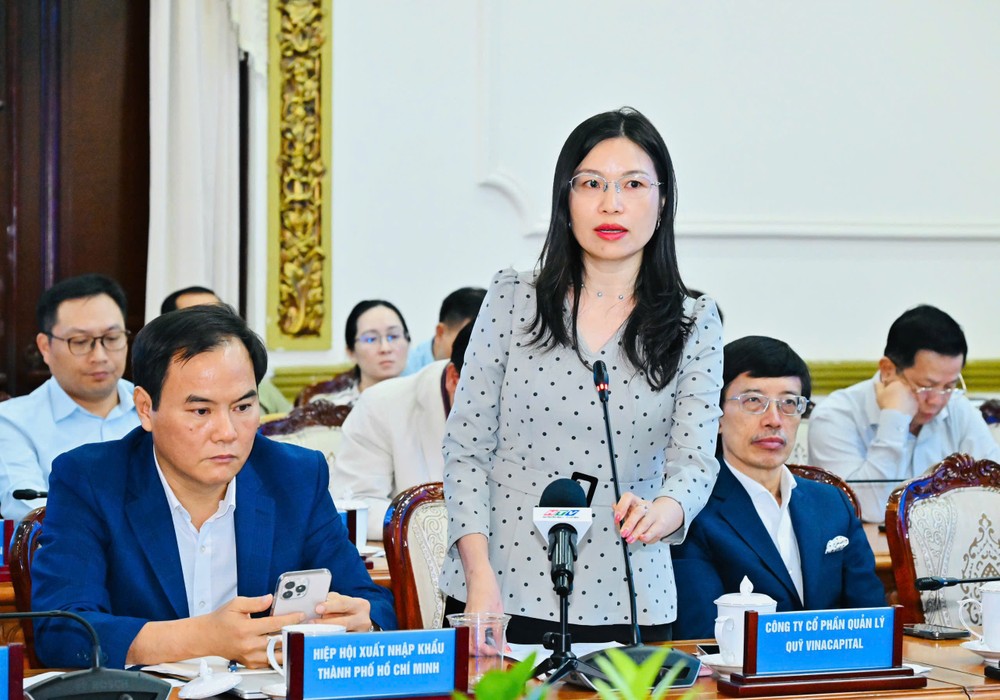
A representative of VinaCapital emphasized that the draft law’s pilot mechanisms must incorporate a regional perspective.
The proposed legislation aims to accelerate strategic infrastructure projects in energy, transport, logistics, and TOD sectors that inherently extend beyond municipal boundaries. If pilot policies are confined solely within HCMC’s jurisdiction, legal fragmentation could undermine regional connectivity objectives.
As a result, the law should explicitly clarify mechanisms applicable to projects involving investors and authorities from two or more provinces or cities.
Regarding large-scale projects, VinaCapital representatives argued that existing preferential policies remain insufficiently attractive to major investors. Restrictions on project transfers are also creating difficulties for capital mobilization in projects ranging from VND100 billion to VND100 trillion, thereby affecting implementation schedules.
The company proposed clearer regulations governing project transfers and streamlined investment procedures to facilitate business operations.
From a planning and land management perspective, representatives of Sun Group welcomed provisions allowing the HCMC People’s Council to approve planning and architectural indicators in TOD areas that differ from national technical standards.
However, the group recommended expanding this flexibility to strategic investors undertaking projects requiring unique architectural and spatial designs in order to create internationally competitive urban spaces.
To address long-standing challenges related to compensation and site clearance, Sun Group proposed adding projects prioritized for strategic investors to the category eligible for independent compensation, support, and resettlement projects before investment approval is formally granted.
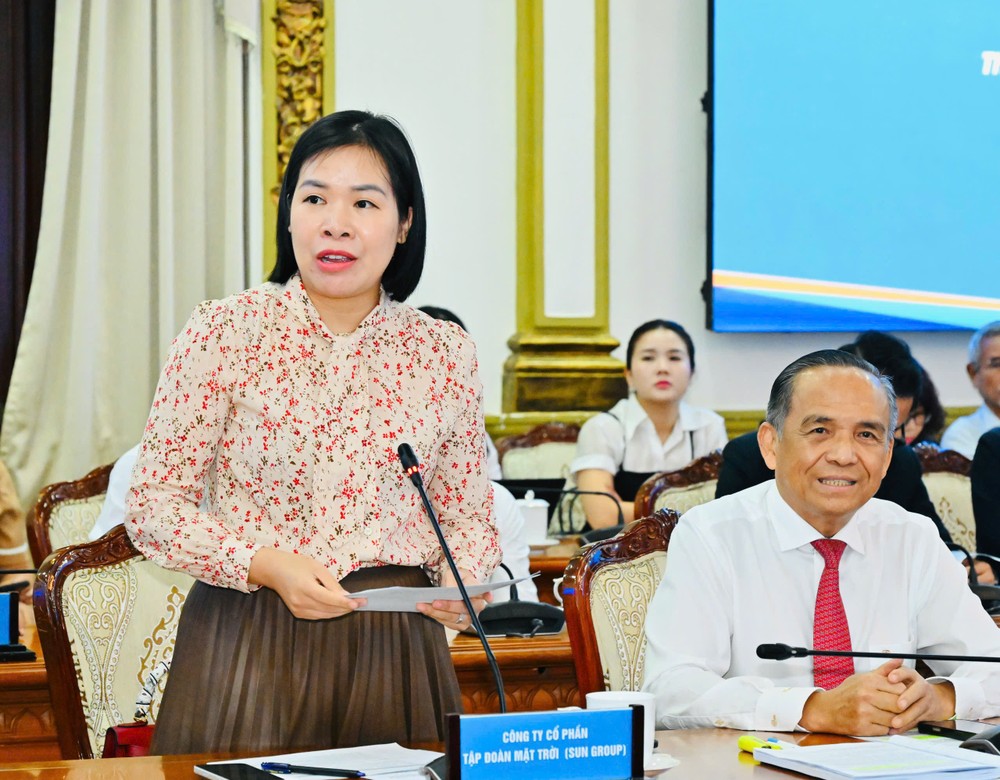
The company also urged the city to adopt mechanisms allowing early land measurement, inventory, and land-origin verification for major strategic projects.
On human resource attraction and urban governance, Sun Group recommended expanding visa and residency policies for experts, scientists, highly skilled workers, and foreign individuals owning housing or commercial properties in projects prioritized for strategic investment.
Specifically, the company proposed visas of up to five years and temporary residence cards valid for up to ten years.
To more comprehensively resolve emerging legal obstacles, the firm suggested allowing the HCMC People’s Council to issue resolutions handling urgent difficulties in cases where National Assembly laws or resolutions have not yet been amended or supplemented.
Such resolutions would subsequently be reported to competent authorities at the nearest session.
According to the company, if HCMC is granted authority to swiftly address institutional bottlenecks, the legal framework itself could become a competitive advantage.
From the real estate sector’s perspective, Mr. Le Hoang Chau proposed that the draft law introduce mechanisms for transferable development rights and spatial conversion to help regulate planning indicators more effectively.
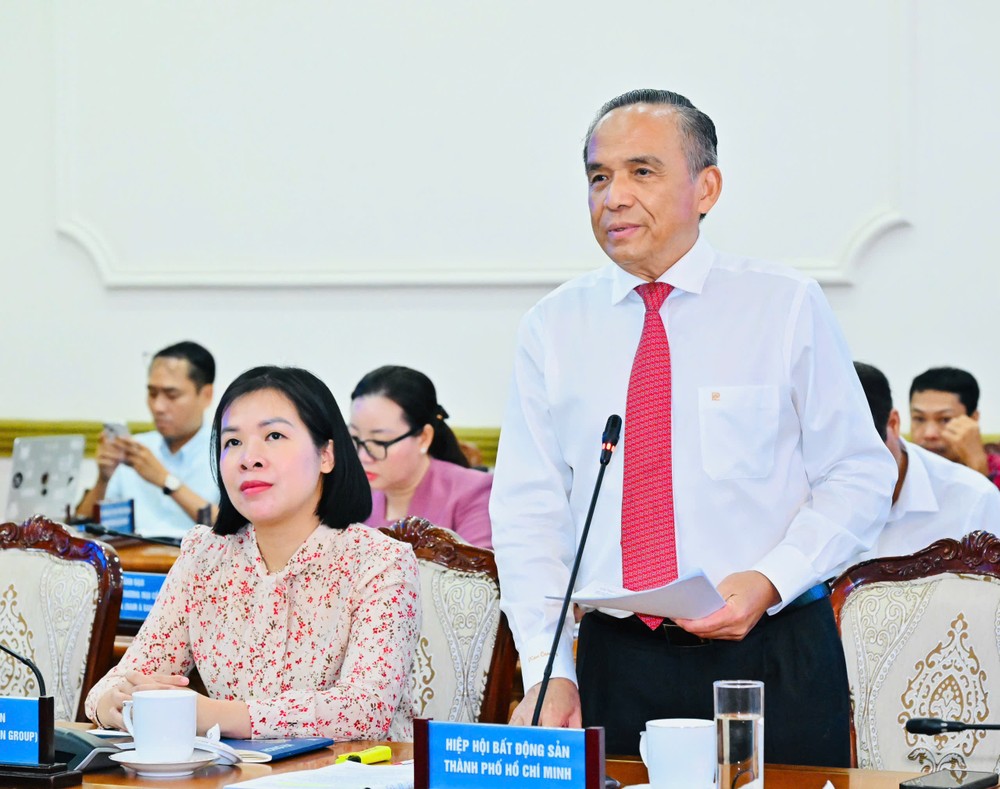
Regarding the renovation of aging apartment buildings, he recommended adding the phrase “renovation and reconstruction of apartment buildings” to clarify ownership structures and avoid implementation disputes.
Mr. Le Hoang Chau also warned about potential consequences stemming from the application of the new land price framework scheduled to take effect on July 1, 2026.
If the revised land price table is combined with the existing land price adjustment coefficient methodology, land-use fees for commercial housing projects could rise two- to three-fold, significantly inflating housing prices.
To stabilize the real estate market, he proposed introducing an additional adjustment coefficient below 1 when calculating land-use fees.
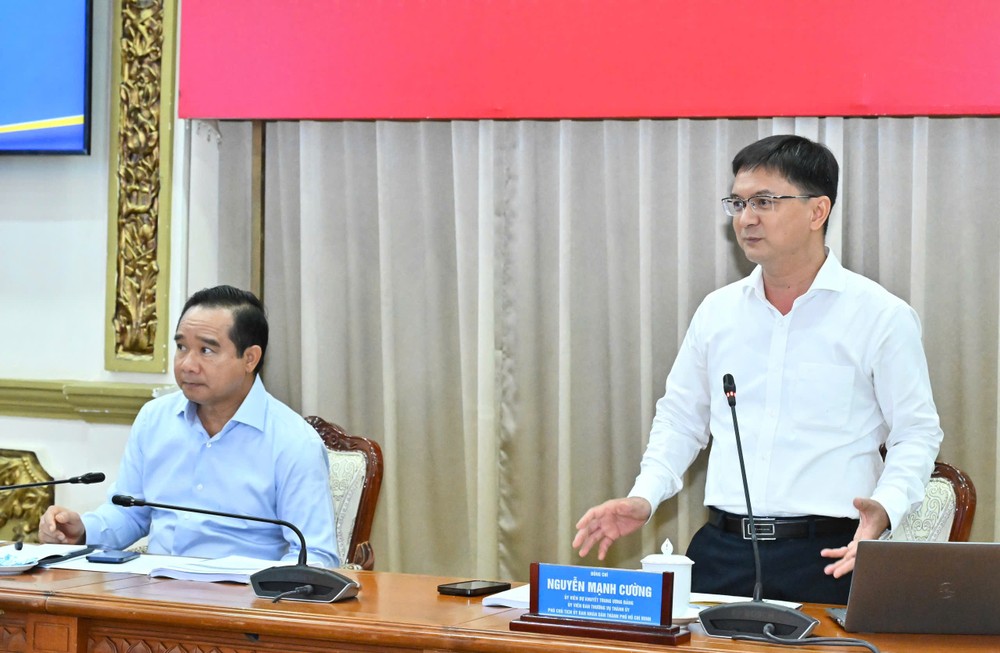
Concluding the workshop, Mr. Nguyen Manh Cuong, Vice Chairman of the HCMC People’s Committee, acknowledged and highly valued the recommendations contributed by businesses and industry associations.
He said the formulation and implementation of the Law on Special Urban Areas align closely with Politburo Resolution 09 on the development of HCMC in a new era.
As a dynamic, innovative urban center and one of Vietnam’s most important growth poles, HCMC’s role further underscores the strategic significance of the proposed legislation, Mr. Nguyen Manh Cuong noted.
On behalf of city leaders, he pledged that all feedback would be carefully reviewed and responsibly incorporated into the drafting process.
Immediately after the workshop, municipal authorities will conduct a comprehensive review of the draft and coordinate with agencies under the Ministry of Justice regarding specific provisions and chapters of the legislation.
The city will also continue gathering opinions from the Vietnam Fatherland Front, socio-political organizations, ministries, and neighboring localities to ensure the law comprehensively addresses regional development needs, green growth, infrastructure expansion, TOD implementation, and science and technology development.
HCMC leaders reaffirmed their commitment to accompanying businesses and industry associations by fostering a stable production and investment environment while gradually improving institutional frameworks in the years ahead.
Despite significant challenges, city officials expressed confidence that with the responsible partnership of the business community, HCMC can still achieve its ambitious double-digit growth target.