Meanwhile, 155,300 businesses withdrew from the market, or about 22,200 per month. The figures point to a positive development, with the number of businesses returning to the market exceeding those exiting by approximately 31,900.
Seeking more efficient business models
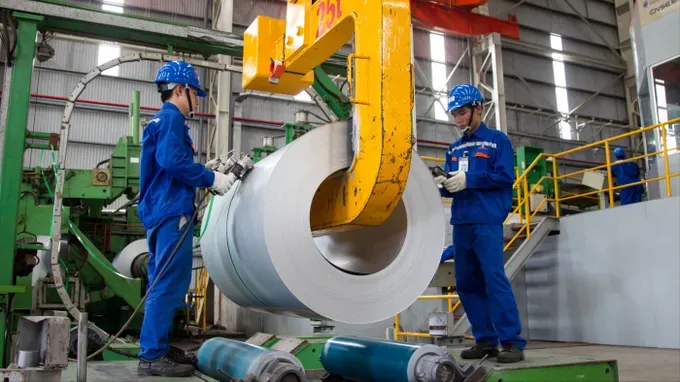
According to Nguyen Thi Huong, Director General of the Statistics Department under the Ministry of Finance, the business community is facing mounting pressure, particularly small and medium-sized enterprises (SMEs) and household businesses. These groups face constraints in management capacity and cash flow, as well as limited access to credit due to difficulties in meeting collateral requirements.
Meanwhile, large enterprises and foreign-invested businesses with high productivity continue to drive overall growth. By sector, statistics show that the services and retail sectors, along with certain segments of the construction and building materials industries, are under considerable pressure as input costs, raw material prices, and labor costs remain high while purchasing power recovers slowly.
However, the trend of businesses withdrawing from the market needs to be viewed more carefully. Market exit does not necessarily mean bankruptcy; it may also reflect a process of business screening and self-restructuring.
Dr. Ho Tran Quoc Hai of the Ho Chi Minh City University of Law said that the wave of business closures or the number of enterprises exiting the market should not be taken as grounds for hastily drawing conclusions about the overall state of the economy. To accurately assess the market’s underlying “health,” it is necessary to take a comprehensive view: after giving up their business premises, are enterprises quietly withdrawing from the market, or are they transitioning to new, more efficient business models?
Strengthening corporate governance and financial transparency
Nevertheless, the pressures facing businesses are real and cannot be ignored. Along some of the busiest streets in Ho Chi Minh City, including Cach Mang Thang Tam, Ly Tu Trong, Dong Du, Hai Ba Trung, and Nguyen Trai, numerous fashion boutiques and major coffee chains are shutting down, with “for lease” and “business transfer” signs posted outside their premises.
According to Ho Dinh Vien, Director of Veco Export Fashion JSC, many fashion stores in central Ho Chi Minh City previously stocked and sold his company’s products. Recently, however, many have been forced to close and return their premises before moving into smaller spaces in alleyways to cut costs.
Others have shifted entirely to online sales, focusing on building their TikTok and Facebook channels and acquiring new skills such as video editing, livestreaming, and managing online stores in an effort to avoid being squeezed out of the market.
Ms. Ly Kim Chi, Chairwoman of the Ho Chi Minh City Food Association, cited figures from the Private Sector Economic Performance Index showing that 60.2 percent of businesses face difficulties in finding customers, while 75.5 percent are unable to access credit without collateral. For small businesses, this creates a worrying vicious cycle: weak demand erodes cash flow and limits access to capital, while a lack of capital makes it difficult to invest in technology and improve product quality to reach new markets.
Chairman of the Ho Chi Minh City Business Association (HUBA), Nguyen Ngoc Hoa, said businesses today are not facing a single challenge but rather mounting pressures from costs, cash flow, and market conditions, as well as the need for transformation. While large enterprises and foreign-invested businesses are accelerating their green transition and restructuring their supply chains, SMEs must maintain operations, strengthen corporate governance, improve financial transparency, and meet new standards.
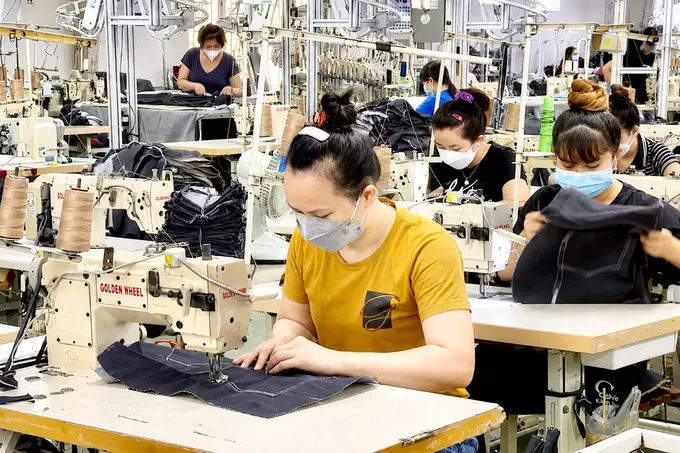
Many exporters note that higher revenue or export turnover does not necessarily mean that their financial health has improved. High costs, prolonged tax refund processing, labor shortages, small orders, and orders confirmed close to production schedules are putting pressure on cash flow and making it difficult for businesses to proactively secure raw materials and working capital.
In practice, logistics costs currently account for around 17 percent to 20 percent of the cost of wood products. Prices of synthetic fibers have at times risen by 15 percent to 20 percent, while profit margins in the industry are only around 4 percent. Meanwhile, freight rates for 40-foot containers to the EU and the US East Coast have at times reached US$4,500-US$5,500.