On the morning of April 9, during the Vietnam International Travel Mart (VITM Hanoi 2026), a seminar on AI applications in tourism attracted a wide range of management agencies, experts, and businesses. The consensus was clear: AI is no longer just a trend but a prerequisite for the tourism industry to accelerate and enhance its competitive edge.
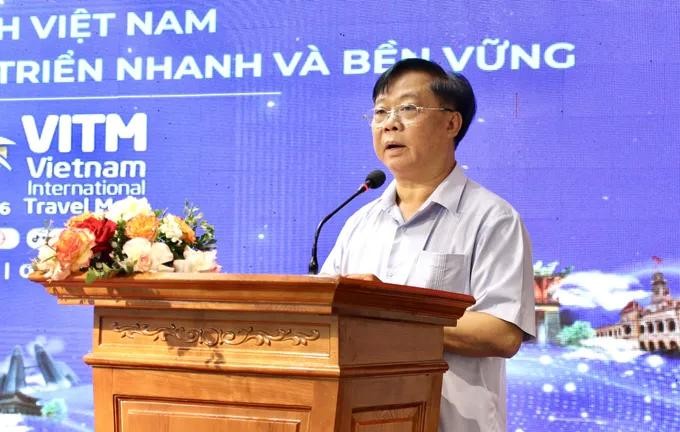
Opening the event, Vu The Binh, Chairman of the Vietnam Tourism Association, noted that in 2025, Vietnam’s tourism saw a strong recovery with approximately 21.2 million international arrivals and 137 million domestic visitors, generating nearly VND1 quadrillion in total revenue. However, he emphasized that these results necessitate a shift in growth models. Digital transformation is no longer an optional recommendation but a practical requirement, as technology reshapes the entire travel journey from information searching and booking to the on-trip experience and post-trip sharing.
Vice Chairman Pham Van Thuy of the Vietnam National Authority of Tourism affirmed that AI will play a central role in the coming period. By analyzing Big Data, AI enables personalized experiences and helps businesses understand traveler needs to create tailored products. Simultaneously, management agencies can use AI to forecast trends, regulate visitor flows to prevent overtourism, and improve resource management efficiency.

Being an entrepreneur, Pham Ha, Founder and CEO of LuxGroup and Vice Chairman of the Vietnam Green Tourism Association, argued that the industry’s biggest challenge is productivity rather than a lack of visitors. He remarked that the tourism sector is "running fast but not yet running smart." AI serves as a lever to optimize operations across marketing, sales, and management. Practical experience within his company shows that AI applications can allow one employee to handle a workload equivalent to 3–5 people while increasing accuracy and processing speed.
Participants at the seminar agreed that a synchronized effort is needed between the State, businesses, and local authorities, focusing on data construction, human resource training, and policy refinement. In the global competition, technology, data, and productivity will determine the standing of Vietnam’s tourism, with the speed of transformation being the decisive factor.









)