At Long Thanh International Airport, technology infrastructure is being integrated from the design stage to enable modern, seamless, and coordinated operations.
Data integration enables proactive airport operations
Seamless flight handling requires coordination among multiple units, from aircraft stand allocation and check-in counter assignments to baggage handling and passenger boarding. These are among the processes that Airports Corporation of Vietnam (ACV) is accelerating the digitalization of to improve operational efficiency across its airport network.
According to ACV, systems such as Airport Collaborative Decision Making (A-CDM), the Airport Operational Database (AODB), and the Flight Information Display System (FIDS) provide effective support for airport operations management, information updates, and operational coordination.
Alongside the deployment of equipment and technological solutions, ACV has proactively researched and developed software platforms, including ACV DCS (Airports Corporation of Vietnam - Departure Control System), Single AODB, PAS (Passenger Announcement System), and VeriPax (a software developed by ACV to display all information read from ID cards and itinerary information associated with the passenger list to verify information on ID cards and boarding passes).
These efforts aim to gradually build in-house technological capabilities for aviation operations and enable solutions to be tailored to actual operational requirements.
ACV leadership identifies technology as core infrastructure, with information and communications technology (ICT) systems designed to be open and flexible, supporting artificial intelligence (AI), big data, the Internet of Things (IoT), and cloud computing to facilitate future expansion and upgrades. The Smart Airport Operations Center (Smart APOC) is envisioned as a centralized operations hub connecting technical, security, and transport systems.
Within this architecture, AODB provides operational data, A-CDM supports collaborative decision-making, and the Airport Management System (AMS) links management activities. AI and big data are expected to enhance forecasting, provide early warnings, and optimize operations.
Automating the passenger journey
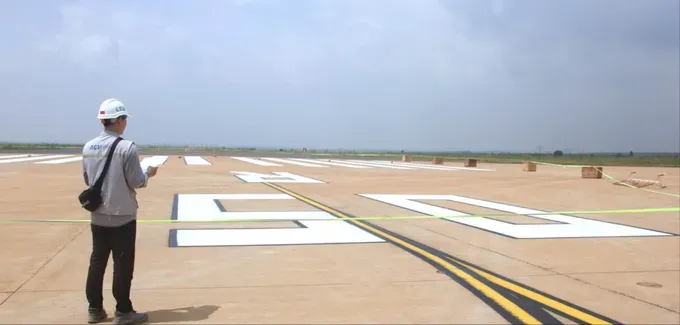
These applications are gradually transforming service processes across ACV's airport network toward end-to-end automation, reducing manual steps and improving convenience. Key passenger-facing solutions include biometric identification, check-in kiosks, self-service baggage drop, and automated boarding gates.
In preparation for the commercial operation of Long Thanh International Airport, ACV is proactively implementing digital transformation and advanced technologies, introducing a range of new passenger services. The digital journey is designed to begin before passengers arrive at the airport, with plans for information lookup, online check-in, and biometric registration through digital applications. At the airport access area, the technology plan includes electronic toll collection, smart parking using AI-powered cameras, and cashless payments.
The passenger terminal will be equipped with 96 check-in kiosks and 64 biometric-enabled self-service baggage drop units. In addition, 160 conventional check-in counters will be available, also supporting biometric registration.
The airport will also feature 12 automated security screening lanes with facial recognition, 28 CT scanners, and 28 automated tray return systems. The CT scanners' three-dimensional imaging capabilities will enable more detailed baggage screening, with the potential to reduce manual handling and waiting times when operations are properly organized.
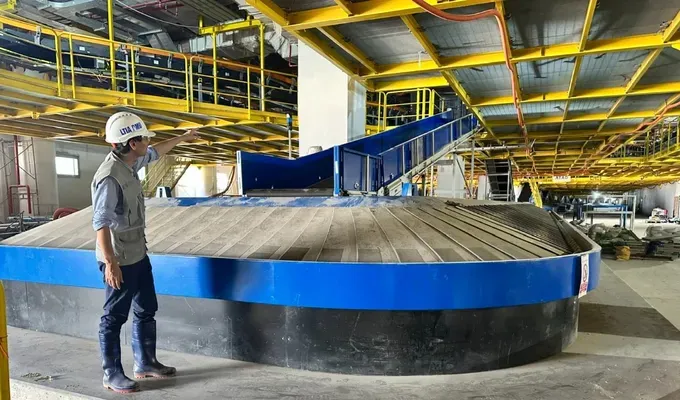
For checked baggage, the baggage handling system is designed to use Independent Carrier System (ICS) technology, connecting CT scanners to a system with a planned capacity of up to 9,157 bags per hour and 24 kilometers of conveyor belts.
ACV's technical team is integrating the system with the Airport Operational Database (AODB) and airlines' baggage messaging systems to facilitate coordinated baggage handling by flight.
Meanwhile, Long Thanh Airport's security surveillance network will comprise 4,133 cameras, with the capacity to expand to 9,000. The system will incorporate AI-powered functions as part of efforts to develop an integrated, green, and smart airport that meets five-star standards.
On October 14, ACV held a conference on digital transformation in Phu Tho Province, chaired by Nguyen Cao Cuong, chairman of the Board of Directors, and Nguyen Duc Hung, acting general director. Participants included representatives of the Civil Aviation Authority of Vietnam, aviation authorities from the Northern, Central, and Southern regions, airlines, fuel suppliers, ground service providers, and technology partners.
At the conference, delegates discussed strategic directions, shared experience, and proposed solutions to accelerate digital transformation in airport operations.




)