Among many important guidelines, mechanisms, and policies recently issued by the Party and the State to promote the development of the health sector, Resolution No. 72-NQ/TW issued by the Politburo is a breakthrough orientation document, creating a foundation for caring for, protecting, and improving the people's health, as stated by Minister of health Dao Hong Lan.
Resolution 72-NQ/TW approaches the issue based on the premise that people’s health is the most valuable asset and the focal point for service, task implementation, and solutions in the health sector. Simultaneously, the Resolution clearly demonstrates the spirit of removing “bottlenecks” in the health sector that have not been fundamentally resolved for a long time.
Resolution 72-NQ/TW addresses a critical transformation in health work, shifting the primary focus from medical treatment to comprehensive healthcare. This enhances the importance of disease prevention and caring for health early, remotely, and throughout the entire life cycle . This represents a massive shift in the sector’s orientation.
To remove bottlenecks, the Ministry of Health proposed Government Resolution 282/NQ-CP, an action program featuring specific breakthrough solutions and clear timelines in order to execute Resolution 72-NQ/TW.
After just three months, decisive Government direction and close coordination have driven strong implementation. Notably, localities have already made clear moves to formulate resolutions and practical schemes suitable to their specific conditions, effectively concretizing the Resolution’s spirit into local action.
One of the identified bottlenecks is institutions. Practical experience shows that institutional inadequacies have created many knots in the organization and implementation of the health sector’s tasks. Future developments, therefore, focus on resolving obstacles by perfecting institutions and resource mobilization mechanisms.
Tight coordination between the State and relevant entities is essential, effectively combining public-private resources and promoting the people’s role to establish shared responsibility. Consequently, the Ministry of Health will continue reviewing regulations to remove bottlenecks and implement Resolution No. 72-NQ/TW. It has registered a five-year law-building program where enhancing institutional quality is a key task to fill gaps in healthcare protection.
Beyond perfection, policies must be feasible and efficient. Policy formulation and issuance requires strict enforcement mechanisms and transparency. Mobilizing the involvement of all levels and sectors remains the basis for synchronously deploying tasks, ensuring policies enter life substantially and effectively.
Resolution No. 72-NQ/TW has proposed breakthrough solutions regarding resource mobilization, including both public and private resources, while emphasizing the role, responsibility, and participation of the people in the process of organizing and implementing healthcare solutions.
To effectively leverage health sector resources, The Ministry of Health prioritizes the ten-year National Target Program alongside mobilizing health insurance, the private sector, and public self-care. Innovating mechanisms to gather these aggregate resources requires strengthening coordination across all levels and sectors.
Simultaneously, it must institutionalize this approach through clear, transparent policies. This robust, consistent strategy creates a vital foundation for effective implementation in practice, ensuring high efficiency while meeting universal health insurance goals.
Recently, besides actively submitting proposals to the Government, the Ministry of Health has advised on many very important documents during the 14th session of the National Assembly to concretize these contents:
- Developing a National Assembly Resolution on specific, breakthrough solutions in the field of caring for and protecting people's health.
- Submitting to the National Assembly for approval the Law on Disease Prevention and the Law on Population, the first of which contains mechanisms and policies to institutionalize contents of great public interest in Resolution 72-NQ/TW, such as healthcare based on the life cycle with a focus on disease prevention as the initial solution in healthcare work with specific policies. This is an important basis for the Ministry of Health to coordinate with ministries, departments, and sectors to build specific implementation plans in the near future.
- Advising on submitting the National Target Program on health development and population policy for the next ten years, ensuring resources for implementing guidelines; so that when institutions and policies are issued, there are resources for implementation.
This is considered a great effort, and the people are also eagerly awaiting specific solutions to be deployed in the coming time.
Simultaneously, with three approaches – from changing thinking and awareness, applying specific resolution and policy solutions, to ensuring resource allocation – implementation has been deployed synchronously from the Central to local levels.
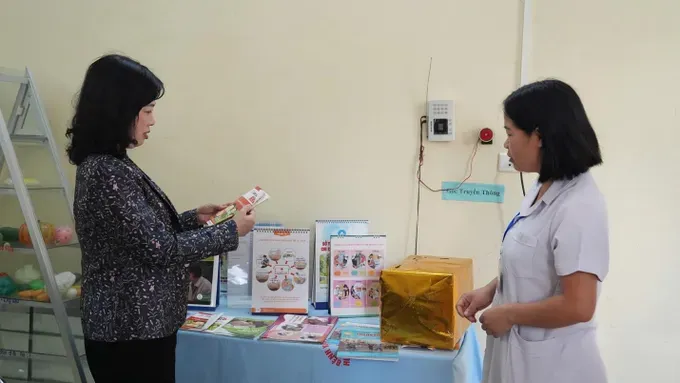
Another bottleneck resolved is to tackle human resources insufficiency to ensure effective implementation of health mechanisms and policies.
It’s necessary to prioritize training the medical workforce, treating it as a specific profession. Simultaneously, Resolution 72-NQ/TW provides guidelines to care for human resources, particularly in grassroots and preventive medicine, forming the basis for future legal documents.
Another crucial task is creating mechanisms for grassroots system development. To achieve early and remote care, the Ministry has recently completed deployment tasks. This process has generated significant support, effectively changing forms and strengthening the essential functions of grassroots health care. This success ensures the system meets people's needs right at the vital foundation.
Localities such as Hanoi, Quang Ninh Province, HCMC are also supportive via the implementation of many solutions. Along with that, the task of improving the quality of health human resource training is also set out.
Resolution 72-NQ/TW provides orientations, and the Ministry of Health has coordinated with the Ministry of Education and Training in the process of perfecting the legal system on training, including contents related to the development orientation of human resource training for the health sector.
Furthermore, regarding policies for medical officials and staff as well as those on using human resources at grassroots levels, in the coming time, many solutions will be built and proposed to attract the medical workforce in general; focusing on priority areas such as preventive medicine and medical staff working in medical centers at communes and wards, the places directly caring for people right at the grassroots.
A subsequent focused solution is to strengthen international cooperation, apply science and technology, and digital transformation in the health sector. Currently, the Health Ministry is decisively developing and applying electronic medical records, building databases for the health sector, exploiting AI in scientific research, and carrying out digital transformation in the health sector to be more convenient, suitable, and to enhance public healthcare.
In that spirit, using domestic resources while absorbing global scientific and technical progress will create stronger development steps in implementing specific solutions to support the care and protection of people’s health.