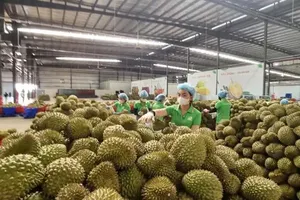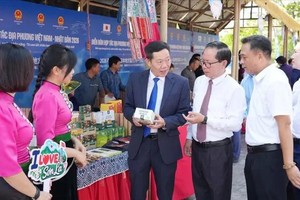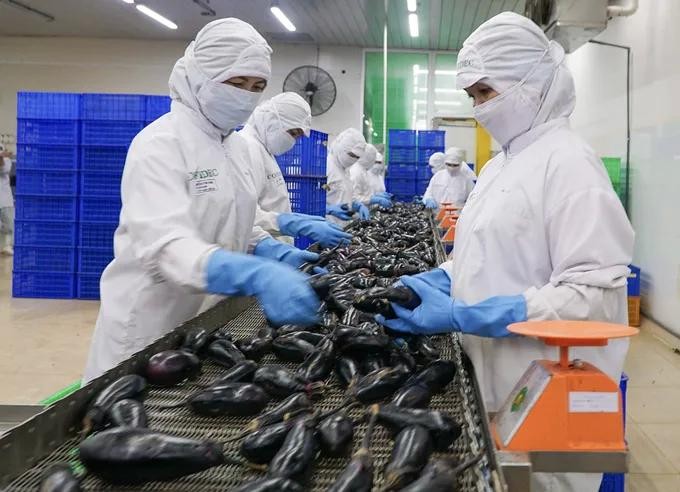
Rising costs for raw materials, energy, and logistics, driven by tensions in the Middle East, have put pressure on Vietnam’s food and beverage sector. Yet the industry still recorded growth of more than 13 percent in the first quarter of 2026, underscoring the resilience and adaptability of businesses.
Cost pressures drive internal momentum
According to Chairwoman Ly Kim Chi of the Ho Chi Minh City Food and Foodstuff Association, input costs for many materials surged by more than 50 percent in the early months of 2026. Despite this, the sector’s production index rose by over 13.2 percent. This reflects how businesses have adapted by stockpiling raw materials for three to six months, tightening cost controls, and, in many cases, maintaining stable prices to preserve market share.
Chairman Phan Minh Thong of Phuc Sinh Group said resilience stems from deeper integration into the value chain. The company has restructured its production, expanded deep processing, and increased exports to more than 120 markets, generating higher added value.
In practice, the same agricultural product can yield vastly different returns depending on processing and branding. For instance, raw rice may sell for around $500 per ton, but the value rises significantly with branding and processing. Similarly, raw turmeric fetches only a few dollars per kilogram, while curcumin extract can reach hundreds of dollars per kilogram.
According to Ho Thi Quyen, Deputy Director of the Ho Chi Minh City Investment and Trade Promotion Center (ITPC), these examples highlight the substantial potential for Vietnam’s agricultural products to move up the value chain through deeper processing and brand development.
With the global food market continuing to expand, particularly the healthy food segment, projected to exceed US$860 billion in 2026, and the Halal market, estimated at around $5 trillion, Vietnamese businesses have significant opportunities to expand market share, increase added value, and reduce exposure to global volatility.
Associate Professor Hoang Kim Anh from the Vietnam Association of Food Science and Technology highlighted that amidst the volatility of input costs, improving product value serves not merely as a short-term remedy but also as a sustainable strategy for the Vietnamese food sector to break free from the "low-cost trap" and progressively ascend to higher value-added tiers within the global value chain.
Vietnamese firms urged to meet global standards to unlock export potential
Global demand for agricultural and food imports is surging, yet Vietnamese enterprises are finding themselves sidelined in the race for international market share.
According to the Ministry of Industry and Trade, Vietnamese goods currently represent a mere 2 percent of total imports entering Europe. The disparity is even more striking in the multi-trillion-dollar Halal segment, where a staggering 99.8 percent of domestic firms remain ineligible for export due to a lack of certification. Currently, only about 0.2 percent of Vietnamese businesses meet the rigorous standards required to tap into the Halal consumer base. Experts attribute this narrow reach to a combination of persistent supply chain bottlenecks and the increasingly stringent quality requirements imposed by foreign markets, leaving domestic firms at a critical crossroads in their global expansion efforts.
Chairman Hoang Van Viet of the Global Intellectual Entrepreneurs Community said that to tap into these markets, businesses must go beyond product quality and comply with international standards across the entire value chain. This includes adopting greener production practices, ensuring supply chain transparency, and meeting global compliance benchmarks.
Rose Chitanuwat, ASEAN Project Portfolio Director at Informa Markets, emphasized the importance of product diversification tailored to specific markets. Thailand’s experience shows that a single processed chicken product can be segmented by region, such as drumsticks for Japan, breast meat for Europe, and wings for China, maximizing value instead of selling a uniform product.
Alongside business efforts, a coordinated support ecosystem is needed from authorities and local governments. This includes appropriate financial mechanisms for small and medium-sized enterprises to invest in deep processing technologies, develop product research centers, and strengthen trade promotion. Enhancing collaboration among the state, scientists, and businesses will also help shorten the path from research to commercialization.