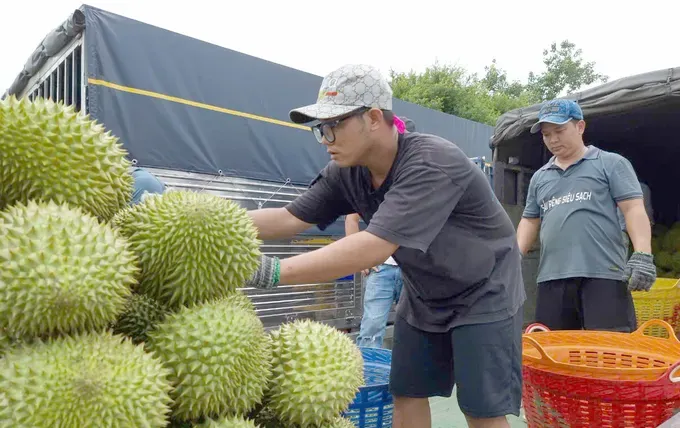
In recent days, market activity has intensified across key durian-growing hubs, including Dong Thap and Vinh Long. Traders are ramping up purchases following a period of stagnation, signaling a renewed momentum in the region's agricultural trade.
According to market reports, premium-grade Ri6 durians are currently being purchased by traders at VND45,000 to VND60,000 (US$1.77 –US$2.36) per kilogram, marking an increase of roughly VND10,000 to VND15,000 from the previous week. Meanwhile, Monthong (Dona) varieties are fluctuating between VND70,000 and VND85,000 (US$2.75 – US$3.34) per kilogram, depending on quality and location.
In Vinh Thanh Commune, Vinh Long Province, Nguyen Van Mach, a long-time durian farmer, noted that while the recent price recovery has alleviated some financial pressure on local growers, current market rates remain relatively low compared to initial capital investments.
“The price rebound is a welcoming sign for farmers, but the actual profit margins are still quite slim,” Mach said, adding that growers are hoping for greater market stability to confidently invest in their orchards.
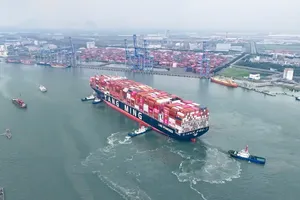
Chairman of the Dong Thap Durian Association, Vo Tan Loi, attributed the price recovery primarily to positive signals from export markets, driven largely by surging procurement for shipments to China.
Furthermore, many enterprises have proactively formed structured alliances with local raw material areas, tightening production protocols, ensuring traceability, and strengthening quality control to meet stringent market demands. According to Mr. Loi, while the price uptick remains modest, it offers a welcome relief following a protracted period of steep declines. However, he cautioned that farmers must continue to prioritize standardized cultivation practices, ensuring both fruit quality and planting area codes to secure long-term export stability.