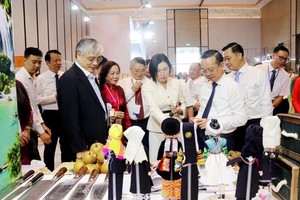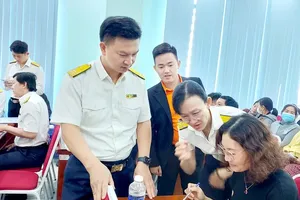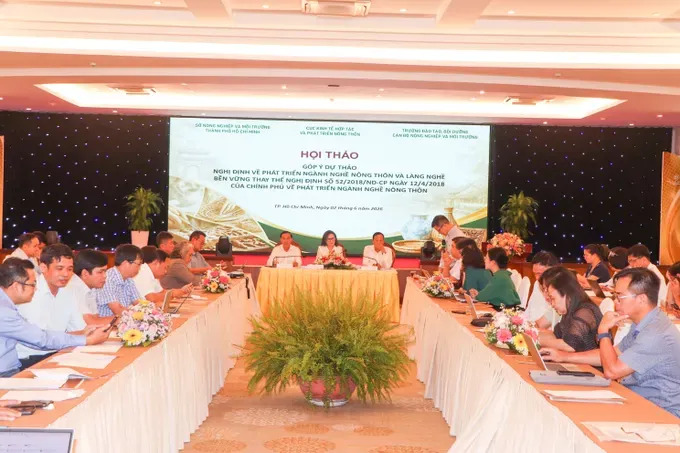
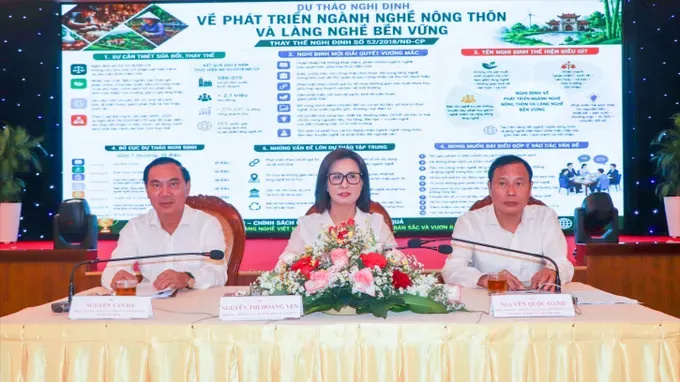
On June 2, in Vung Tau Ward, Ho Chi Minh City, the Department of Cooperatives and Rural Development under the Ministry of Agriculture and Environment and the School for Training and Fostering Agricultural and Environmental Officials organized a seminar to collect feedback on the draft decree replacing Decree No. 52/2018/ND-CP on the development of rural trades and occupations.
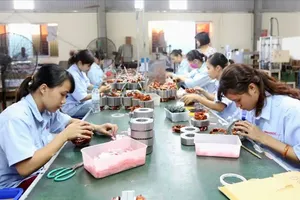
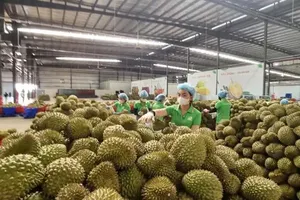
The draft classifies rural occupations into five groups, including agricultural, forestry, and fishery processing; handicrafts; household products; ornamental creatures; salt production; and supporting services. The State encourages development along value chains, linking raw material zones, production, and consumption in order to enhance added value.
The draft also stipulates that traditional crafts must have existed for at least 30 years, possess distinct cultural characteristics, and be either currently maintained or have the potential for revival. A craft village must have at least 20 percent of households engaged in rural trades, or the value of craft-related production must account for at least 50 percent of the total production value of the community.
Lawyer Ho Minh Son, Vice Chairman of the Vietnam Association of Craft Villages, stated that it is necessary to ensure consistency between the draft decree and existing regulations on emulation, commendation, and the conferment of artisan titles. In addition, criteria for evaluating artisans should be tailored to the specific characteristics of each occupational group rather than applying a uniform set of standards.
Director of the Agricultural Trade Promotion Center, Nguyen Minh Tien, proposed adding mechanisms to support artisans in applying artificial intelligence (AI), e-commerce, and green transition solutions to meet international market requirements.
“If fossil energy continues to be used, craft village products will find it difficult to access demanding markets such as the EU due to carbon emission regulations,” he noted.
According to Head of the Ho Chi Minh City Sub-Department of Rural Development, Vu Ngoc Dang, the new decree should strengthen decentralization to local authorities in recognizing traditional crafts, craft villages, and artisans in order to ensure timeliness and create motivation for people to feel secure in production.
Ms. Nguyen Thi Hoang Yen, Deputy Director General of the Department of Cooperative Economy and Rural Development, stated that the drafting agency will continue to incorporate feedback in order to finalize the draft decree in a more feasible manner and in line with practical conditions.
“Rural industries can only develop sustainably when a synchronized ecosystem is established, in which the State plays a facilitating role, artisans preserve the essence of traditional crafts, and enterprises serve as a bridge to bring craft village products to international markets,” she emphasized.