In 2025, for the first time, coffee exports generated over US$8 billion in revenue, becoming a bright spot in Vietnam's agricultural export landscape.
A bountiful harvest
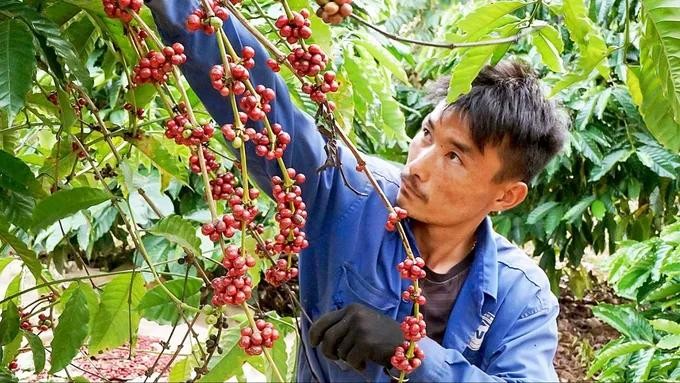
At the start of 2026, farmer Nguyen Van Khiem from Thong Nhat Village in Son Lang Commune, Gia Lai Province, described the 2025–2026 coffee harvest as a “double joy”. Managing nearly two hectares of coffee, his family has hired five workers for the busy harvest season. Despite a slight drop in prices which are now hovering around VND100,000 per kilogram, spirits in the area remain high. “This year, there are more workers, so costs are higher, but the yield is strong, and the cherries have ripened evenly,” Khiem said. “We’re paying the harvesters a bit more so everyone feels encouraged and can share in the joy of a prosperous season.”
Not only coffee growers but also seasonal harvesters are sharing in the optimism. Hua Van Viet, a laborer from Quang Ngai Province who has spent nearly a decade working on coffee farms in Son Lang Commune, Gia Lai, noted that this season has been particularly rewarding. “Harvesting wages are higher than in previous years, averaging between VND400,000 and VND500,000 per worker per day,” he said. “Everyone works hard and in good spirits, and with food and lodging provided by the plantation owners, we all feel well taken care of and content as the year draws to a close.”
Exports reach US$8.4 billion
According to the Ministry of Agriculture and Environment, by the end of 2025, Vietnam's coffee exports reached over 1.5 million tons, worth US$8.4 billion, an increase of 16.9 percent in volume and 60.7 percent in value compared to the same period in 2024. The main driving force comes from the export price of coffee maintaining a record high level. On average throughout the year, the export price reached over US$5,600 a ton, at times soaring to nearly US$5,850 a ton.
According to Deputy Minister of Agriculture and Environment Hoang Trung, 2025 is a historic milestone for Vietnam's coffee industry. Coffee exports to key markets such as the European Union (EU) and the United States continue to drive growth this year. Many emerging markets, such as Algeria and Mexico, have recorded significant growth, opening up further opportunities for Vietnamese coffee development.
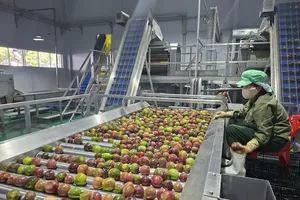
Meanwhile, Phan Minh Thong, Chairman of the Board of Directors of Phuc Sinh Joint Stock Company (one of Vietnam's leading coffee export companies, headquartered in Ho Chi Minh City), believes that in 2025, increasing the proportion of deeply processed coffee products contributed to raising export value and reducing dependence on raw coffee exports. For the first time, the export value of processed coffee has reached US$1 billion. The shift from exporting quantity to exporting value has helped increase coffee growers' profits by 2-3 times compared to previous years, creating a positive foundation for the Vietnamese coffee industry to enter a new phase of development.
Vietnam currently has approximately 710,000 hectares of coffee plantations, of which 650,000 hectares are in the harvesting stage, mainly concentrated in the Central Highlands provinces such as Dak Lak, Lam Dong, and Gia Lai. In recent years, Vietnam's coffee cultivation area has expanded rapidly, especially during the period 2007-2012, at an average rate of 3.5 percent per year. Simultaneously, yields have increased sharply, from about 16 quintals a hectare in 2005 to 30 quintals a hectare in 2025, making Vietnam the world's largest exporter of Robusta coffee.
According to Nguyen Nam Hai, Chairman of the Vietnam Coffee and Cocoa Association, the export value of coffee reaching over US$8 billion in 2025 stems from the price surge in the global market. The decline in supply due to climate change and the El Niño phenomenon has pushed coffee prices to unprecedented levels. The second, and more important, reason is the improved quality of Vietnamese coffee thanks to businesses investing heavily in advanced processing technology and traceability.
Along with durian, from 2024 to the present, many farmers in Dak Lak and Gia Lai provinces have struck it rich with coffee, becoming millionaires. In 2025, in the coffee-growing regions of these provinces, farmers purchased tens of thousands of new cars for daily transportation and living expenses.






)