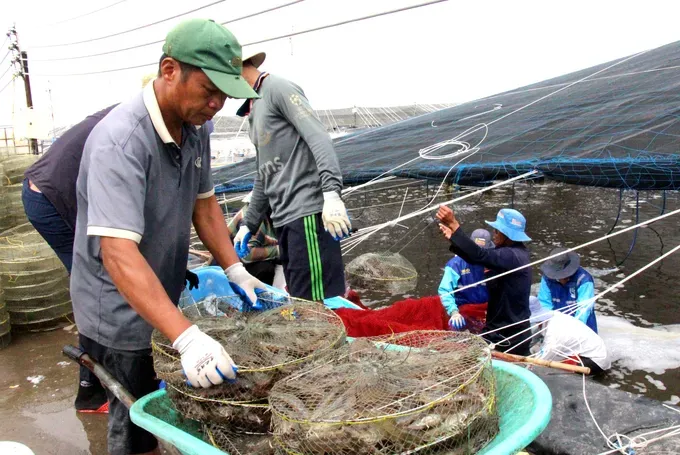
In the final months of 2025 and early 2026, commercial shrimp prices in HCMC’s key coastal aquaculture zones recorded a significant escalation. Specifically, the price of white-leg shrimp has increased by VND80,000 – 100,000 (US$3 – 3.8) per kilogram.
Currently, hi-tech farmed white-leg shrimp (sized 20–26 count per kg) are being procured by traders at an average of VND250,000 – 260,000/kg ($9.8); the 30 count/kg variety hovers above VND230,000/kg ($8.8); while smaller shrimp (approximately 100 count/kg) also exceed VND100,000/kg ($3.8). These are considered the steepest price points observed in recent years.
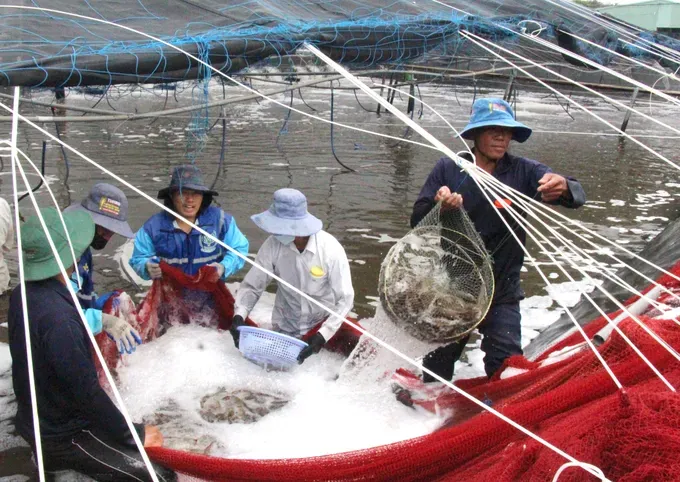
Cho Ben Cooperative in Long Dien Commune, possessing 11 shrimp ponds with an anticipated yield of approximately 34 tonnes, is facing sluggish consumption. Bui The Vuong, the cooperative manager, noted that while previous harvests required merely a week for traders to purchase the entire stock, it has now been over a month, and the inventory remains uncleared.
According to Mr. Vuong, although prices surged just as the cooperative entered the harvest season, weak demand necessitated a prolonged farming period, causing costs for feed, electricity, and labor to skyrocket.
“Typically, a three-month cycle incurs costs of about VND110,000/kg ($4.2). Now, extending beyond four months, costs have risen to VND140,000 – 150,000/kg ($5.6), meaning profit margins have not expanded as anticipated,” Mr. Vuong confided.
According to shrimp farmers, the price hike is primarily attributed to a supply deficit following bouts of extreme weather and complex disease outbreaks, forcing many households to “leave ponds idle” or reduce stocking density. Furthermore, against the backdrop of a challenging economy, consumers have been compelled to tighten their purse strings.
Observations at the city’s coastal traditional markets indicate a distinct drop in purchasing power. Many vendors report that sales volume has plummeted to merely 20–30 percent of previous levels.
Ho Thi Be Kieu, a vendor at Phuoc Nguyen Market in Ba Ria Ward, stated: “Previously, I sold about 50kg daily; now, it is barely 10kg. Customers inquire about the price, hesitate, and then opt for fish or squid instead.”
The phenomenon of “high prices but slow consumption” is creating a discrepancy within the shrimp supply chain. Farmers face inventory backlogs and cost pressures; traders struggle with capital turnover; and retailers encounter risks of diminished profits. If purchasing power does not improve promptly, this supply-demand imbalance could adversely affect reproduction planning.
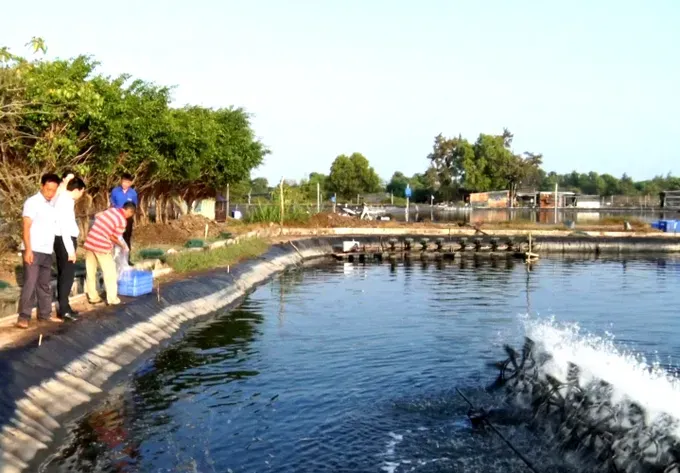
Assessing the current shrimp market, Vice Chairman Nguyen Van Loc of the HCMC Fisheries Association posits that the shrimp industry is enduring a “double curse” of escalating production costs and weak consumption. Immediate measures must focus on bolstering supply-demand connection programs, transporting shrimp from farming zones directly to modern distribution systems to eliminate intermediaries and lower costs.
Additionally, diversifying products, developing deep-processed items, and utilizing smaller packaging to match consumer spending power are essential solutions to stimulate the domestic market. In the long term, the aquaculture sector must continue applying science and technology to farming, disease control, and input cost reduction to stabilize output and pricing.
In such a volatile market, establishing sustainable value chains among farmers, processing enterprises, and distribution systems is viewed as a fundamental solution. This contributes to creating a long-term stability for the shrimp industry, ensuring harmonious benefits for producers, traders, and consumers.