As the city’s international network continues to expand, economic diplomacy is shifting from investment promotion toward mobilizing capital, technology and knowledge and securing market access to drive the city’s growth.
Proactively seeking resources
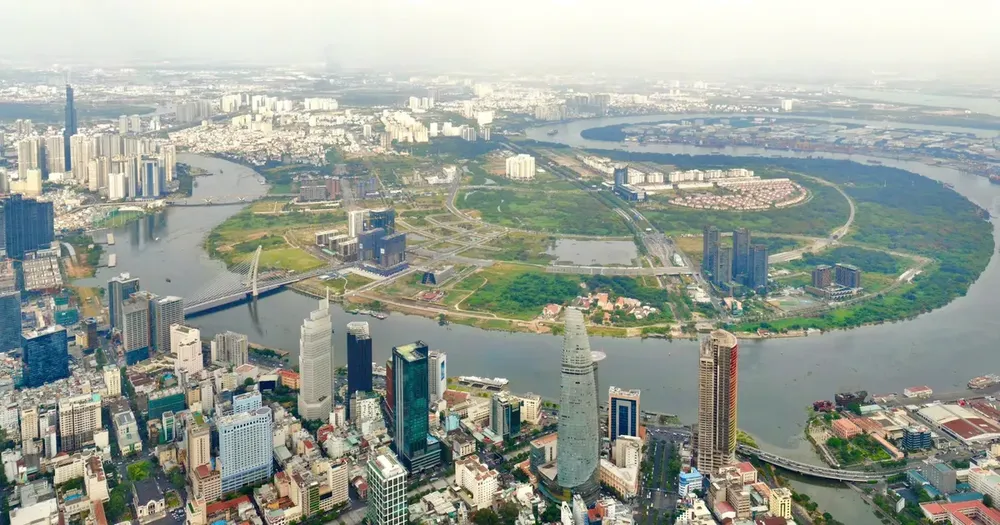
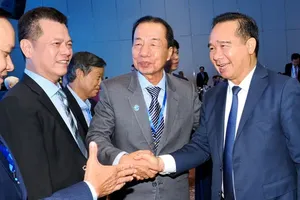
Recently, a delegation led by Vice Chairman of the Ho Chi Minh City People’s Committee Nguyen Cong Vinh visited the United States and invited nearly 20 technology companies, including Intel, NVIDIA, Qualcomm, Marvell Technology, and Axon Enterprise, to help build an ecosystem for the Strategic Technology Development Center.
The center aims to attract capital and strategic resources in artificial intelligence (AI), semiconductors, data centers, research and development (R&D), and high-quality human resources, as well as linkages between technology corporations and universities and research institutions. Rather than simply presenting what the city has to offer and waiting for investors to choose, Ho Chi Minh City is identifying missing links in the ecosystem and seeking the right partners to fill them.
To date, Ho Chi Minh City has established friendship and cooperation relations with 88 foreign localities and nearly 20 international partner organizations. As the network continues to expand and new ties are forged, the challenge is to turn contacts, agreements, and partnerships into resources for development.
According to Standing Vice Chairman of the Ho Chi Minh City People’s Committee Nguyen Loc Ha, external relations and international integration are increasingly becoming direct drivers of development. During recent engagements with partners from Catalonia, Australia, and elsewhere, the city has called for dedicated focal points to monitor and provide support, ensuring that proposals can be translated into concrete outcomes at an early stage.
External relations are therefore shifting from simply expanding ties to delivering tangible economic results. For example, Marvell Technology continues to discuss expanding its chip design and R&D operations, training in integrated-circuit engineering, and the possibility of joining the Strategic Technology Development Center. Qualcomm, meanwhile, has expressed interest in the Vietnam International Financial Center in Ho Chi Minh City, opening up opportunities for cooperation in digital infrastructure, fintech, and innovation.
Investment flows also partly reflect the city’s ability to mobilize resources. In the first seven months of 2026, Ho Chi Minh City attracted more than US$9.8 billion in foreign investment, a sharp increase year on year. However, the value of economic diplomacy does not lie merely in the amount of capital attracted but in its ability to turn the city’s international network into a long-term resource for growth.
Turning ties into resources
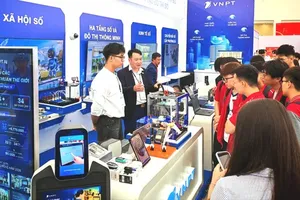
According to Le Truong Duy, Director of the Ho Chi Minh City Center for the Fourth Industrial Revolution (HCMC C4IR), once the city has built a sufficiently extensive network of international relations, the challenge is to turn those ties into economic resources and advantages. This approach will be pursued further at the 2026 Autumn Economic Forum, scheduled for October 2026, which will bring together hundreds of international corporations, experts, and investment funds with Ho Chi Minh City’s specific development strategies.
Sharing this view, Le Van Danh, Deputy Director of the Ho Chi Minh City Department of Industry and Trade, said that the 17 free trade agreements signed by Vietnam and currently in effect have expanded market opportunities for businesses. They also enable international buyers to meet domestic suppliers directly, narrowing the gap between international integration and access to markets and orders.
However, economist Dr. Can Van Luc noted that proactively seeking external resources must go hand in hand with strengthening the economy’s capacity to absorb them. The greater the external resources, the greater the demands on domestic capacity. If effectively absorbed, R&D centers can bring in technology and skilled human resources; major corporations can create opportunities for domestic businesses to join supply chains; and new markets can be converted into orders and production capacity. This is the process through which external resources are transformed into the economy’s “soft internal strength.”


)