Businesses say delays in obtaining certificates of origin are increasing costs and affecting delivery schedules, payments and access to tariff preferences, while authorities report a sharp rise in applications submitted in Ho Chi Minh City.
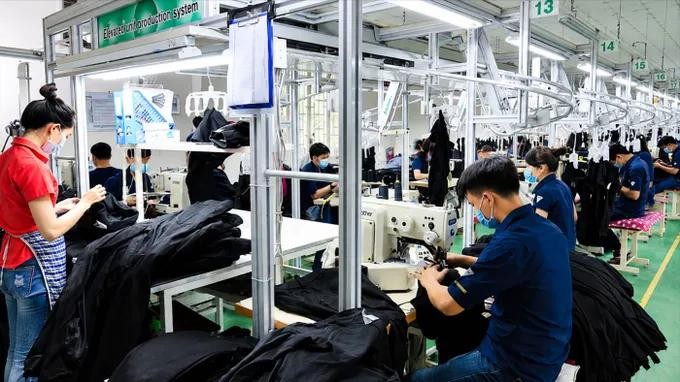
On August 28, the Ho Chi Minh City Department of Industry and Trade held a conference on dialogue with import-export businesses and resolving difficulties and obstacles in the 2026 process for certifying the origin of goods. Numerous businesses reported problems arising during the declaration, submission and processing of certificates of origin (C/O), while authorities said the volume of applications received in Ho Chi Minh City had increased sharply.
Exporters struggle as C/O delays drive up costs
For businesses with large export volumes, a C/O is not merely an administrative procedure but is directly linked to delivery schedules, payments and the ability to receive tariff preferences in importing markets. A delay in just one procedure can trigger a chain of additional costs.
A representative of Worldon Vietnam Company said the company submits nearly 1,000 C/O applications of various forms each month. Each application consists of dozens of documents, while many documents now have to be declared and signed separately rather than processed in batches as before. The increased workload has significantly lengthened the time needed to complete applications, leaving the company's import-export department short of staff to handle the workload. The company proposed that the system allow batch declarations and digital signatures for eligible documents to shorten processing times.
Regarding prolonged waits for C/Os, a representative of Mascopex JSC said some applications now take 10 days to process, compared with three days previously. Delayed C/Os prevent export documentation from being completed, affecting delivery schedules, payments and commitments to customers. Many logistics businesses also expressed concern that waiting for C/Os leads to warehousing and storage costs, transportation plan adjustments and the risk of late deliveries. For contracts with strict deadlines and documentation requirements, businesses may face penalties or have to renegotiate with partners.
In addition to processing times, businesses face difficulties because Vietnam and some importing markets apply different versions of the Harmonized Commodity Description and Coding System (HS), which can result in different HS codes being assigned to the same product.
Businesses called for specific guidance on how to handle such cases, particularly when differences in HS codes affect the determination of origin criteria.
Businesses encouraged to file applications locally
Tran Ngoc Binh, head of the Ho Chi Minh City Regional Import-Export Management Division under the Ministry of Industry and Trade's Import-Export Department, said one of the common errors businesses make when submitting C/O applications involves digital signatures. Some applications contain all required information but documents have not been digitally signed, signatures are invalid, or the system cannot authenticate them, requiring businesses to supplement and resubmit the applications. Businesses should therefore carefully check their applications and digital signatures before submission to avoid prolonging processing times.
Nguyen Thi Trong Nghia, deputy head of the Ho Chi Minh City Regional Import-Export Management Division under the Import-Export Department, also advised businesses to update their procedures and comply with the rules of origin under each free trade agreement to which Vietnam is a party. Complete and accurate applications from the outset will reduce correction time and limit risks when goods reach importing markets.
Beyond documentation requirements, Deputy Director Le Van Danh of the Ho Chi Minh City Department of Industry and Trade said the major pressure currently comes from a sudden surge in the number of applications. In just over one month since taking over C/O issuance, the city has received about 17,000 applications, of which about 12,000 have been processed and about 5,000 remain under processing. The Department of Industry and Trade has increased staffing and plans to add more personnel, but the large volume of applications and pressure on the electronic system mean processing times cannot immediately meet businesses' expectations.
Notably, more than 50 percent of applications received come from businesses outside Ho Chi Minh City. Under the interconnected mechanism, businesses can choose an authorized agency to submit their applications. Once an application has been transferred to Ho Chi Minh City, the receiving agency cannot reject it simply because the business is headquartered in another locality. The concentration of applications from multiple provinces and cities in Ho Chi Minh City has further increased processing pressure.
According to Deputy Director Le Van Danh, the Ho Chi Minh City Department of Industry and Trade is focusing on processing about 5,000 outstanding applications, while the number of new applications is expected to continue rising. The department encourages businesses to submit applications in the localities where they operate to distribute the workload more appropriately and reduce pressure on Ho Chi Minh City.
Regarding a proposal to introduce 'green and yellow channels' and a 'certify first, inspect later' mechanism for Form B C/Os, authorities said this is an approach that could be studied. However, current regulations still require agencies which are responsible for issuing C/O to inspect applications, meaning localities cannot independently apply a post-inspection mechanism. The proposal will be compiled and reported to the Ministry of Industry and Trade and competent authorities for consideration.
In the long term, addressing the overload at its root will require not only better distribution of applications among localities but also continued improvements to the electronic system, fewer declaration steps and research into applying risk-based management to compliant businesses.
The Shoes and Leather Association in Ho Chi Minh City said C/Os are part of payment documentation. Delays in C/O issuance affect not only deliveries but also businesses' cash flow. Based on this situation, the association proposed applying risk-based management to Form B C/Os, similar to customs' green and yellow channel mechanism. Businesses with good compliance records and low-risk applications could be considered for certification first and inspection later, while assuming legal responsibility for the accuracy of their applications.