Ho Chi Minh City police have dismantled a large-scale operation involved in raising and distributing pigs containing the banned substance Salbutamol.
According to investigators, more than 10,000 tons of pigs containing the banned substance had been released onto the market since January 2026, while more than 1,000 kg of Salbutamol was seized.
The case highlights the need to review the entire management chain, including the sourcing of raw materials, circulation, pig farming, transportation, quarantine, and slaughter, and to determine responsibility at every link in the chain.
A familiar banned substance
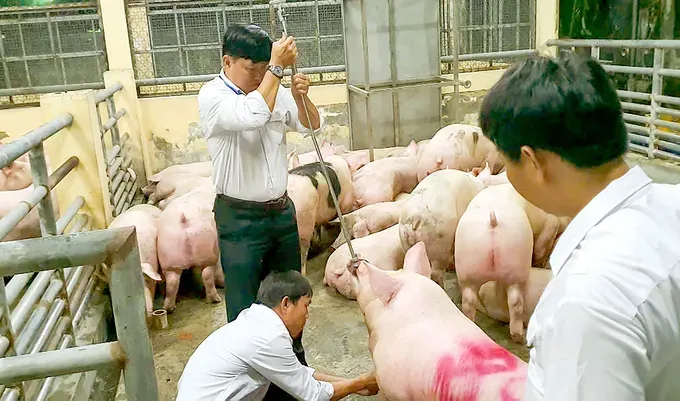
In July 2026, the Division of Livestock Production and Animal Health under the Ho Chi Minh City Department of Agriculture and Environment conducted surprise inspections of vehicles transporting animals along several major roads and at gateways into and out of the city.
The inspections found three consignments of pigs whose urine samples tested positive for Salbutamol, a substance in the Beta-Agonist group that is banned for use in livestock farming. All 280 pigs, weighing a total of 35,350 kg, were destroyed, and the case files were transferred to police authorities.
As the investigation was expanded, Ho Chi Minh City police uncovered a particularly large-scale operation involved in raising and distributing pigs containing Salbutamol and initiated legal proceedings against nine suspects on four criminal charges.
From January through the end of July 2026, the suspects were identified as having placed more than 10,000 tons of pigs containing the banned substance on the market in Ho Chi Minh City and several southern provinces and cities. Police also seized more than 1,000 kg of Salbutamol packed in bags bearing foreign-language labels.
Salbutamol is banned for use in livestock farming. In the medical field, it is a strictly controlled drug subject to tight regulation governing its import, distribution, and use.
According to Associate Professor and Doctor Le Quoc Hung, former head of the Poison Control Unit at Cho Ray Hospital in Ho Chi Minh City, Salbutamol is commonly administered in medicine through inhalers or nebulizers to treat patients with asthma and chronic obstructive pulmonary disease, helping relieve wheezing and breathing difficulties.
Explaining why Salbutamol is often misused in livestock farming, Doctor Le Quoc Hung said the drug alters metabolism, increasing protein accumulation in muscles while reducing fat accumulation, thereby increasing the lean-meat ratio in animals. Taking advantage of this property, some individuals have illegally used Salbutamol in livestock farming to increase profits.
The danger is that Salbutamol residues in pork can affect consumers’ health. In cases of acute poisoning, Salbutamol can cause hand tremors, restlessness, headaches, palpitations, rapid heartbeat, and nausea.
The drug can also lower blood potassium levels, causing muscle weakness and increasing the risk of cardiac arrhythmias. Severe cases may result in chest pain, seizures, and even life-threatening complications. People with heart disease or cardiac arrhythmias face a higher risk of cardiovascular complications when exposed to Salbutamol.
The most worrying issue is that consumers may be exposed to the drug without even knowing it, including children, older people, and those with underlying health conditions. The illicit profits go to the offenders, while the health risks are borne by the community, Doctor Le Quoc Hung.
In recent years, the Food Safety Department under the Ministry of Health has repeatedly warned against the misuse of Salbutamol in livestock farming and included the issue in food safety inspections, audits, and post-inspection monitoring. The Drug Administration of Vietnam under the Ministry of Health has also repeatedly called for tighter management of the import, distribution, and use of Salbutamol to reduce the risk of diversion and misuse.
Deputy Director of the Drug Administration of Vietnam under the Ministry of Health, Ta Minh Hung, said that when Salbutamol is mixed into animal feed at high concentrations, some of the active substance may not be fully eliminated and can remain in meat and offal. Consumers who eat food containing Salbutamol residues may therefore be exposed to the active substance outside its intended therapeutic use. Notably, temperatures reached during boiling, frying, or grilling do not significantly break down Salbutamol.
There is currently insufficient robust epidemiological evidence to attribute cancer, sex-related changes, or reproductive damage to Salbutamol residues in meat. However, adding the active substance to animal feed at high doses is misuse and poses potential risks to consumer health, Mr. Ta Minh Hung said.
Ho Chi Minh City currently has more than 21 million poultry, over 1.3 million pigs, and nearly 100,000 buffaloes and cattle. The city has 80 operating animal slaughterhouses. On average, these facilities slaughter about 9,000 pigs a day, equivalent to around 720 tons.
Meanwhile, the city’s residents consume about 14,000 pigs, or 1,120 tons, per day. Thus, the supply from slaughtering facilities within the city meets only about 64 percent of demand, with the remainder dependent on livestock and animal products brought in from other localities.
Challenges in preventing banned substances in livestock farming
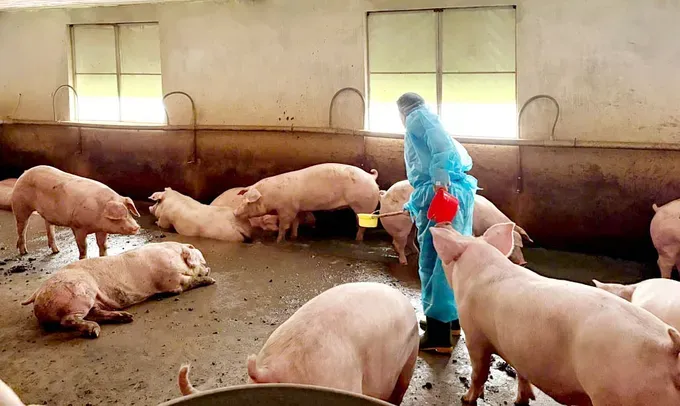
Dr. Nguyen Van Bac, former deputy head of the Southern Office under the National Agricultural Extension Center of the Ministry of Agriculture and Environment, said the root cause of the continued clandestine use of the banned substance Salbutamol in livestock farming is illicit profit, while existing penalties have not been sufficiently deterrent. The paradox is that banned substances can help livestock grow faster at lower costs, generating substantial profits for farmers, while consumers often favor lower-priced food.
Although imported Salbutamol ingredients are strictly controlled by the authorities, the challenge remains the risk of smuggled supplies or goods entering through informal channels and subsequently making their way into livestock farming, Dr. Nguyen Van Bac said.
He expressed concern that the use of banned substances could seriously undermine the sustainable development of the livestock sector and threaten consumer health and safety. Large livestock enterprises are generally well aware of the consequences of such practices because they directly affect their reputation, production, and business operations. Meanwhile, some small-scale livestock farmers remain insufficiently aware of the risks.
Based on this situation, Dr. Nguyen Van Bac proposed strengthening direct and regular communication with livestock farmers and developing long-term programs linked to commitments not to use banned substances. At the same time, penalties should be tightened and violations dealt with strictly enough to serve as an effective deterrent. Regulatory authorities should also increase surprise inspections and regularly monitor meat products circulating on the market to promptly detect violations, dismantle networks involved in raising and distributing pork containing banned substances, and protect public health and consumer rights.
Meanwhile, Associate Professor and Doctor Le Quoc Hung said efforts to prevent the use of banned substances in livestock farming must begin with tighter control over raw materials: who Salbutamol is sold to, what it is intended to be used for, and whether the quantities are consistent with actual demand for pharmaceutical production. When violations are detected, authorities should promptly trace the source, recall related products, and provide timely information so that people can take preventive measures.
Regulatory policies should focus on preventing medicines from being misused while ensuring that patients still have access to the drugs they need for treatment. Strict penalties are necessary, but they must be accompanied by the ability to detect violations early and clear accountability at every stage of the supply chain. Food safety cannot rely solely on consumers’ vigilance, Associate Professor and Doctor Le Quoc Hung said.
Tighter monitoring
According to Tran Phu Cuong, head of the Division of Livestock Production and Animal Health under the Ho Chi Minh City Department of Agriculture and Environment, authorities are stepping up controls on animal products entering the city, focusing on monitoring Beta-Agonist banned substances, sedatives, microbiological indicators, and antibiotic residues in meat. They are also monitoring infectious diseases such as avian influenza and African swine fever at animal collection facilities, transit points, and slaughterhouses.
When rapid on-site tests return positive results, authorities continue to collect samples for quantitative testing at laboratories as a basis for handling violations.
Following the detection of 280 pigs containing Salbutamol in Ho Chi Minh City in July 2026, central and city authorities have called for stronger inspection and monitoring of animal diseases, veterinary hygiene, food safety, and banned substances in livestock farming, while tightening controls over the transportation, trading, collection, and slaughter of animals and animal products.
The authorities are working to prevent pork contaminated with banned substances or of poor quality from reaching people’s meals. When consumers choose food in general and pork in particular, they also place their trust in the product’s origin and quality.

)