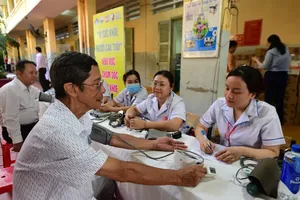
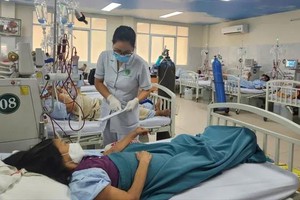
"Doctors at Ho Chi Minh City Oncology Hospital examine a patient.")
On October 2, the Ho Chi Minh City Department of Health said the city would allocate more than VND5 trillion for five key oncology investment projects amid rising demand for cancer screening and treatment, aiming to address overcrowding, radiotherapy capacity, and specialized diagnostics while developing a leading cancer hospital capable of serving as a major referral center for the city and southern region.
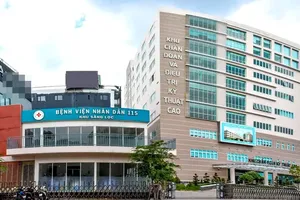
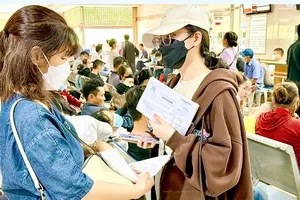
According to Associate Professor, PhD, Dr. Tang Chi Thuong, Director of the Ho Chi Minh City Department of Health, Ho Chi Minh City Oncology Hospital is currently one of the largest tertiary oncology facilities in the Southern region. The hospital receives around 4,800–5,000 patient visits each day for examinations and treatment, with more than 75 percent of patients coming from other provinces and cities.
In response to the situation, the city's health sector has registered five key public investment projects at Ho Chi Minh City Oncology Hospital for 2026–2030, with a total estimated investment of more than VND5 trillion (US$192.1 million) from the city budget.
The projects include construction of a new high-tech disease screening area; procurement of specialized medical equipment; procurement of a cyclotron system and a single-energy linear accelerator system; construction of a new proton therapy center; and construction of a new auxiliary area to support patients at Ho Chi Minh City Oncology Hospital.
These are not standalone investment projects. Rather, they are aimed at comprehensively strengthening the capacity of a tertiary oncology center, from screening and early diagnosis to multimodal treatment, advanced radiotherapy, nuclear medicine, and patient care throughout the treatment process, Associate Professor, PhD, Dr. Tang Chi Thuong said.
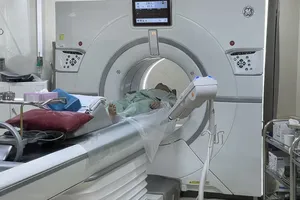
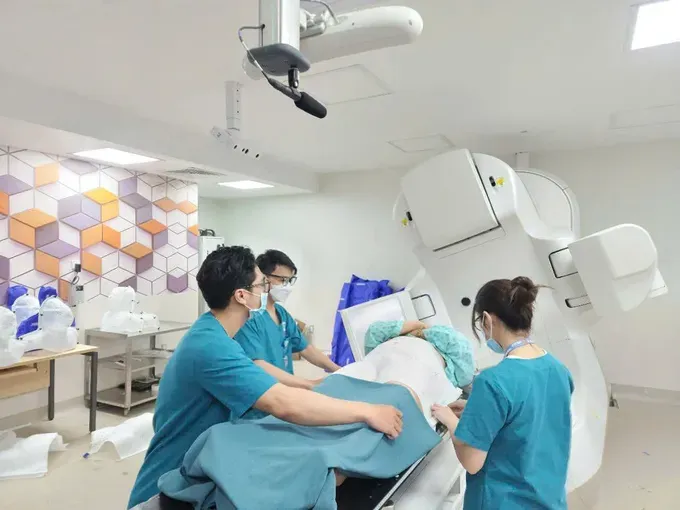
According to Dr. Tang Chi Thuong, the project to procure a Cyclotron system and linear accelerator, with a total investment of VND587 billion, is particularly significant given the current limited supply of radiopharmaceuticals used for PET/CT scans. Once completed, the project will enable the hospital to be more proactive in securing radiopharmaceutical supplies for its two PET/CT systems while also expanding radiotherapy capacity to meet the needs of a growing number of patients.
The Cyclotron system could also help supply radiopharmaceuticals to other healthcare facilities in the city and neighboring provinces and cities.
To date, the project to “Procure specialized medical equipment for Ho Chi Minh City Oncology Hospital,” for which the Ho Chi Minh City Civil and Industrial Construction Investment Project Management Board is the investor, has received investment policy approval from the Ho Chi Minh City People’s Committee. Bidding is expected to be organized no later than the first quarter of 2027.
The remaining projects are being finalized by the Department of Health in coordination with the Ho Chi Minh City Civil and Industrial Construction Investment Project Management Board, the Department of Finance and relevant agencies, with dossiers to be submitted to competent authorities for consideration in 2026–2027.
While awaiting the implementation of the investment projects, the Department of Health has asked Ho Chi Minh City Oncology Hospital to immediately take proactive measures to reduce waiting times and make access to care as convenient as possible for patients.
Amid the growing number of patients requiring radiotherapy, the hospital has introduced extended-hour radiotherapy services, operating its systems from 5 a.m. to 11 p.m. It has also adopted hypofractionated radiotherapy protocols to shorten treatment times for patients with appropriate indications, while prioritizing emergency radiotherapy cases and those requiring early treatment.
Regarding the shortage of the 18F-FDG radiotracer used for PET/CT scans, the hospital has proactively provided counseling and explanations to patients and used appropriate alternative diagnostic methods, such as CT, MRI, and bone scans, based on clinical indications, ensuring that treatment plans are not disrupted.
At the same time, the CT function of the PET/CT systems continues to be utilized for diagnostic imaging, treatment monitoring and response assessment, radiotherapy planning, and other appropriate clinical indications, ensuring effective use of the equipment and preventing waste of the resources already invested.
Cancer treatment capacity should not be concentrated in a single central hospital
According to Associate Professor, PhD, Dr. Tang Chi Thuong, in the long term, simply expanding the existing Ho Chi Minh City Oncology Hospital will not be sufficient to meet the needs of a large urban population that is also receiving a very large number of cancer patients from other provinces and cities.
Under the city’s healthcare development strategy of a “multi-tier, multi-polar, and multi-center” system, cancer screening, diagnosis, and treatment capacity need to be organized into a network, gradually bringing advanced medical services closer to where people live.
Under the current proposal, the city’s list of healthcare public-private partnership (PPP) projects includes the construction of the Ba Ria facility of Ho Chi Minh City Oncology Hospital, with a planned capacity of 700 beds, as well as projects to build high-tech screening and diagnostic centers at the Tan Kien and Thu Duc medical clusters.
In addition, under the 2026–2030 medium-term public investment plan, the Department of Health has registered a project to build the Binh Duong facility of Ho Chi Minh City Oncology Hospital at the Binh Duong medical cluster.
If implemented in line with the planned direction, these projects will gradually help establish specialized oncology hubs, reduce the pressure caused by concentrating patients at a single facility, and improve access to cancer screening, diagnosis, and treatment services for people across the expanded city, Dr. Tang Chi Thuong said.
The Ho Chi Minh City Department of Health believes that investing in additional hospitals, equipment, and beds is essential but cannot be the sole solution to the growing cancer burden. The fundamental solution must be a comprehensive cancer prevention and control strategy, including strengthening prevention and control of risk factors; expanding screening and early detection; enhancing diagnostic and treatment capacity at specialized facilities; developing palliative care; strengthening cancer registration and management systems; and enhancing linkages, technology transfer, and coordination between Ho Chi Minh City and other provinces and cities, he added.