Under the draft Law on Donation, Removal, and Transplantation of Human Tissues and Organs and Donation and Removal of Cadavers (amended), the Ministry of Health proposes allowing a wife to use her late husband's sperm or receive their joint embryos for childbirth via assisted reproduction techniques.
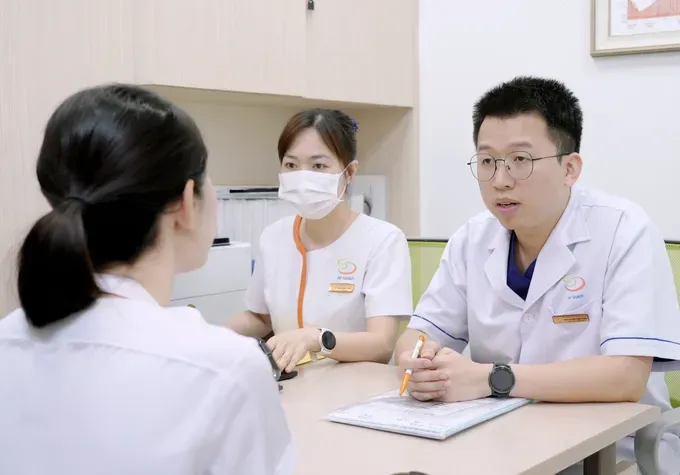
In cases where the husband is determined to be brain dead or circulatory dead, the draft also proposes permitting the wife to retrieve her husband's sperm for in vitro fertilization.
These provisions are included in the section governing conditions for donors, retrievers, and recipients of sperm, ova, and embryos. Detailed conditions, dossiers, processes, and procedures will be regulated by the Government.
The proposal aims to establish a legal framework allowing women to use their deceased husbands' sperm or joint embryos to give birth, provided they satisfy all prescribed requirements.
This proposal stems from practical difficulties in using sperm after a donor has died.
In 2019, a family asked a hospital to retrieve and preserve sperm from their 28-year-old son after he passed away unexpectedly.
Several families who had stored sperm samples from deceased husbands had also requested permission to use them for childbirth, but these requests were not approved.
According to experts, from a technical standpoint, sperm can be retrieved within approximately 24 to 36 hours after death. However, at that time, the law did not contain specific provisions allowing the use of sperm samples from deceased individuals for reproductive purposes.
The draft also adds and clarifies the rights of single women and infertile couples to receive sperm, ova, and embryos in assisted reproductive procedures.
According to the draft, the donation and receipt of sperm, ova, and embryos must take place at medical facilities authorized to store these biological materials. Males aged 20 and older are eligible to donate sperm, while females aged 18 and older may donate ova. Married couples with surplus embryos they no longer need may also donate them.
For recipients, the draft requires meeting health standards and receiving independent counseling. Donated sperm, ova, and embryos may only be used for one woman or one married couple to give birth.
The donation and receipt of sperm and embryos must strictly follow the principle of anonymity between donors and recipients. A wife in an infertile couple undergoing treatment may receive sperm, while single women are also eligible to receive sperm or embryos to have children.
The rule enabling single women to receive sperm or embryos to give birth was previously outlined in Decree No. 207/2025/ND-CP on childbirth via assisted reproductive technology and conditions for altruistic surrogacy, which took effect on October 1, 2025.
Proposal to allow living tissue donation by individuals under 18
The draft Law on the Donation, Retrieval, and Transplantation of Human Tissues and Body Parts, and the Donation and Retrieval of Human Remains (amended), stipulates that individuals aged 15 to under 18 may donate regenerative tissue while living to treat a family member, provided they give consent and obtain consent from their legal representative following independent counseling.
Children under 15 may also donate regenerative tissue to treat their father, mother, brother, sister, or sibling if no suitable adult donor is available. In such cases, the child must agree to the donation and receive consent from their legal representative.
The donation of living tissue by individuals under 18 must meet the conditions set out in the draft law and does not apply to blood donation or the donation of blood components.
)