Residents switch crops, starting saving water
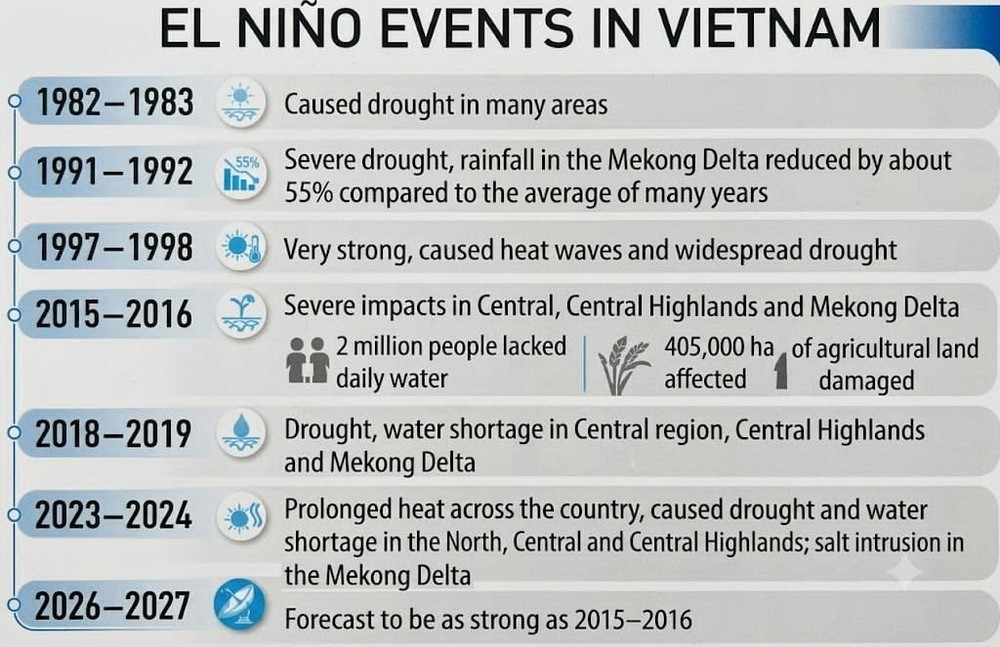
In early June 2026, central Vietnam was sweltering under intense heatwaves. In many areas, outdoor temperatures exceeded 40 degrees Celsius, rice fields cracked under the scorching sun, forest fire risks remained high, and hospitals reported a growing number of patients suffering from weather-related illnesses. As El Nino continues to intensify, local authorities are racing to conserve water, combat drought and prevent saltwater intrusion.
Under the blazing sun, Le Thi Minh, a resident of Bac Van village, Dong Tien Commune, Ha Tinh Province, and her family were busy installing pumps, pipelines and an automated irrigation system for more than 5 hectares of watermelon fields.
"After reading newspaper reports and watching experts warn that El Nino could bring severe drought until mid-2027, my family decided to dig a reservoir to store water and install an automatic irrigation system for our fields. This technology helps save irrigation water, maintains soil moisture for crops, and also protects our family's health by reducing the time we have to work outdoors," Minh said.
Alongside adopting new farming technologies, many localities in central Vietnam are restructuring agricultural production to adapt to climate change.
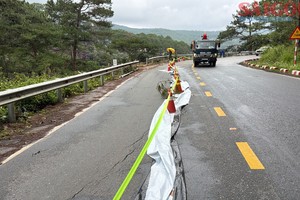
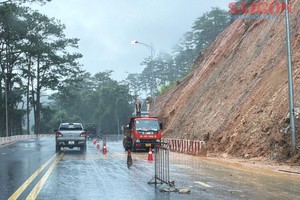
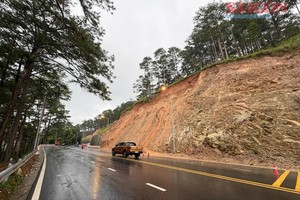
Besides concerns about water shortages for daily life and agricultural production, millions of households in the Mekong Delta region face the risk of landslides as El Nino's development becomes more complex. To respond, on June 25, the People's Committees of Ca Mau and Dong Thap provinces directed the departments of Agriculture and Environment to coordinate with local authorities to review and compile statistics on households living in high-risk landslide areas, and to promptly develop plans to relocate people and property to safe locations, especially in the two freshwater areas of Tran Van Thoi and Go Cong.
Simultaneously, they assessed the level and risk for each area, road, and location, and proposed funding for upgrading infrastructure, roads, and embankments to prevent landslides.
Phan Van Huan, head of the Crop Production Division under the Ha Tinh Sub-Department of Crop Production and Animal Husbandry, said the province has converted about 289 hectares of summer-autumn rice fields into vegetable cultivation in response to the risk of irrigation water shortages caused by El Nino.
Similarly, Nghe An Province's agriculture sector has switched 1,000 hectares of rice land to corn, peanuts, watermelon and other crops to reduce risks during the severe dry season forecast ahead.
Authorities upgrade irrigation systems
In Dong Thap Province, the Go Cong freshwater zone is considered the area most vulnerable to prolonged drought and worsening El Nino conditions, with severe shortages of water for both household use and agricultural production expected.
Nguyen Thi My Hung, head of the Rural Development Sub-Department under the Dong Thap Department of Agriculture and Environment, said the province is urgently investing in a project to transfer freshwater through the Cho Gao Canal.
Construction is underway on multiple components of the project, including dredging about 40 kilometers of major water transfer canals such as Nguyen Tan Thanh Canal, Phu Chung–Ben Chua Canal, Bao Dinh River, Hoc Dung Canal, Ba Ngot Canal, Go Cat Canal and Ong Van Canal.
The project also includes installing pipelines with diameters of 2 to 2.5 meters to transport water through the Cho Gao Canal, together with a booster pumping station capable of pumping 15 to 20 cubic meters of water per second. Additional dredging of longitudinal and lateral canals and low-lying areas will improve water storage and distribution throughout the Go Cong freshwater project area.
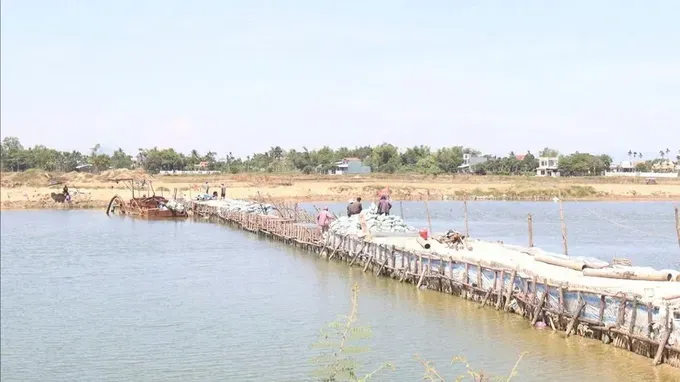
In Da Nang, irrigation authorities are also racing to implement measures against saltwater intrusion, including welding shut a temporary 105-meter dam across the Vinh Dien River at a cost of VND2.6 billion (US$98,784).
Le Thanh Long, Vice Chairman of Dien Ban Dong Ward, said that without the saltwater barrier, more than 2,000 hectares of summer-autumn rice would be affected, while over 40,000 households supplied by the Vinh Dien Water Plant would also face the risk of water shortages.
In response to the increasingly complex El Nino situation, the chairman of the Da Nang People's Committee in March 2026 instructed agencies to closely monitor water resources, regulate reservoir operations, prioritize downstream water supplies, upgrade rural water supply facilities and prepare mobile water distribution plans.
In Hue, the Thao Long Barrage at the downstream end of the Huong River has long served as an effective barrier against saltwater intrusion but has deteriorated after years of use.
To protect thousands of hectares of rice and crops while ensuring domestic water supplies for hundreds of thousands of households in Hoa Chau, Phu Xuan, Thuan Hoa, Duong No and other wards amid worsening El Nino conditions, Truong Van Giang, director of the Hue Agricultural and Rural Development Construction Investment Project Management Board, said the Ministry of Agriculture and Environment has approved an emergency VND349 billion rehabilitation project for the barrage.
In Lam Dong Province, more than 25,000 hectares are planted with dragon fruit, a crop that depends heavily on irrigation.
As El Nino continues to intensify, the provincial Department of Agriculture and Environment is reviewing water supplies at reservoirs and proactively storing water from multiple sources to ensure adequate supplies during severe drought periods.
At the same time, agricultural authorities and local governments are supporting farmers in investing in drip irrigation systems and mulching to retain soil moisture.