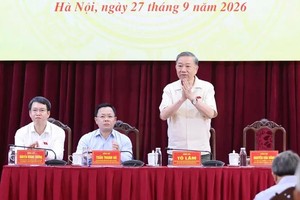
Today, August 11, according to the schedule of the first extraordinary session of the 16th National Assembly, lawmakers are debating the draft Law on Urban Development in the plenary hall following earlier group discussions on August 7. Minister of Justice Hoang Thanh Tung will deliver an explanatory speech to clarify several issues raised by National Assembly (NA) deputies.
The draft Law on Urban Development is widely expected to forge development space for massive urban centers, including HCMC. At the end of the day, this isn’t merely a conventional statute on urban planning, construction, or administration.
The most glaring development bottleneck facing HCMC lies in urban financing, even though the NA’s Resolution No. 98/2023/QH15 on piloting specific mechanisms and policies to develop HCMC enables the city to issue local government bonds, borrow from domestic financial institutions, and on-lend the Government’s foreign loans. The outstanding debt limit has also been expanded. Therefore, the core issue is that being permitted to borrow money doesn’t equate to possessing a modern urban financial ecosystem.
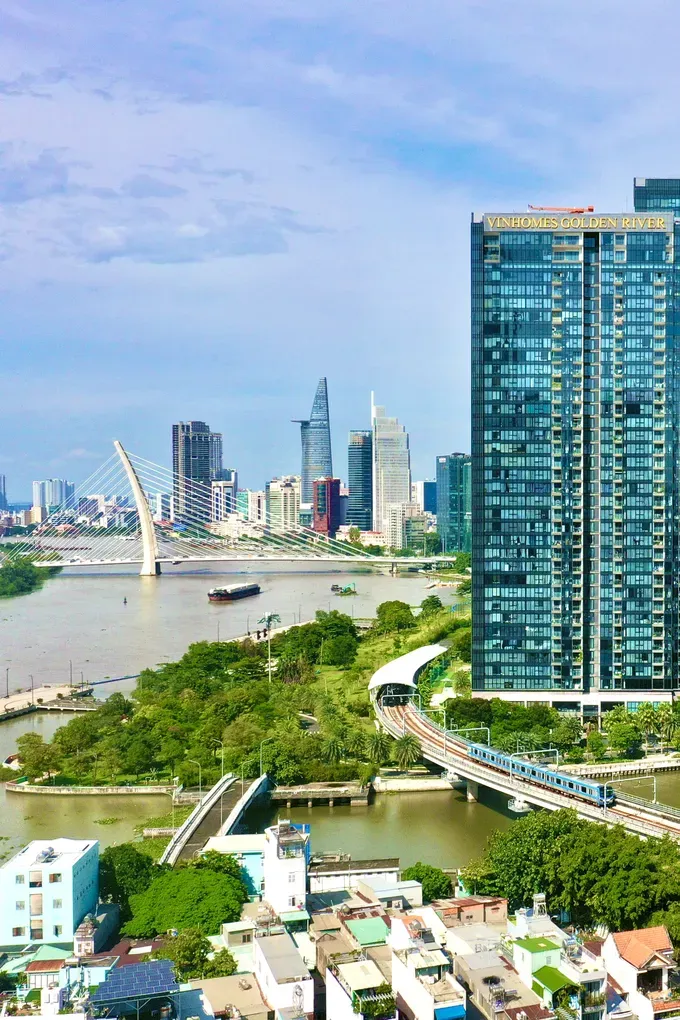
Constructing a metro line, for instance, consumes billions of US dollars in initial investment, yet it yields economic dividends spanning decades. It slashes travel times, expands urban space, elevates real estate values, and completely reshapes surrounding development density. Consequently, it’s both transport infrastructure and a lucrative asset capable of generating massive future value.
However, under traditional models, the State must inject upfront capital, while the resulting real estate appreciation lands squarely in the laps of adjacent property owners. This is precisely why transit-oriented development (TOD) mechanisms are vastly more critical than standard urban planning.
If well-designed, TOD empowers authorities to capture a portion of the increased land value generated by public investment. This resource can then be used to fund public infrastructure, establishing a highly beneficial cycle where infrastructure creates land value, generating revenue to fund new projects.
The draft Law on Urban Development is anticipated to carve out expanded legal room to exploit underground and elevated spaces in TOD zones. Instead of asking if the budget has enough money to get the ball rolling, the city can directly structure a 50-year value stream into capital today, reflecting the true mindset of modern urban finance.
A massive metropolis demands a robust capital market anchored to project cash flows, rather than leaning too heavily on state budgets and bank credit. Urban infrastructure is a distinctly unique asset class, as metro lines endure for decades, and water or energy projects can churn out stable cash flows over extensive periods.
These aren’t just standard investments; they can allure numerous insurance, pension, and infrastructure funds. To attract these inflows, HCMC must deploy appropriate financial instruments.
For example, instead of merely issuing general government bonds, the city can kick off issuing specialized bonds tied to specific infrastructure clusters with transparent repayment structures. At that time, urban funds could utilize state capital as seed money before drawing in international private finance.
The challenge is that such projects must guarantee efficiency and satisfy their stringent criteria, backed by a sufficiently flexible mechanism enabling the city to confidently commit, “I can deliver this.”
If the Law on Urban Development grants HCMC broader autonomy to design TODs, exploit urban space, and reorganize functional zones, its impact will be monumental. It wouldn’t be an exaggeration to assert that, if designed rationally, this legislation could give rise to an entirely novel urban economic model.
This becomes even more critical as the city evolves into an incredibly diverse economic space. An international financial center doesn’t require the same governance model as an industrial park. A seaport-logistics hub demands administrative procedures, land regulations, and infrastructure connectivity distinct from those of a residential neighborhood. An innovation hub necessitates specialized mechanisms to attract talent and establish laboratories.
Areas serving as incubators for university spin-offs and venture-backed enterprises require a development landscape vastly different from that of a conventional urban zone.
The crucial point here isn’t that HCMC should be allowed to borrow more at any cost, but rather that it needs a broader menu of financial tools to choose from, while tightly supervising compliance with financial safety regulations. It’s foreseeable that fresh borrowing demands will lead to raising the city’s public debt ceiling, and without enhanced governance capacity, this might simply inflate fiscal risks.
Meanwhile, expanding financial instruments by linking debt to cash flows, assets, and accountability can help the city mobilize vast capital reserves currently sitting on the sidelines of infrastructure projects, while boosting efficiency by ensuring newly borrowed funds are utilized securely.
Obviously, HCMC should shift from the mindset of “Selling urban assets to earn money” to “Transforming a portion of the city’s future cash flows into today’s investment capital.”
This financial narrative highlights a profound issue regarding self-determination in urban development. For years, planning was viewed merely as an administrative hurdle determining floor counts or land-use functions.
However, for a megacity, planning is a potent instrument for distributing economic value. Deciding where to locate a metro station drastically alters neighborhood land prices, while increasing land-use coefficients can generate trillions of Vietnamese dong (billions of US dollars) in new real estate value.
Permitting underground spaces or high-density zones surrounding public transit can fundamentally revolutionize a project’s financial viability. Therefore, the right to plan isn’t simply the right to draw maps. Ultimately, it’s the sheer power to dictate exactly how economic value is distributed.