“Opening up massive spaces” for urban centers
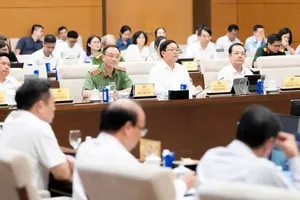
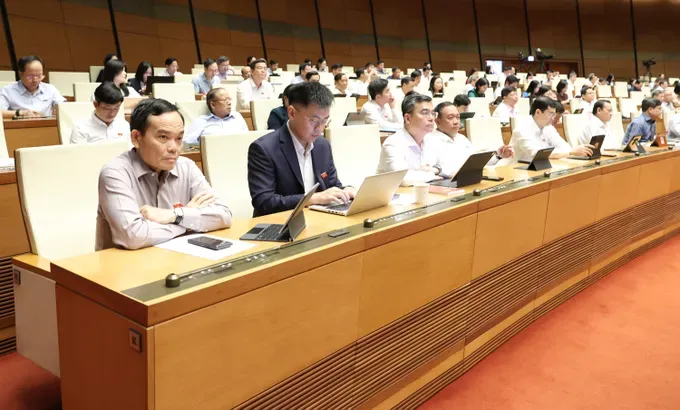
Speaking during the plenary debate, deputies unanimously agreed on designing a flexible legal framework, yet strongly emphasized the absolute necessity of ensuring uniformity and stringent power control.
For Deputy Trinh Xuan An from Dong Nai City, robust decentralization is the key for regional development. He explained that granting over 150 specific jurisdictions to the municipal People’s Council establishes a massive space for local policy-making. To guarantee effective execution, he proposed clarifying three distinct control levels, namely preliminary screening, rigorous oversight, and thorough post-inspection coupled with strict accountability.
Showing keen interest in the proposed International Financial Center (IFC) model in HCMC and Da Nang City, Deputy Trinh Ngoc Phuong from Tay Ninh Province argued they must evolve into comprehensive ecosystems bridging international capital with domestic funding demands. The operational mechanisms for these cities don’t need to be identical, given the former’s colossal economic scale.
Meanwhile, Deputy Nguyen Duy Minh from Da nang City astutely analyzed that the IFC model inherently acts as an extremely accurate screening threshold. Consequently, he argued it’s entirely unnecessary to mandate localities to seek in-principle approval before officially applying the law.
Several representatives proposed expanding the law’s scope to encompass centrally-run cities that haven’t yet achieved special-class status to significantly boost competitive capacity.
However, Deputy Tran Thi Van from Bac Ninh Province expressed substantial apprehension regarding tailor-made mechanisms for specifically named cities. Instead, she suggested identifying specialized urban models so any qualified locality can seamlessly apply them. This systematic approach addresses concrete local demands while preserving the fundamental uniformity of the legal system.
For Deputy Tran Anh Tuan from HCMC, the heavy concentration of state-owned enterprises (SOEs) necessitates greater autonomy for HCMC. He proposed granting the municipal People’s Committee full authority to dictate supplementary charter capital investments for SOEs, rather than constantly reporting to the Prime Minister. Furthermore, decentralizing power should allow localities to proactively restructure city-owned enterprises. This bold move will make the decentralization spirit much more powerful.
Sharing this concern, Deputy Nguyen The Duy from HCMC recommended unlocking dormant resources within state-dominated enterprises. He argued the draft primarily caters to SOEs holding 100 percent of charter capital, leaving a glaring regulatory void.
Consequently, lawmakers should supplement mechanisms for SOEs holding between 50 and under 100 percent of state capital, as they manage colossal infrastructure resources. Untying these operational constraints empowers state-dominated enterprises to lead the charge and transform into a potent developmental engine for HCMC.
Implementing “lock” mechanisms for stringent oversight
Providing explanatory remarks on the draft Law on Urban Development, Minister of Justice Hoang Thanh Tung stated that the legislation was meticulously crafted to establish a breakthrough legal corridor. It’s expected to effectively dismantle lingering institutional bottlenecks to turbocharge regional growth engines, particularly in HCMC.
The Minister emphasized a strategic shift from rigid management toward actively forging development, executing radical decentralization under the motto: “Localities decide, localities act, localities bear accountability.” The draft law primarily stipulates mechanisms to fuel the advancement of special-class cities, other urban centers, and distinct special economic zones.
While some deputies proposed that cities yet to achieve this status could automatically apply these superior policy frameworks without governmental approval, the Ministry firmly pushed back. Entrusting the Government with this crucial decision-making power rather than blindly granting specialized mechanisms to non-special cities is deliberately designed to guarantee tightly controlled execution.
This approach successfully balances ambitious policies with actual implementation capacity. As a rule of thumb, breakthrough mechanisms inherently demand exceptionally high governance standards and massive financial resources that only special-class urban areas currently possess.
For Minister Hoang Thanh Tung, preventing a race to the bottom remains paramount. “This specific provision helps rein in situations where localities blindly race to offer incentives, ultimately sparking unhealthy competition and severely scattering national resources,” he noted from the podium. Nevertheless, he confirmed he would gracefully absorb constructive feedback to refine the statutory limits for future decisions.
Regarding power control frameworks, he confidently asserted these mechanisms are being perfected with integrated “valves and locks” to ensure multi-layered oversight, ranging from preliminary screening to post-inspection accountability.
Even though the draft grants special-class cities like HCMC unprecedented authority to promulgate documents diverging from central regulations, they can’t act recklessly. They must strictly adhere to rigorous impact assessments and formally report to the National Assembly Standing Committee within an uncompromising seven-day window.
Moreover, the Prime Minister retains the ultimate right to unconditionally annul municipal documents if they blatantly infringe upon national interests. Within the experimental mechanism, the draft inherently designs a temporal lock, capping initiatives at five years. The municipal People’s Committee is legally bound to instantly halt any policy if the pilot triggers negative impacts on rapid damage control.
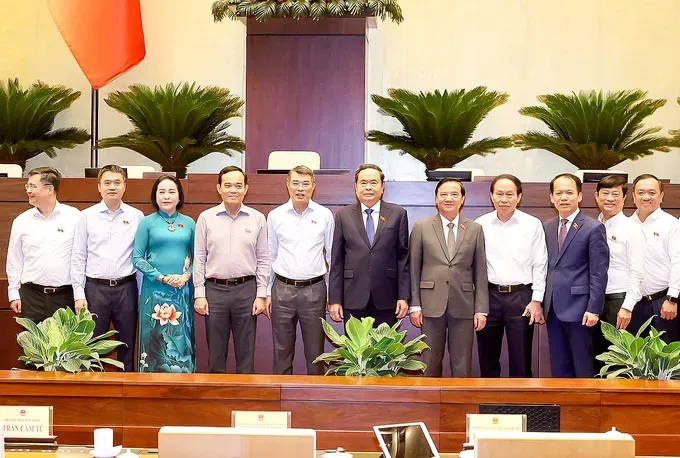
Summarizing the debate, National Assembly Vice Chairman Nguyen Khac Dinh reported that 39 deputies formally voiced their opinions. He confirmed that drafting agencies will seriously absorb all valid legislative feedback. Ultimately, the main goal is to flawlessly refine the draft law to the highest quality standard before its final legislative review.
On August 11 afternoon, the National Assembly continued its plenary discussions, offering critical feedback to finalize the National Assembly’s draft Resolution concerning crime prevention and legal violations, the operations of the people’s procuracies and people’s courts, and overall civil judgment execution activities, which is slated to replace the existing Resolution No.96/2019/QH14.