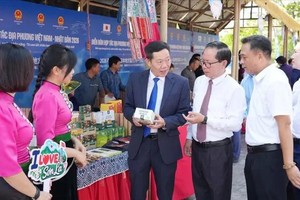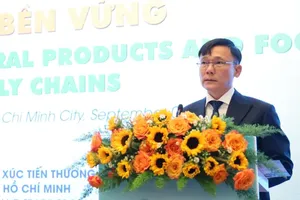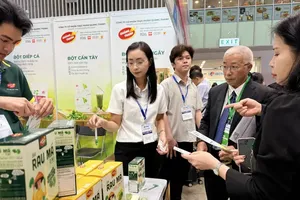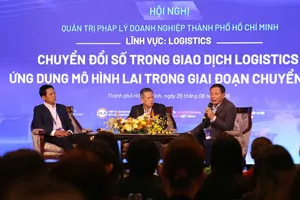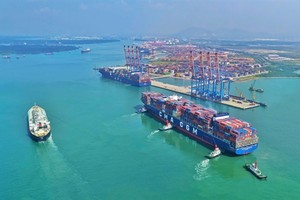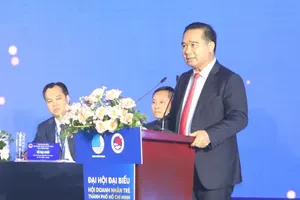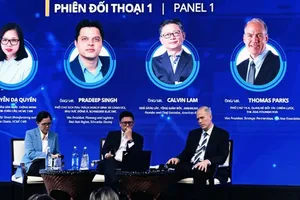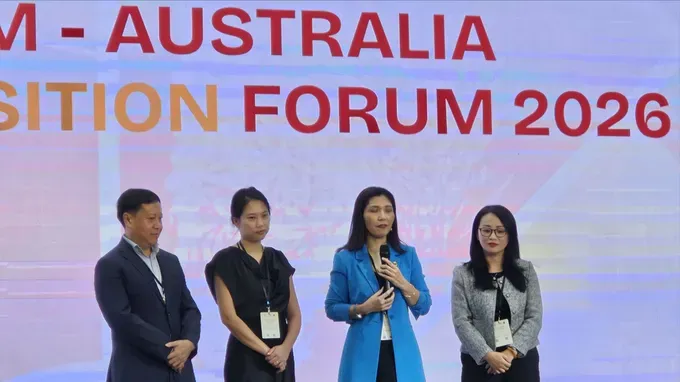
Information shared at the forum revealed that two-way trade in goods and services between Vietnam and Australia has reached approximately AUD28.5 billion. This makes Vietnam Australia's 14th largest trading partner and places it among the fastest-growing markets.
Speaking at the forum, Sarah Hooper, Australian Consul-General in HCMC, stated that Vietnam-Australia relations are currently at their strongest following the upgrade to a Comprehensive Strategic Partnership. Australia has provided over AUD3 billion in development assistance since 1973. According to Hooper, this serves as a vital foundation for deeper cooperation, particularly as the world is reshaped by supply chain disruptions, energy volatility, and new sustainability standards.
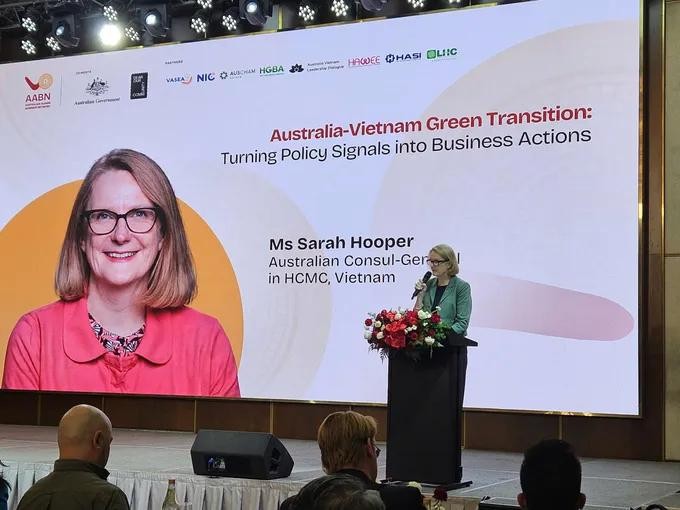
Many businesses at the forum argued that green transformation is no longer a long-term goal but an urgent requirement. Environmental, Social, and Governance (ESG) standards, carbon intensity, and traceability are becoming mandatory conditions for participating in global supply chains, especially in export sectors such as agriculture and manufacturing.
Australian Consul-General in HCMC Hooper noted that bilateral cooperation has expanded beyond policy into finance and technology. In the energy sector, the Vietnam-Australia Energy Transition Platform promotes private capital mobilization for renewable energy and low-emission technologies, while the "Vietnam Electricity Future" initiative supports policy development and power system planning.
In finance, a representative from Export Finance Australia announced a AUD75 million on-lending facility provided to VPBank to fund sustainable infrastructure projects. Additionally, the AUD33 million Aus4Innovation program is generating practical applications, such as using satellite data and AI to optimize rice production in the Mekong Delta, contributing to a reduction of over 193,000 tons of CO2 and job creation.
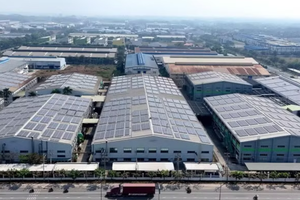
Professor Andrew Blakers from the Australian National University stated that Australia identifies Vietnam as a priority market in its Southeast Asia Economic Strategy to 2040, focusing on clean energy, sustainable agriculture, and climate tech. The network of over 160,000 Australian alumni in Vietnam is also viewed as a crucial bridge for business cooperation. To accelerate the green transition, he emphasized the need to expand markets, enable stronger private sector participation in renewable energy, particularly rooftop solar, and invest in storage and transmission systems while maintaining stable long-term policies.
Economist Can Van Luc observed that the green transition is an inevitable trend and an opportunity for Vietnam to restructure its growth model. Vietnam aims for the green economy to account for 10 percent of GDP by 2030, with renewable energy making up 26 percent-30 percent of the total energy supply and greenhouse gas emissions reduced by 8 percent-10 percent. However, this process faces significant challenges, notably a massive resource requirement estimated at 6 percent-8 percent of GDP annually for infrastructure and related sectors, where the private sector will play a pivotal role.
According to participants, vast potential remains for cooperation in renewable energy, sustainable agriculture, green finance, climate technology, and power system modernization, contributing to green growth and sustainable development in the coming period.