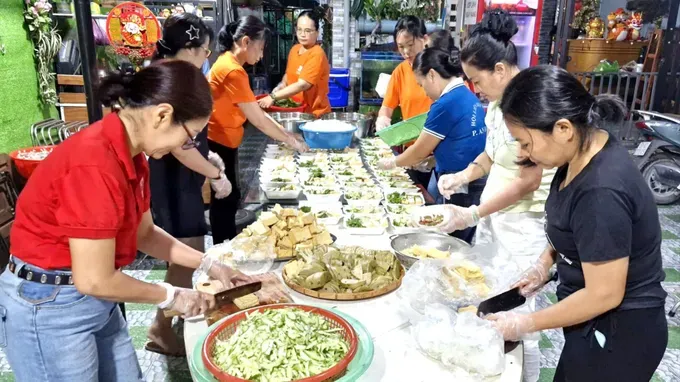
On a bustling weekend morning, Nguyen Van Tuan, Deputy Secretary of the Party Cell and Head of Neighborhood No. 4 in Phu Thanh Ward, arrived early at the community hall to inspect electrical and sound equipment for children’s summer activities. Thanks to his technical experience, he voluntarily handles these tasks. Once the youngsters gathered, he reminded them about safety and behavioral norms.
Concurrently, as Head of the Mediation Team, Mr. Tuan actively resolves conflicts in the residential cluster. Ultimately, these rewarding duties have become a familiar part of life for this dedicated official who closely monitors his locality.
It appears Mr. Tuan’s various tasks brilliantly mirrors the daily reality for neighborhood officials across HCMC today. For Party Cell Secretary of Phuoc Nguyen Neighborhood No.6 Nguyen Hong Phong, the intricate living conditions of numerous households are deeply etched into his mind. He meticulously tracks which families face hardships or need urgent repairs.
“Working at the neighborhood level dictates that you must stick close to citizens. Whenever a crisis unfolds, they naturally seek out neighborhood officials first,” he explained.
Currently, Phuoc Nguyen Neighborhood No.6 accommodates 342 households with 1,222 residents. Since it hasn’t met stringent requirements regarding household scale, it falls under the mandatory scope for restructuring.
According to Mr. Phong, whenever the administrative territory expands and the population becomes denser, the neighborhood’s role grows exponentially crucial. Grassroots problems are frequently detected remarkably early via quick phone calls, brief text messages, or vocalized grievances during crowded meetings. Therefore, the neighborhood undeniably remains the closest entity to the populace, capable of grasping any emerging community issues the fastest.
Sharing this viewpoint, Head Nguyen Van Tuan argued that seamlessly reorganizing neighborhoods is a vital step aimed at meeting rigorous management demands of this brand-new era. Nevertheless, alongside reorganizing to suit the population scale, he noted authorities must ramp up advanced technology, striving to resolve citizens’ paperwork significantly faster. Simultaneously, it’s absolutely crucial to rejuvenate the aging neighborhood cadres to flawlessly meet the ever-escalating demands of serving the populace.
Drawing directly from grassroots reality, it’s crystal clear that restructuring isn’t merely about redrawing boundaries. The paramount factor is sustainably maintaining the innate ability to grasp citizens’ current situations, monitor the locality, and resolve unprecedented problems. Ultimately, neighborhoods will increasingly serve as a pivotal focal point, explicitly designed to help the government stay close to citizens and serve them more efficiently.
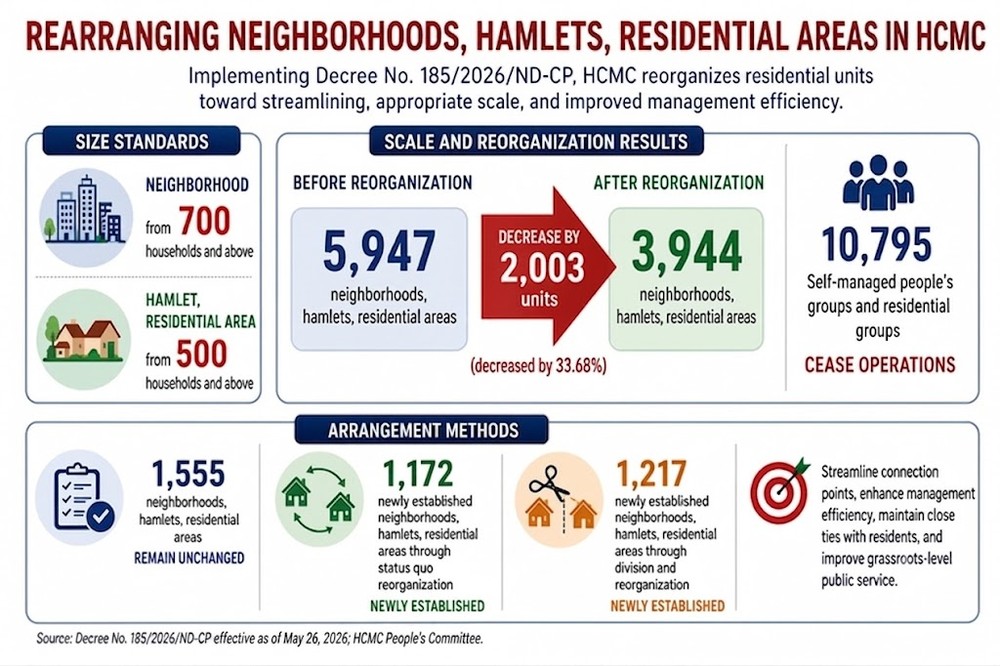
HCMC currently boasts exactly 5,947 neighborhoods, hamlets, villages, and residential areas encompassing over 5.3 million distinct households. Following a meticulous review, 2,723 of these administrative units failed to meet the brand-new household scale standards, accounting for a staggering 45.79 percent.
Following the rigorous restructuring phase, the entire city is projected to retain just 3,944 neighborhoods, hamlets, villages, and residential clusters, aggressively slashing 2,003 administrative focal points, which equates to a massive 33.68 percent reduction. Alongside this shift, the city is terminating 10,795 self-governing citizen groups previously situated beneath the neighborhood level.
This constitutes a massive grassroots overhaul, directly disrupting how communities are traditionally organized. Therefore, trimming down administrative focal points must go hand in hand with meticulously redeploying personnel, establishing clear points of contact, and sustainably maintaining vital self-governance, social welfare, security, and sanitation.
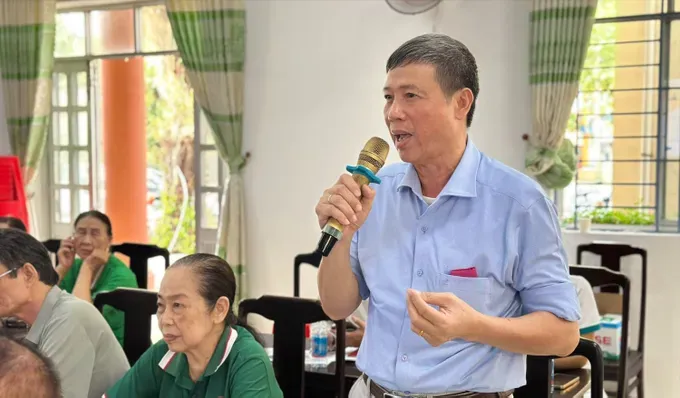
For Chairman Pham Minh Thien of the Chanh Hiep Ward People’s Committee, seamlessly merging neighborhoods is a massive policy aimed at streamlining bureaucracy while elevating grassroots political efficiency. To ensure this rollout doesn’t disrupt residents’ lives, the locality is executing feasible solutions. This includes forging public consensus, guaranteeing continuity in state management, and handpicking neighborhood officials brimming with competence and ironclad responsibility.
Secretary Truong Le My Ngoc of the Tan Son Hoa Ward Party Committee shared that throughout this restructuring phase, the paramount factor is guaranteeing citizens’ inherent rights are thoroughly protected. Once the dust settles, residents will conveniently access crucial information, receive superior care, and proactively construct a civilized community.
Currently, the ward is hyper-focused on reviewing complex residential data, grasping the locality’s demographics, and painstakingly auditing public assets. Ultimately, the goal is ensuring a seamless transition, allowing the brand-new neighborhood to operate with ironclad stability and efficiency right from the get-go.
The HCMC People’s Committee requires the restructuring of neighborhoods, hamlets, and villages to perfectly align with population scale, geographic characteristics, and the two-tier local government model’s rigorous demands.
Under brand-new regulations, a standard neighborhood must encompass at least 700 households, whereas hamlets and villages require 500. However, remote territories like Thanh An Commune, Con Dao Special Zone, or highly dispersed areas are permitted to apply significantly lower criteria.
This monumental restructuring imposes brand-new demands on grassroots administration. With commune-level workloads and paperwork skyrocketing, neighborhoods must be organized with robust strength to actively alleviate this crushing burden while maintaining a consistent connection with the populace. A genuinely powerful grassroots foundation relies on smart task delegation, grasping local reality, utilizing complex data, and ironclad responsibility, rather than sheer headcount.
Fundamentally reorganizing these units is an exceptionally urgent political mission for HCMC in 2026. Currently, the city is grappling with roughly 46 percent of its grassroots units failing to meet household scale standards. Furthermore, designated cultural institutions and gathering headquarters aren’t adequately allocated. This inevitably fragments community activities, complicates resource mobilization, and ultimately leaves them unqualified to secure massive investments for synchronized cultural infrastructure.






)




