The event brought together over 200 delegates, including leaders from central agencies, press organizations, communication experts, tourism businesses, and digital platforms nationwide.
A "soft bridge" connecting destinations with tourists
In his opening remarks, Deputy Minister of Culture, Sports and Tourism Ho An Phong emphasized that, over recent years, the tourism industry has experienced a robust recovery and development, gradually affirming its position as an interdisciplinary and regional economic sector. It increasingly serves as a vital driver of national growth.
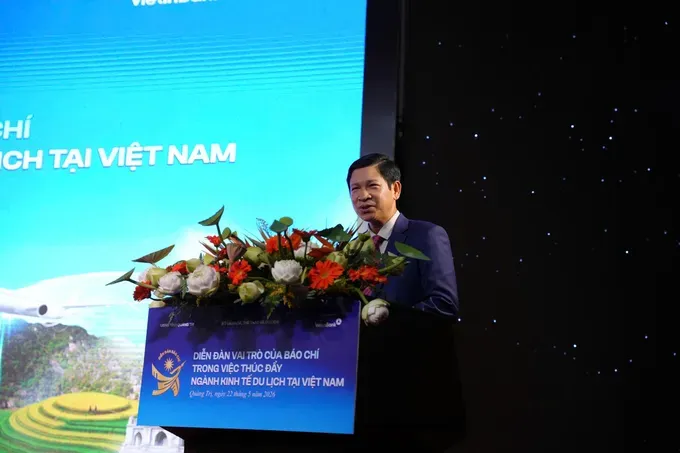
Currently, Vietnam’s tourism is among the fastest-growing in the world in terms of visitor numbers. By 2025, Vietnam is expected to host over 21 million international tourists, underscoring the sector’s growing importance to the country's economy, Deputy Minister Ho An Phong shared.
Highly appreciating the role of the press, he stated that in the digital age, journalism is not merely a communication channel but also a force that shapes societal awareness, guides trends, disseminates cultural values, and fosters economic development. For tourism, the press acts as a "soft bridge" linking destinations with travelers; cultural values with markets; and the image of the nation with the international community.
However, tourism communication efforts still face limitations, such as inconsistent promotional content; storytelling that fails to distinguish destinations; shallow coordination among media, businesses, and local authorities; and underutilized digital technologies and big data in tourism promotion.
The Deputy Minister urged delegates to reaffirm the press’s vital role in promoting Vietnam’s national image and developing the country’s tourism brand amid global media competition.
He also called for innovation in tourism communication, making it more professional, modern, and multi-platform; expanding the application of digital journalism, artificial intelligence, digital data, and social media. Strengthening cooperation among management agencies, media, businesses, localities, and technology platforms is essential to building a unified, effective, and sustainable tourism media ecosystem.
Moreover, attention should be given to developing in-depth, culturally rich journalistic products that contribute to disseminating Vietnamese values and enhancing the nation’s “soft power.” The press’s role in policy communication, fostering social consensus, and realizing the goal of making tourism a leading economic sector must be further promoted.
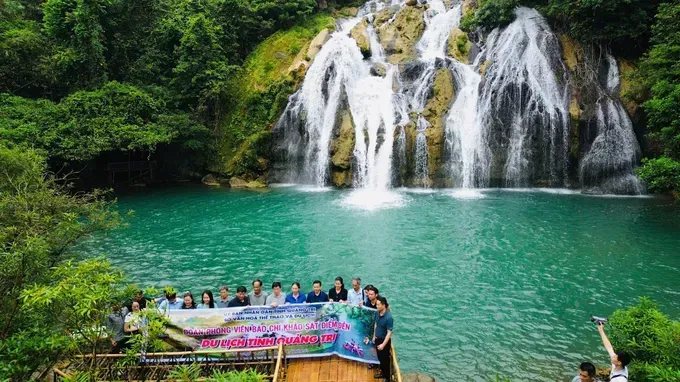
The press as a “filter” for information
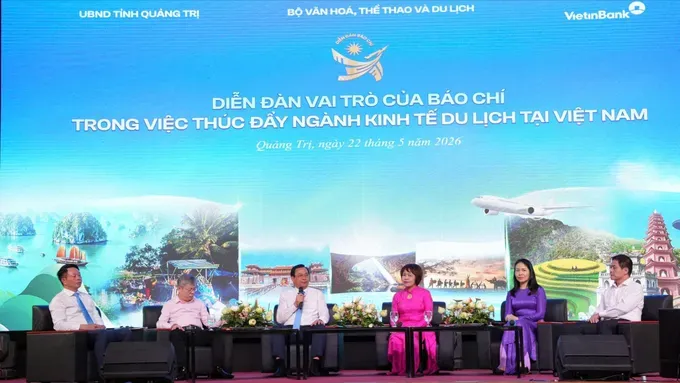
During the forum, delegates discussed the media’s role in promoting tourism development, national tourism branding, international communication, and digital transformation in the tourism sector.
Many agreed that, whereas tourism crises in the past mainly stemmed from natural disasters, epidemics, or political instability, today a new type of crisis has emerged: the “destination communication crisis.” A single video highlighting issues like price gouging, environmental pollution, or rude behavior towards tourists can garner millions of views in a short time, directly impacting the destination’s image and tourism market psychology.
Colonel Nguyen Thanh Binh, Deputy Director of the Department of Communications of the Ministry of Public Security and Editor-in-Chief of the People’s Public Security Newspaper, emphasized the importance of the press playing its role as a “filter” for information. If the media is slow to verify and provide accurate information, public opinion can easily be misled by rumors, emotional reactions, or sensational content.
Similarly, Vo Anh Tai, Deputy General Director of Saigontourist Group, believes that tourism journalism today should do more than just promote destinations.
A deep, insightful article not only promotes a location but also helps shape the world’s perception of Vietnam. A successful communication campaign can lead to more visitors and elevate the country’s standing within the global value chain, Mr. Vo Anh Tai shared.