Erratic weather and rising cultivation costs have forced many gardeners to accept narrower profit margins to keep prices stable while turning to social media to reach new buyers.
Cutting margins, expanding sales channels
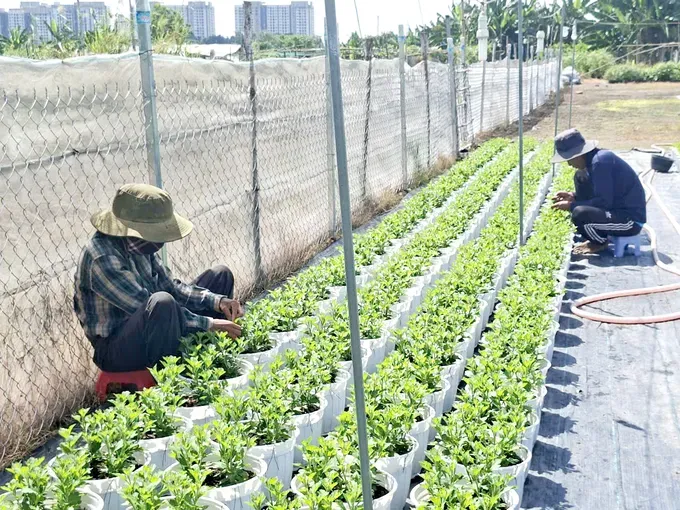
These days, in Thoi An flower village, Thoi An Ward, growers are focused on tending, fertilizing, and watering their crops to ensure the flowers bloom right on time for the Lunar New Year. At Vu Thi Thanh Nga’s nursery, workers are busy caring for individual pots ahead of the industry's most critical sales season of the year.
Ms. Nga said her family has been in the ornamental flower business for nearly 20 years. For this Lunar New Year season, her nursery expects to supply around 2,500 potted plants, including lisianthus, cockscomb, and ruby chrysanthemums.
This year, erratic weather and heavy rain have significantly affected flower growth, driving up maintenance costs. Many gardeners are looking for ways to cut expenses and accept lower profits so they don't have to raise selling prices, keeping them aligned with current economic conditions, Ms. Nga said.
Sharing similar concerns over rising costs, Nguyen Thi Thanh Thuy from Long Binh Ward, who owns a two-hectare flower farm, is focusing on planting varieties such as marigolds, lisianthus, kalanchoe, and cockscomb to supply tens of thousands of flower baskets to Ho Chi Minh City and neighboring provinces for the holiday.
According to Ms. Thuy, her nursery has managed to retain regular customers by keeping prices reasonable and accepting slimmer profit margins to share financial pressures with consumers. She is also leveraging social media to showcase her products and reach new buyers.
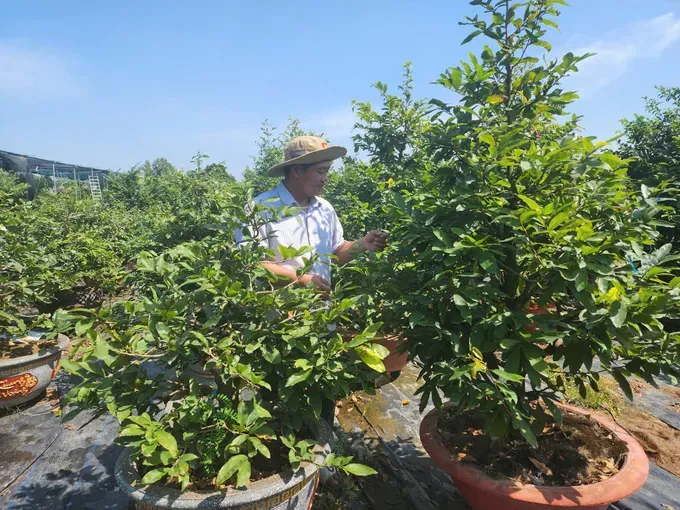
In Binh Loi Commune, a major hub for yellow apricot blossom cultivation, growers are equally busy gearing up for the holiday rush. Leading a tour of his four-hectare Huu Duc apricot garden, which houses more than 20,000 trees of various sizes, Bui Ngoc Duc said yellow apricot cultivation has generated higher incomes for many local households compared to growing rice or sugarcane in the past.
For the 2027 Lunar New Year, Mr. Duc has prepared thousands of yellow apricot trees, potted plants, and bonsai varieties in multiple sizes to serve buyers and traders nationwide. Expected selling prices range from VND300,000 (US$11.65) to VND400,000 (US$15.55) per tree for smaller varieties and from VND500,000 to around VND1 million for larger trees and select potted plants. For oversized potted apricot trees, the nursery also offers holiday rental services.
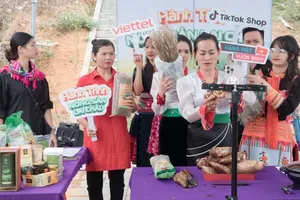
Moving beyond traditional sales methods, he has been livestreaming to promote and sell yellow apricot trees through social media during the pre-Lunar New Year period since 2025. By reaching customers in various localities, his nursery has maintained stable sales. He has also partnered with express delivery services to ensure the trees are delivered directly to buyers.
Once focused mainly on pruning branches, caring for roots, and shaping apricot trees, growers like Bui Ngoc Duc are now proactively reaching out to customers via smartphones and expanding their markets through online sales channels. This is also an approach increasingly adopted by many nurseries to reduce their dependence on traders and improve sales opportunities during the Lunar New Year season.
The shift is not limited to large-scale nurseries. Many flower-growing households in Hiep Phuoc Commune are also taking the initiative to modernize production methods and explore new ways of accessing the market.
Tran Van Tan, a grower from Nhon Phu Hamlet in Hiep Phuoc Commune who participates in a cooperative linkage model, said that thanks to the support of the Hiep Phuoc Commune Farmers' Association and the experience shared by growers in Sa Dec, his family feels much more confident about the upcoming 2027 Lunar New Year flower crop.
The business has received training in new cultivation techniques that reduce the use of chemical fertilizers, helping plants grow more steadily. Learning how to promote our flower gardens on social media has also enabled him to receive more advance orders from distributors.
Strengthening production linkages and proactively adapting to weather conditions
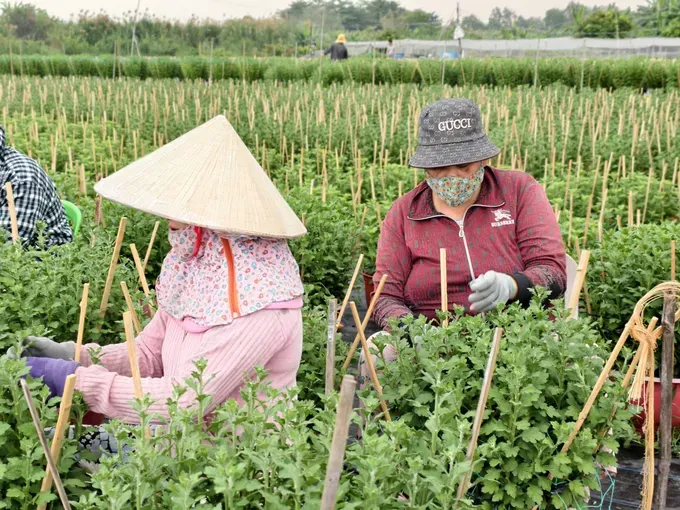
To help farmers reduce costs, mitigate risks, and ensure a reliable supply of goods for the Lunar New Year market, many localities across Ho Chi Minh City are stepping up production linkages, providing technical support and investing in infrastructure for flower-growing areas and yellow apricot tree cultivation.
In Hiep Phuoc Commune, the local Farmers' Association has helped growers establish connections with agricultural production facilities in Sa Dec Flower Village in Dong Thap Province. Through networking activities, experience-sharing, and cooperation in seedling supply and product distribution, local farmers have gained greater access to new flower varieties, improved cultivation techniques, and better control over flowering schedules to meet Lunar New Year market demand.
These partnerships also help growers stabilize supplies, reduce production costs, and mitigate risks posed by increasingly unpredictable weather conditions.
According to Vo Thi Kim Duong, Chairwoman of the Hiep Phuoc Commune Farmers' Association, supporting local growers is a key priority for the commune. In addition to connecting suppliers and helping farmers market their products, the association organizes technical training courses on safe flower cultivation and provides guidance on the use of organic fertilizers and biological products. These efforts help members reduce costs and gradually transition towards greener and more sustainable production practices.
Meanwhile, in Binh Loi's yellow apricot-growing area, local authorities are prioritizing the completion and upgrading of irrigation systems to protect cultivation areas from flooding risks.
According to the Binh Loi Commune People's Committee, a combination of high tides, heavy rainfall, and reservoir water releases in late October 2025 flooded approximately 500 hectares of yellow apricot trees in Hamlets 1, 2, 3, and 4, causing losses for many growers. In response, the locality is continuing to invest in and upgrade irrigation infrastructure to better cope with extreme weather and safeguard agricultural production.
Phan Thi My Khuyen, Chief of Office of the Binh Loi Commune People's Committee, said the locality had recently completed and commissioned repairs to the culvert covers along Tram Lay 1 and Tram Lay 2 canals, at a cost of more than VND1.5 billion, to address water overflow. The commune has also constructed tidal embankments along Vuon Thom Road and Tram Lay 1 Canal Road, with an investment of VND735 million.
In the fourth quarter of 2026, the commune will begin dredging three canals—Nos. 4, 6, and 10—at a total cost of VND11.7 billion and repairing 14 culverts in Area A, with an investment of VND28.1 billion. The projects are expected to be completed and put into operation in the second quarter of 2027, helping improve drainage capacity and reduce flooding risks in the specialized yellow apricot-growing area.
Together with growers' efforts to find markets for their products and cut costs, these infrastructure improvements are helping Ho Chi Minh City's flower-growing areas better prepare for the Lunar New Year season while sustaining local livelihoods over the long term.
According to Nguyen Thi Gon, Chairwoman of the Binh Loi Commune Farmers' Association, Binh Loi is the largest yellow apricot-growing area in Ho Chi Minh City, covering more than 600 hectares and providing regular employment for nearly 1,100 workers.