"The draft Law on Civil Status (amended) drew extensive feedback from National Assembly delegates during group discussions on the morning of April 9, held as part of the first session of the 16th National Assembly.
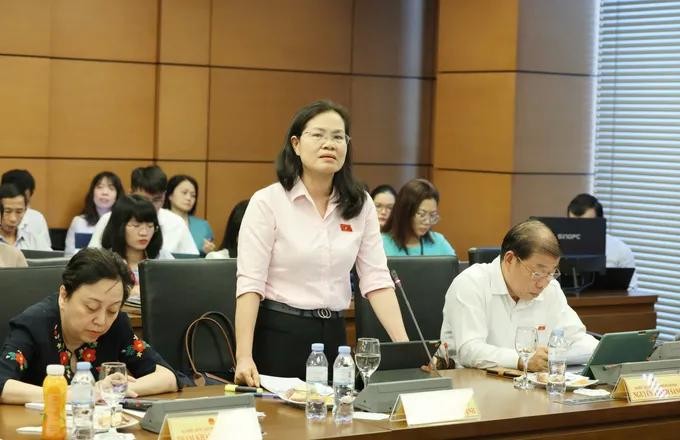
While acknowledging the draft’s positive strides in digital transformation and procedural reform, NA deputy Nguyen Thi Hong Hanh from Ho Chi Minh City called for clearer regulations on utilizing the national population database to replace traditional paperwork in civil registration.
She raised concerns over potential inconsistencies between physical documents and digital records. She questioned which record would serve as the master for correction if a discrepancy arises between civil status papers and digital information.
To better serve citizens at the grassroots level, the female NA deputy proposed further decentralizing authority to the commune level. She also suggested enhanced verification processes and stricter sanctions for civil status corrections to protect personal identity data and prevent legal loopholes.

Regarding the revocation of unlawful or inaccurate documents, NA deputy Nguyen Thi Hong Hanh noted that while the draft’s approach is citizen-friendly, the law must explicitly define which specific authorities hold the power to annul such records.
Meanwhile, NA deputy Do Duc Hong Ha from Hanoi noted that defining the civil status database as a centralized, unified, and scalable national system is a progressive step. He highlighted that this requirement compels civil registration authorities to proactively utilize electronic data, ensuring citizens are not required to submit or present documents that the State already possesses.
However, to ensure the practical application of this regulation, NA deputy Do Duc Hong Ha proposed adding principles to handle cases where digitized civil status data is collected or updated from multiple sources but remains inconsistent, inaccurate, or poorly synchronized.
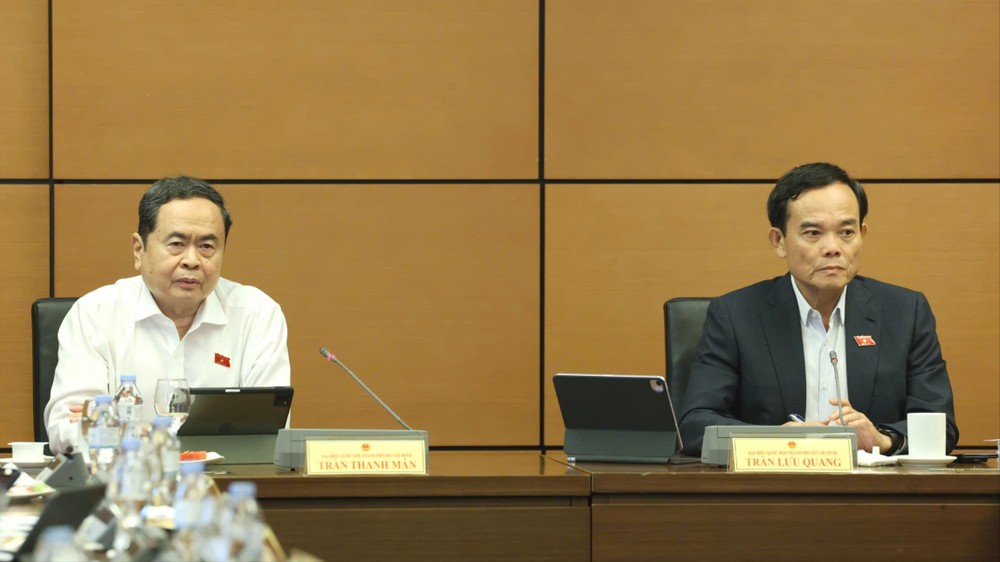
At the session, NA deputy Tran Dinh Gia from Ha Tinh noted that while "civil registration" requires determining marital status, this status is not an independent civil event. Instead, he argued that marital status is derived from previously registered events such as marriage, divorce, or the death of a spouse.
The NA deputy pointed out that the draft fails to specify management principles for marital status verification, largely leaving these details to Government regulations. He argued that since marital status verification is a near-universal transaction, leaving such a critical matter out of the primary law is unreasonable. He proposed that the law include specific provisions ensuring that marital status is verified based on registered data already updated in the civil status database.
Regarding the delegation of registration authority, the draft Law on Civil Status (amended) assigns responsibility to people's committees in wards and communes aligning with the two-tier local government model. However, NA deputy Tran Dinh Gia urged for an evaluation of the capacity of officials and civil servants in wards and communes when handling cases involving foreign elements. He also recommended establishing a direct legal advisory mechanism from Departments of Justice to support grassroots officials.