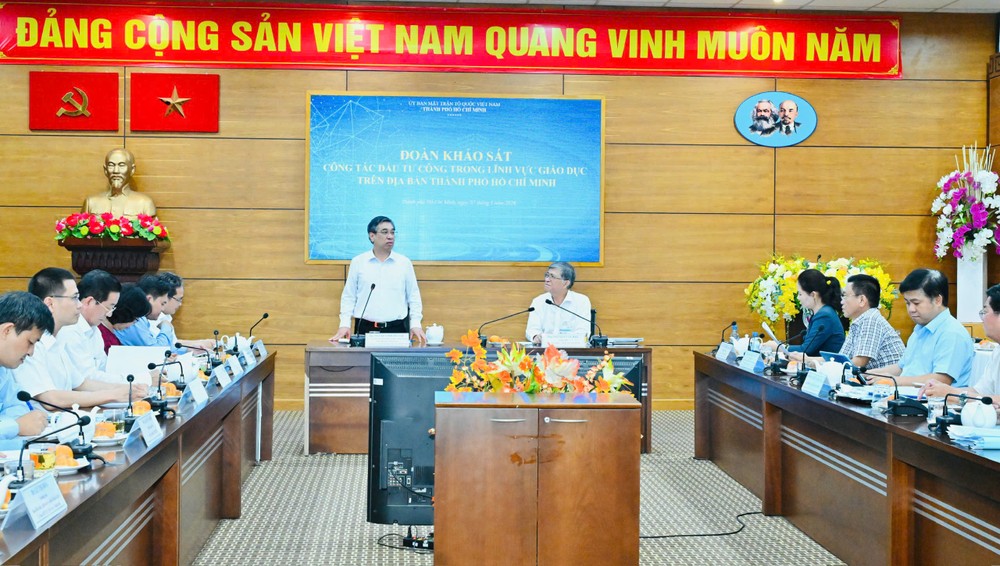
A working delegation led by Mr. Nguyen Phuoc Loc, Party Central Committee Member, Deputy Secretary of the HCMC Party Committee, and Chairman of the Vietnam Fatherland Front Committee of HCMC, held a session with the municipal Department of Education and Training to review public investment in the city’s education sector.
The meeting drew representatives from the HCMC People’s Council’s Culture and Social Affairs Committee, the HCMC Party Committee’s Commission for Propaganda and Mass Mobilization, and relevant departments and agencies.
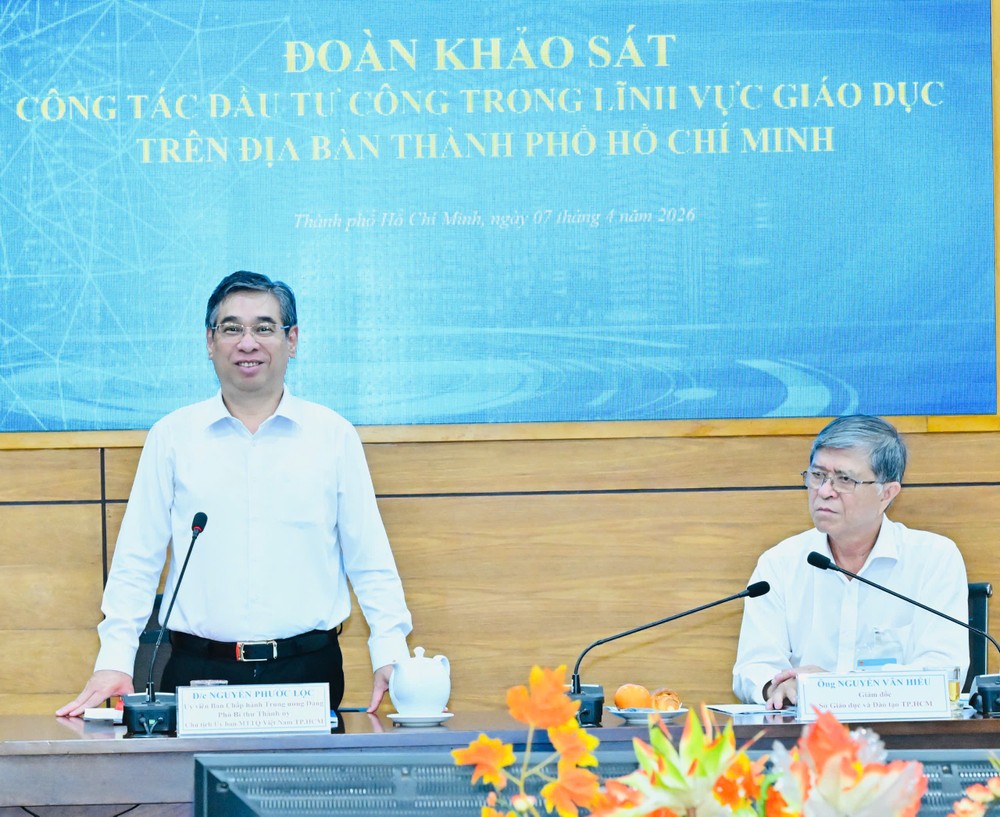
Opening the session, Mr. Nguyen Phuoc Loc said the survey aimed to gather field-based data and identify bottlenecks beyond the education sector’s authority to resolve, thereby informing policy recommendations to higher-level authorities. The ultimate goal, he stressed, is to refine the legal framework for public investment, improve education indicators, and ensure equitable access for future generations.
Based on reports from the Department of Education and Training, Mr. Nguyen Phuoc Loc underscored that public investment in education must be synchronized with the provision of equipment and the development of human resources. School construction, he noted, should not end with project completion and handover, but must ensure full operational readiness, avoiding situations where newly built schools lack students or adequate staffing.
He called on the department to refine its data systems and conduct a comprehensive, accurate assessment of school infrastructure across all levels and localities, with particular attention to areas experiencing rapid population influx. At the same time, authorities must review and expand land reserves for education, develop phased investment plans with clear priorities, and ensure feasibility aligned with actual demand.
The department was also tasked with consolidating proposals from 168 wards, communes, and special administrative units, while formulating synchronized plans for teacher training and recruitment to match school construction.
At the meeting, participants proposed a range of solutions to address persistent challenges in education investment. A key recommendation was to strengthen demand forecasting based on population data to enable proactive planning, rather than reactive responses to overcrowding.
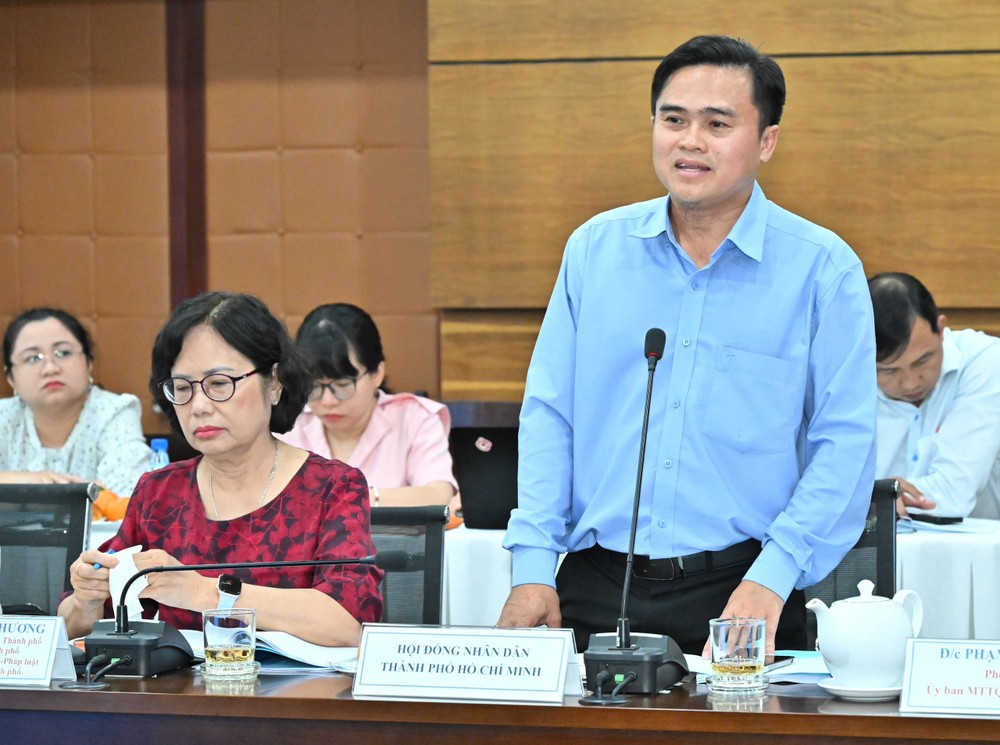
Delegates also emphasized enhanced inter-agency coordination and the adoption of flexible measures, such as the vertical expansion of school facilities and the use of temporary learning spaces during phased construction, to accelerate project timelines.
Additional proposals included stricter sanctions against delayed investors, closer coordination with local authorities in reclaiming overdue project sites, and the development of comprehensive school infrastructure plans tailored to local conditions.
According to Ms. Nguyen Thi Nhat Hang, Deputy Director of the HCMC Department of Education and Training, the city currently has 3,438 educational institutions serving more than 2.5 million students. Despite its scale, the system faces localized overcrowding due to rapid population growth, uneven distribution of facilities, high student-to-class ratios, limited capacity for full-day schooling, a relatively low share of national-standard schools, and teacher shortages in certain subjects.

Regarding the repurposing of surplus facilities following administrative restructuring, 17 redundant sites across the city could be converted into educational institutions.
In 2026, HCMC plans to launch 66 school construction projects, adding 1,147 classrooms with a total investment exceeding VND5.3 trillion (US$210 million). However, some projects are expected to extend through December 2026.
The city has also launched a “150-day campaign to complete 1,000 classrooms” for the 2026–2027 academic year, aiming to meet rising educational demand and ease pressure on the system.