How can a child born abroad learn Vietnamese not only to use the language but also to forge a lasting bond with their homeland? Insights from community classrooms provide valuable lessons for broader educational reform: understanding the learner, empowering the teacher, and leveraging technology to expand learning opportunities.
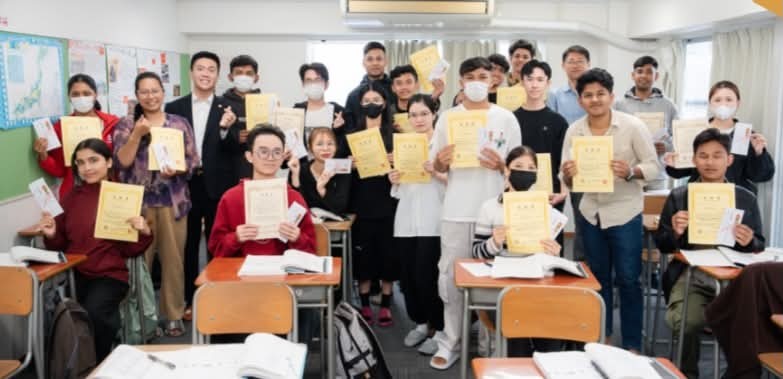
Working in education and community outreach in Japan, Mr. Nguyen Duy Anh—Member of the Central Committee of the Vietnam Fatherland Front and General Secretary of the Global Network for Teaching Vietnamese Language and Preserving Vietnamese Culture—has long dedicated himself to how children of Vietnamese descent acquire the language.
In a single classroom, some children speak Vietnamese with their parents daily, others understand only basic phrases, and a few are starting virtually from scratch. Grouping students solely by age, relying on a rigid curriculum, and expecting everyone to progress at the same pace makes it difficult for teachers to meet individual needs. Students who fall behind quickly lose faith in themselves, while those who have a stronger foundation quickly lose interest.
Consequently, reform must begin with how a learner’s starting point is identified. This requires a curriculum with clear objectives yet sufficient flexibility for teachers to adapt. A shared repository of learning materials should be paired with activities tailored to the children's living environments and real-world experiences. For instance, rather than simply memorizing family vocabulary, teachers can guide students to record a short audio clip introducing their relatives.
A lesson on Tet (Lunar New Year) could conclude with a conversation with grandparents, helping children discover their homeland's customs in the process. When language proves useful in everyday life, learning motivation becomes far more sustainable.
Drawing from this practical experience, Mr. Nguyen Duy Anh believes educational reform must place greater emphasis on assessing individual progress. Grades truly matter when they help both teachers and students recognize what has been accomplished, what requires support, and what the next step should be. When used solely for sorting or ranking, evaluation falls short of fulfilling its true educational purpose.
Connecting resources through clear mandates
Resolution 71-NQ/TW on breakthroughs in education and training development highlights the expansion of Vietnamese language instruction and the promotion of traditional Vietnamese cultural values abroad. This serves as a critical foundation for bridging community-driven efforts with domestic academic expertise.
Mr. Nguyen Duy Anh proposes first developing and sharing learning materials tailored to specific needs. Pedagogical universities could collaborate with overseas Vietnamese teachers to design lessons for multilingual children, piloting them in select classrooms for refinement before wider rollout.
Next, ongoing professional support groups should be maintained rather than relying solely on sporadic training sessions. Such learning communities can operate online, connecting educators both inside and outside the country. Overseas Vietnamese resources should also be mobilized through assignments with clear deliverables and timelines. A team of specialists can develop learning materials, a tech company can provide digital tools, and an educational institution can oversee piloting and evaluation.
Ho Chi Minh City is well-positioned to act as a bridge linking universities, technology firms, and overseas Vietnamese intellectuals to pilot these collaborative models. Insights gained from these initiatives would not only advance Vietnamese language instruction abroad but also enrich educational research and pedagogical reform at home.
Reflecting on these overseas classrooms, Mr. Nguyen Duy Anh remains convinced that educational innovation begins with empathy, such as understanding students to design relevant lessons, understanding teachers to provide the right support, and understanding real-world needs to invest effectively in technology. When a child living abroad can write a greeting to their grandparents in Vietnamese on their own, that achievement embodies knowledge, affection, and family connection. Ultimately, that is what education strives for—equipping individuals with the capability to step out into the world while deeply understanding the values that define them.
On September 29, 2025, the Global Network for Teaching Vietnamese Language and Preserving Vietnamese Culture was officially launched in Fukuoka. Scheduled for release in December 2026, the Network’s Global Digital Map of the Vietnamese Language aims to centralize information on classes, teaching focal points, and support resources—helping parents find learning opportunities for their children, enabling teachers to connect professionally, and allowing partner organizations to identify regional needs. To ensure long-term utility, the map will be regularly updated, verified, and actively maintained, with strict safeguards in place to protect personal data, particularly children's information.