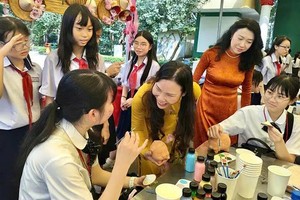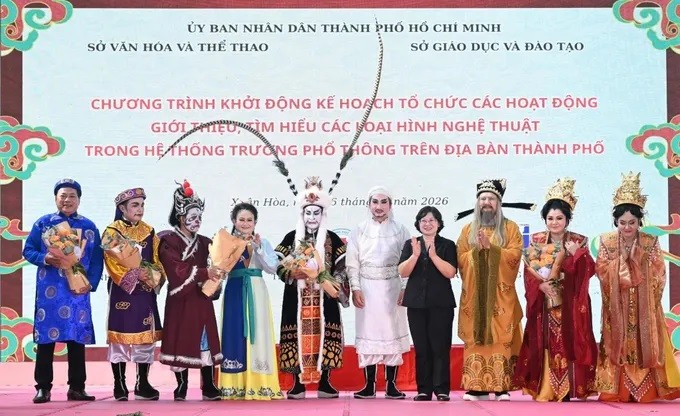
On the morning of November 16, a launch ceremony was held at Le Quy Don High School for a program designed to introduce and explore various art forms within secondary schools across Ho Chi Minh City.
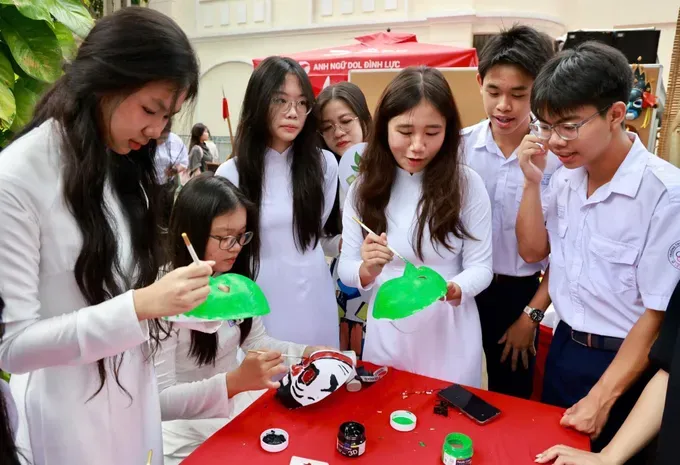
This initiative serves as the opening activity for the pilot phase of the project, "Developing School-Based Arts in Ho Chi Minh City (2026–2035)." The project aims to integrate cultural and artistic values with a particular focus on traditional arts into the school environment, thereby fostering students' inner lives and character, while building a foundation for future cultural resources.
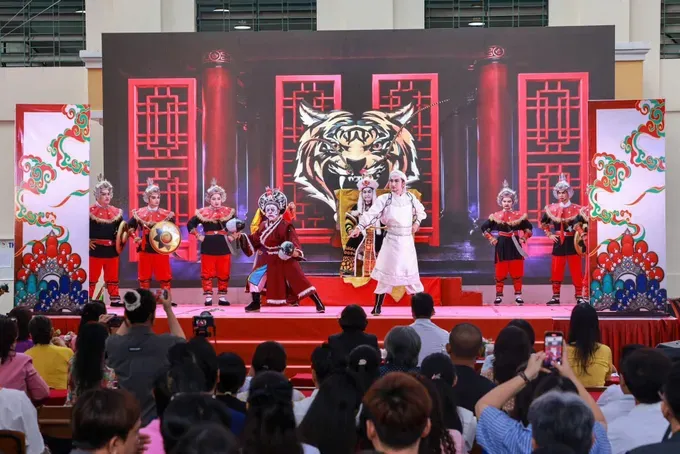
The program also plays a vital role in cultivating a new generation of young audiences while fostering the core values of Ho Chi Minh City’s residents, in alignment with the cultural ideals set forth in Politburo Resolution 80-NQ/TW on the development of Vietnamese culture.
The event was attended by several officials, including Deputy Secretary Van Thi Bach Tuyet of the Ho Chi Minh City Party Committee, Vice Chairman Nguyen Manh Cuong of the Ho Chi Minh City People’s Committee; and Le Van Minh, Permanent Deputy Head of the Ho Chi Minh City Party Committee’s Commission for Information and Education. Also in attendance were leaders from the Ho Chi Minh City Department of Education and Training and the Department of Culture and Sports, alongside various artists who have supported this meaningful endeavor, such as People’s Artist Huu Danh, Dr. Mai My Duyen, and Meritorious Artist Huu Chau.
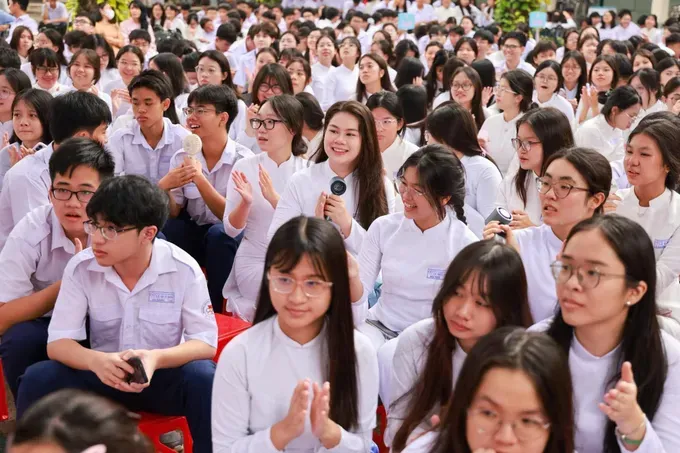
The program at Le Quy Don High School is part of the pilot plan for the "Developing School-Based Arts in Ho Chi Minh City (2026–2035)" project. It is being implemented through a collaboration between the Ho Chi Minh City Department of Culture and Sports, the Department of Education and Training, various theaters, and local schools.
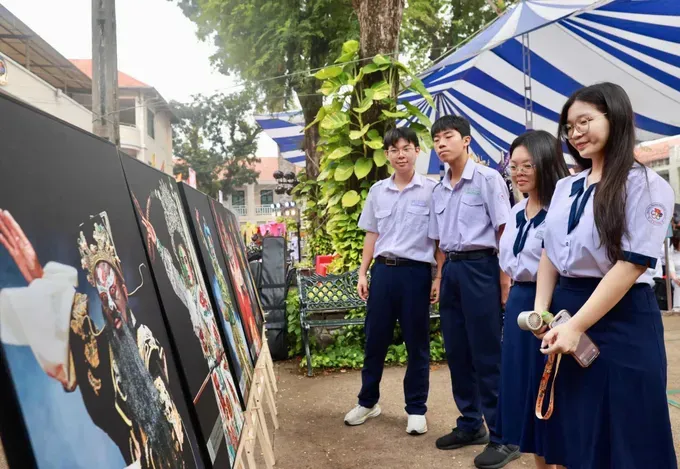
The Department of Culture and Sports is responsible for developing management software to coordinate and oversee the program on a digital platform. The Ho Chi Minh City Department of Culture and Sports stated that the programs will be divided into two sections: an experiential area and a performance stage.
Prior to this, the Department organized a training workshop to equip performers including actors, singers, and musicians from 17 public and non-public arts organizations with pedagogical skills.