The education and training sector has identified several key priorities: refining policies, tackling challenges, developing the teaching workforce, and improving educators’ working conditions.
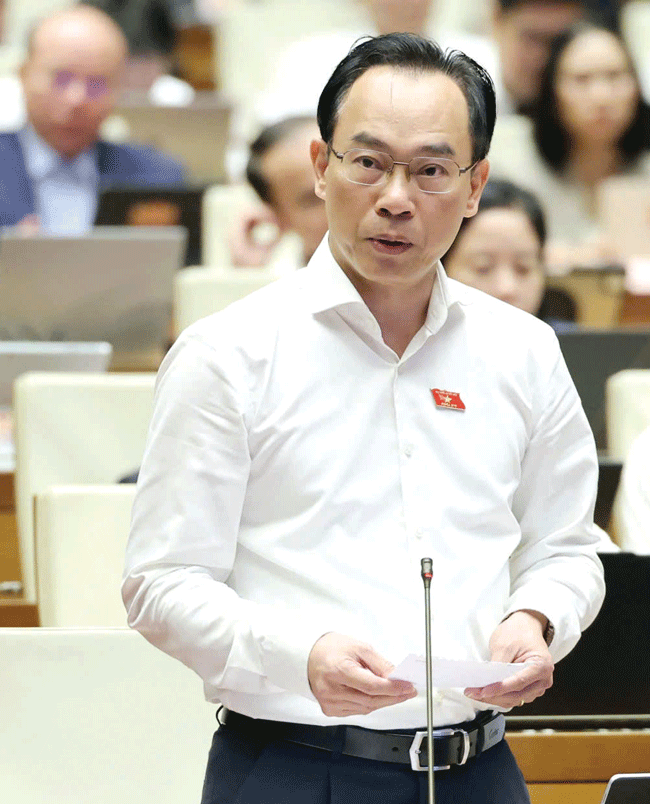
On the occasion of Vietnamese Teachers’ Day on November 20, Sai Gon Giai Phong (SGGP) Newspaper interviewed Minister of Education and Training Hoang Minh Son about these issues.
One year after the implementation of Resolution No. 71-NQ/TW began, a significant accomplishment has been the conversion of key directives on building and developing the teaching workforce into practical policies. These measures aim to raise educators’ standing, improve compensation, and reform recruitment and management, allowing teachers to work with confidence, remain dedicated to their profession, and fulfill their potential.
Importantly, the Law on Teachers establishes a dedicated legal framework for advancing the teaching profession. Comprising 9 chapters and 42 articles, it provides a comprehensive policy structure addressing educators’ rights and responsibilities, professional standards, recruitment, management, compensation, benefits, and professional training and development. The Law’s central policy shift prioritizes the growth of the teaching workforce, strengthens the profession’s quality and appeal, and addresses existing gaps in the state management of educators.
To bring the Law into effect, the Ministry of Education and Training has advised the Government on the issuance of two decrees, while also exercising its own authority to issue 15 circulars that provide detailed regulations and implementation guidelines.
Notably, the policy on professional incentive allowances has contributed to improving income levels, providing educators with greater motivation to remain dedicated to their profession. Under Decree No. 182/2026/ND-CP, the allowance for preschool and general education teachers has been increased by 10 percent over the previous level. This move is part of the roadmap to achieve the objectives set out in Resolution No. 71-NQ/TW: raising the professional preferential allowance to at least 70 percent for teachers in preschool and general education institutions, and to 100 percent for those working in areas facing exceptional hardship, including border regions, islands, and areas inhabited by ethnic minority communities.
Alongside these remuneration policies, significant reforms have been introduced regarding the recruitment, placement, and utilization of educators. Detailed regulations and guidelines have also been established for tenured educators and retired teachers working under contract. Furthermore, specific provisions for the reassignment, transfer, and inter-school deployment of teachers have been set, providing a foundation for consistent implementation across localities. This mechanism allows for more flexible coordination of teaching staff between educational institutions, helping to address localized surpluses or shortages of teachers and ensuring the efficient use of existing human resources.

Notably, the National Assembly has enacted a unique, highly advantageous framework for the recruitment, deployment, and management of personnel in the education sector. This grants the Director of the Department of Education and Training the authority to recruit and appoint educators, administrative staff, and support personnel for public preschools, general education institutions, continuing education centers, specialized schools, and vocational secondary schools within the province.
The reorganization of educational institutions has a direct impact on the organizational structure, job roles, and working methods of both administrative staff and teachers. The objective is to streamline management structures and utilize personnel effectively, while safeguarding the rights of staff and teachers, ensuring stable teaching and learning activities, and enhancing the quality of education. As of September 2026, all 34 provinces and cities have completed the reorganization of public preschool and general education institutions, resulting in a 50.6 percent reduction in the number of organizational units. The most significant impact on the workforce has been the shift in the composition of management staff and teaching faculty.
The Ministry fully recognizes that transitioning from administrative roles to a primary focus on teaching represents a major change for many educators—both in terms of their daily responsibilities and their psychological well-being. Local authorities should duly acknowledge the past contributions of these educators, while providing thoughtful, tailored professional support to ensure they feel proud and confident in their core roles within the school. In cases where placement plans have yet to be established or are deemed inappropriate, local authorities must act promptly to review the situation, listen to the concerns and aspirations of the individuals involved, and reach a satisfactory resolution.
The Ministry of Education and Training will continue to collaborate with local authorities to review and refine regulations concerning organization, governance, and staffing quotas, ensuring they align with the post-reorganization models of educational institutions. The focus will be on clearly defining authority and responsibilities, ensuring the right people are placed in the right roles, upholding relevant policies and benefits, and strengthening professional development for staff. The ultimate goal is to ensure that reorganized educational institutions operate stably, that staff can fully leverage their capabilities, and that the quality of teaching and learning is improved.
The ministry views the recognition and honoring of educators as an ongoing duty—one that goes hand-in-hand with safeguarding their rights and interests, and fostering an environment where they can continue to grow and develop. These activities acknowledge the contributions of generations of educators, while fostering a sense of professional pride and responsibility.
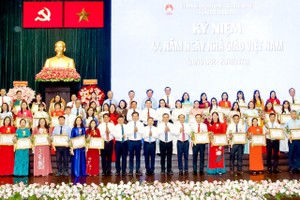
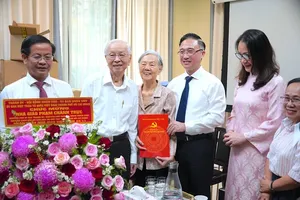
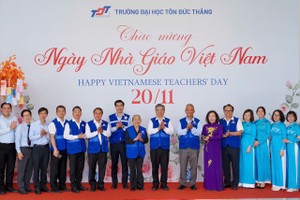
Each year, particularly around Vietnamese Teachers' Day on November 20, the ministry organizes events to meet with, visit, commend, and reward exemplary educators who have made significant contributions to the cause of education. These initiatives demonstrate the ministry’s care and high regard for the teaching profession, while helping to foster a societal culture that honors teachers and values education.
Furthermore, the process of conferring titles such as "People’s Teacher" and "Meritorious Teacher," alongside various other forms of recognition and awards, serves to acknowledge educators with outstanding achievements and contributions. These efforts highlight inspiring examples of teachers who are deeply dedicated to their students, resilient in the face of challenges, and innovative and creative in their approach to teaching and educational management. Such recognition serves as a powerful motivator, encouraging educators to continue striving and contributing.
The Ministry of Education and Training has also focused on developing and refining policies regarding salaries, professional allowances, and measures to attract, retain, and effectively utilize teaching talent. This includes providing training and professional development opportunities, fostering a safe and democratic educational environment that encourages innovation and creativity, and safeguarding the reputation, honor, and dignity of teachers ensuring they are treated equitably in their professional practice and career development.
The ministry continues to link commendations and awards with efforts to improve the livelihoods and working conditions of educators, while expanding opportunities for their professional growth. Such recognition carries lasting significance when every teacher is valued by society, protected, empowered to fully realize their potential, and duly acknowledged for their contributions.
Marking Vietnamese Teachers' Day, Minister Hoang Minh Son extended his gratitude to generations of teachers and administrators wishing them health, happiness, and success. He noted that the sector’s achievements today are built on their persistent contributions, intellect, dedication, sense of responsibility, and countless quiet sacrifices.
Addressing new demands in the sector, the minister called on every educator to continuously learn, strengthen their professional expertise, innovate teaching methods, and integrate technology effectively to make each lesson meaningful. He also urged educational administrators to stay attentive and supportive, creating conditions for teachers to maximize their potential, foster creativity, and work with peace of mind. Looking ahead, he emphasized that the entire sector must work together to build happy, safe, and disciplined schools while upholding integrity in teaching and learning and protecting the dignity and legitimate rights of both educators and learners.