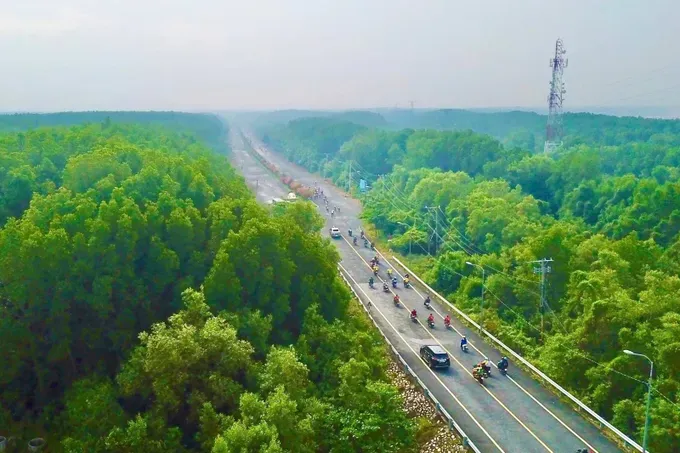
The approximately 35-kilometer Rung Sac (Mangrove forest) road connecting central Ho Chi Minh City with Can Gio, along with the nearly 4-kilometer Lam Vien Road, officially received mobile network coverage.
On May 10, Viettel Ho Chi Minh City officially provided mobile network coverage along the approximately 35-kilometer Rung Sac Road connecting central Ho Chi Minh City with Can Gio, as well as the nearly four-kilometer Lam Vien Road area, which had long been considered a telecommunications “dead zone.”
In recent years, communication disruptions in the area have caused inconvenience for residents and tourists, while also affecting management operations, emergency response efforts, public safety and local socio-economic activities.
In response, the Ho Chi Minh City People’s Committee assigned the city’s Department of Science and Technology to coordinate with Viettel Ho Chi Minh City and relevant agencies to quickly complete infrastructure licensing procedures and install mobile base stations.
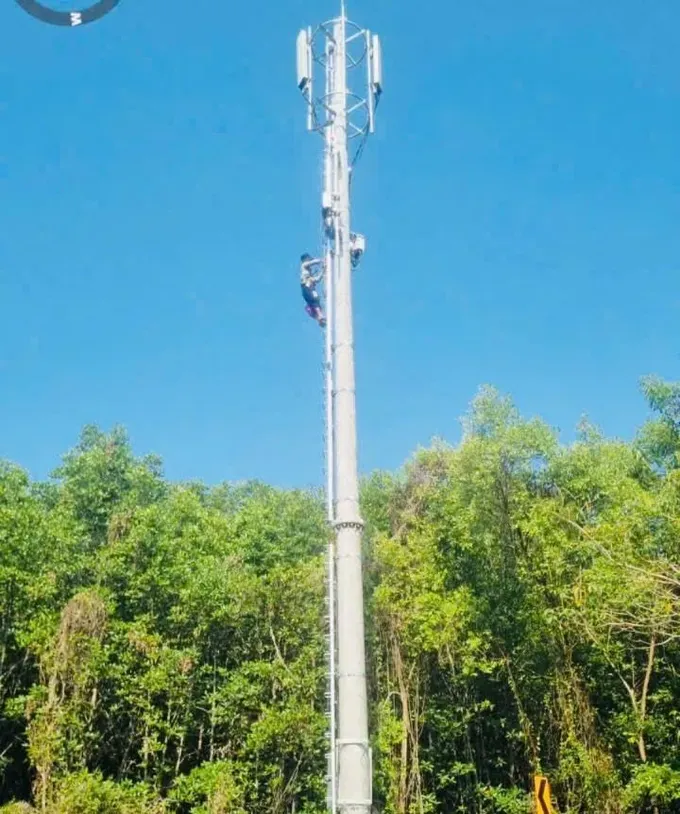
Within just one month, 12 mobile transmission stations along the Rung Sac–Lam Vien route were installed and put into operation, providing continuous coverage across An Thoi Dong Commune and Can Gio Commune.
The elimination of mobile dead zones along Rung Sac and Lam Vien roads is expected not only to improve communication for residents and visitors but also to strengthen safety, security, and emergency rescue capabilities in the area.
A representative of Viettel Ho Chi Minh City said that expanding network coverage in Rung Sac is not only a business mission but also part of the company’s social responsibility toward the community. The company affirmed its commitment to bringing stable and continuous telecommunications services to even the most challenging locations.
In the long term, improved telecommunications infrastructure is expected to become a key driver for socio-economic development, particularly eco-tourism in the Can Gio Mangrove Biosphere Reserve, one of the city’s most valuable “green lungs.”