The Ministry of Agriculture and Environment has proposed reducing the processing time for applications for planting area codes serving the domestic market to three working days, while applications for planting area codes and packing facility codes for exports would be processed within no more than 10 working days.
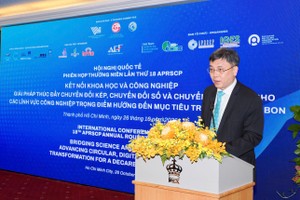
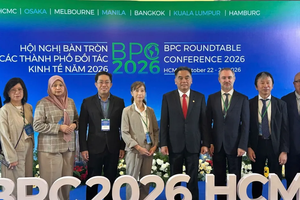
On the afternoon of July 13 in Hanoi, the ministry held an online workshop with nearly 300 locations nationwide to gather feedback on a draft government resolution aimed at simplifying administrative procedures for planting area codes and packing facility codes.
The draft resolution is intended to address obstacles encountered in implementing Government Decree No. 38/2026/ND-CP, issued on January 24, 2026, while making it easier for farmers, cooperatives, and businesses to produce, market, and export agricultural products. It also seeks to ensure state management requirements are maintained while the decree undergoes a comprehensive revision.
At the workshop, Deputy Minister of Agriculture and Environment Nguyen Hoang Hiep stated that reforming the issuance and management of planting area codes and packaging facility codes not only serves exports but also aims at managing production, traceability, and ensuring food safety for the domestic market.
The Deputy Minister emphasized that simplifying procedures does not mean loosening management. For exported agricultural products, a 10-day pre-inspection period is necessary for specialized agencies to fully assess compliance with the requirements of importing countries, limiting risks affecting the reputation and brand of Vietnamese agricultural products.
Deputy Minister Nguyen Hoang Hiep requested that the drafting agency clearly define the responsibilities of specialized agencies in compiling and transferring the list of planting area codes and packaging facility codes to the competent authorities of importing countries, ensuring a unified point of contact. Local authorities should review and standardize the database of planting areas and packaging facilities, promote production linkages, develop cooperatives and cooperative groups, and form concentrated raw material areas.
The Ministry is urgently implementing a range of measures to remove bottlenecks related to planting area codes, simplify administrative procedures, and expand export markets to secure outlets for durian as the Southeast region and the Central Highlands region enter the peak harvest season.
Price pressure
Durian prices have continued to fall sharply in many localities in recent days.
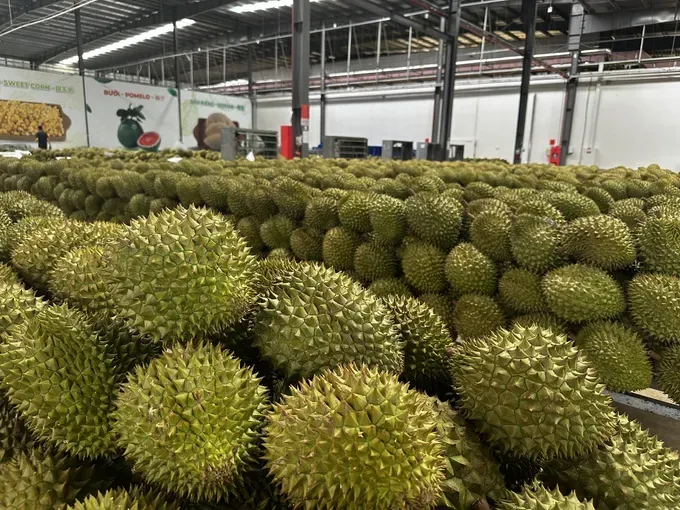
In the Southeast, Grade A Monthong durian is selling for between VND59,000 and VND67,000 (US$2.25-US$2.55) per kilogram, while Grade B ranges from VND39,000 to VND46,000 (US$1.49-US$1.75). Grade A Ri6 durian is priced at VND34,000-VND38,000 (US$1.30-US$1.45) per kilogram, while Grade B sells for VND19,000-VND22,000 (US$0.73-US$0.84).
Growers and traders said durian prices have fallen about 30 percent to 40 percent compared with the same period in 2025, the lowest level in several months.
The main reason is that exports to China have become more difficult due to stricter requirements for testing, traceability, and pesticide residue control, resulting in longer customs clearance times. At the same time, durian acreage and production have increased significantly this year, pushing short-term supply above purchasing demand, while many growing areas have yet to receive planting area codes.
Dak Lak durian exports threatened as orchards lack planting codes
One of the key bottlenecks preventing large volumes of durian from being exported through official channels is the lack of planting area codes.
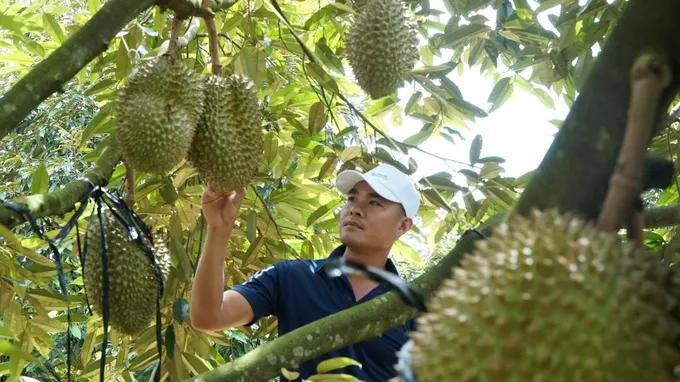
For example, Dak Lak Province is entering the main harvest season for the 2026 durian crop. The province currently has about 30,000 hectares of fruit-bearing durian orchards, with output estimated at about 500,000 metric tons. However, nearly 70 percent of that production still lacks planting area codes.
According to official statistics, about 17,500 hectares of durian in Dak Lak Province, equivalent to nearly 350,000 tons of harvest for the 2026 crop, have not yet received planting area codes. If these areas are not approved in time, official exports to China will face significant difficulties.
To address the issue, the Ministry of Agriculture and Environment has established task forces to work directly with local authorities in the Central Highlands region to review applications and provide guidance to ensure planting area codes are issued accurately.
Deputy Minister of Agriculture and Environment Nguyen Hoang Hiep said that as key durian-growing localities in the Central Highlands region and the Southeast region enter the harvest season, the ministry is implementing a range of measures to support the industry, including expanding planting area codes and packing facility codes, diversifying export markets, and developing processing capacity.
The ministry will continue working with Chinese authorities to accelerate approval of additional planting area codes and packing facility codes based on applications submitted by governments in provinces.
Regarding issues related to planting area codes, particularly provisions under Government Decree No. 38/2026/ND-CP issued on January 24, 2026, governing the import of plants with soil attached as well as planting area and packing facility codes, Deputy Minister Nguyen Hoang Hiep said the ministry had found that several provisions were not well suited to actual conditions during implementation.
Based on those findings, the ministry has reported the matter to the prime minister and has been instructed to urgently study amendments.
The revisions will focus on several areas, including changes to the overall approach and application requirements for planting area codes, adjusting the minimum area required for a planting area code, which currently set at 10 hectares, to better reflect practical conditions, and clarifying whether planting area codes apply to specialized growing areas or intercropping areas to ensure consistent implementation.
"In addition to resolving issues related to planting area code approvals, we are also asking local authorities to organize trade promotion activities and encourage businesses to increase fresh durian exports. At the same time, we need to develop packing and processing facilities to expand frozen durian exports and ensure consumption of output during the peak harvest season," Deputy Minister Nguyen Hoang Hiep said.