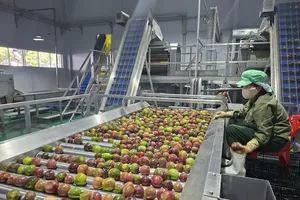
Despite strong growth in registered capital, exports and employment, these indicators alone do not fully measure the quality and depth of foreign investment.
Meanwhile, foreign indirect investment (FII), the second component of foreign capital, has not been fully integrated into Vietnam's overall investment strategy. The Politburo's Resolution No. 10-NQ/TW seeks to address this imbalance by redefining the country's approach to foreign investment-led growth.
According to the Foreign Investment Agency under the Ministry of Finance, Vietnam had 45,416 valid FDI projects as of December 31, 2025, with total registered capital of approximately US$529.6 billion. Disbursed capital reached US$350.22 billion, equivalent to 66.1 percent of total registered investment.
The FDI sector currently contributes around 20 percent of the country's GDP and accounts for more than 70 percent of the country's export value. However, much of this investment remains concentrated in labor-intensive assembly and processing industries with relatively low value added. Average localization rates stand at only about 30 percent, while technology transfer and linkages between foreign investors and domestic enterprises remain limited.
In addition, investment incentives have traditionally focused on tax breaks and land preferences, while infrastructure and skilled labor development have not kept pace. In some localities, investment screening has prioritized registered capital over project quality.
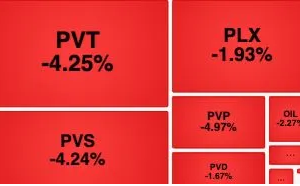
In contrast, Vietnam's FII portfolio stood at an estimated US$50 billion at the end of 2024. Foreign investors have posted net sales for 13 straight quarters, selling more than VND80 trillion (US$3 billion) worth of shares in the first six months of 2026.
Nevertheless, Vietnam's stock market recently received confirmation from FTSE Russell that it has met the criteria for an upgrade, expected to take effect in September 2026. The upgrade could attract an additional US$25 billion-US$30 billion in investment by 2030.
Despite this potential, cumulative FDI remains roughly ten times larger than FII and accounts for more than 90 percent of total foreign investment.
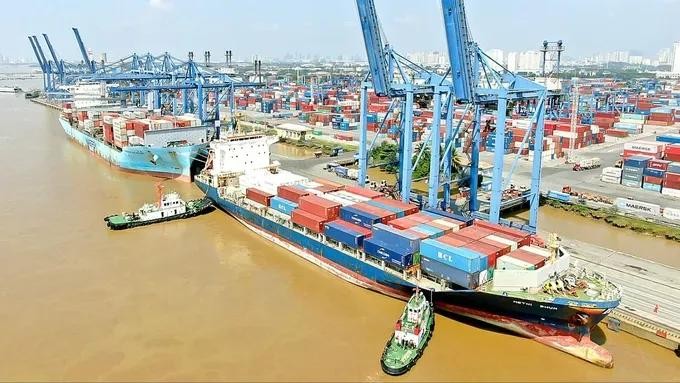
Compared with previous policies, Resolution No. 10-NQ/TW represents a fundamental shift in the country's foreign investment strategy.
First, success will no longer be measured solely by the volume of investment but by its ability to strengthen domestic supply chains and facilitate technology transfer. The resolution targets localization rates of 45-50 percent and seeks to integrate 10,000 Vietnamese enterprises into FDI supply chains.
Second, it shifts investment management from administrative boundaries toward industry clusters and value chains, reducing fragmented competition among localities.
Third, investment incentives will increasingly be tied to performance rather than broadly granted through tax and land preferences, while allowing pilot mechanisms for breakthrough institutional reforms.
Fourth, the strategy expands beyond FDI to include indirect investment, linking capital market development with Vietnam's stock market upgrade.
Finally, the resolution adopts a long-term vision extending to 2045, moving beyond traditional five-year planning cycles and signaling a comprehensive repositioning of Vietnam's foreign investment strategy.
By 2030, Vietnam aims to attract US$200 billion- US$300 billion in newly registered foreign investment, equivalent to US$40 billion-US$50 billion annually, with realized capital reaching US$150 billion- US$200 billion.
About 75 percent of new investment is expected to originate from developed economies, while the number of Fortune Global 500 corporations investing in Vietnam is targeted to increase by 30 percent, underscoring the country's emphasis on improving investor quality rather than simply increasing project numbers.
Looking ahead to 2045, the government expects the foreign-invested sector to contribute around 30 percent of GDP and account for 25 percent of total social investment.
Achieving these ambitions will require stronger domestic private enterprises capable of increasing localization and participating more deeply in global supply chains. It will also depend on coordinated institutional reforms and improvements to the investment climate at both central and local levels, ensuring that policy reforms are effectively implemented rather than remaining on paper.
Vietnam is increasingly positioning itself not merely as a low-cost manufacturing destination, but as a high-value participant in global technology and supply chains.







)