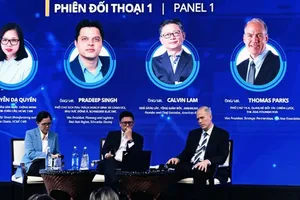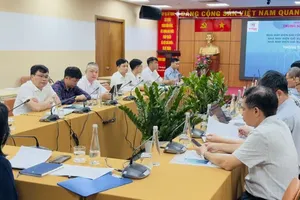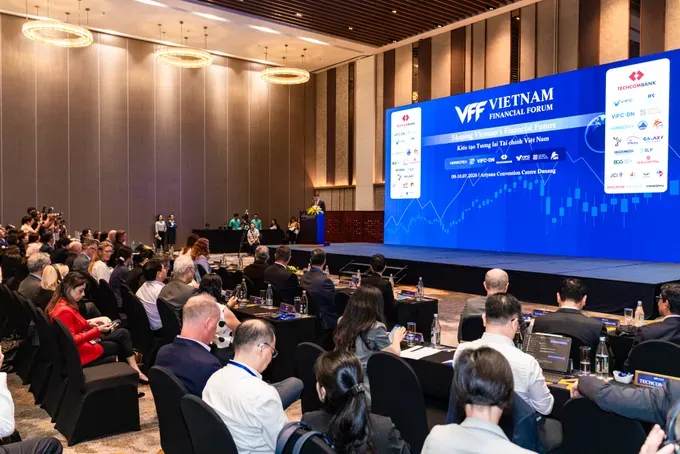
The participants specialize in fintech, capital markets, and financial infrastructure.
Speaking at the forum, Mr. Chris Van Loon, Chairman of the Central Vietnam Business Alliance, said the establishment of the Vietnam International Financial Center (VIFC) is progressing at an exceptionally rapid pace. Just six months after its official announcement, the VIFC has begun taking shape in Ho Chi Minh City and Da Nang while attracting participation from institutional partners and securing initial capital commitments.
He said the key question is no longer why Vietnam needs an international financial center but how to turn that vision into reality through concrete policies, institutional mechanisms, and resources. What is in short supply today, he noted, is not ideas but committed capital and decisive action to translate those ideas into tangible outcomes.
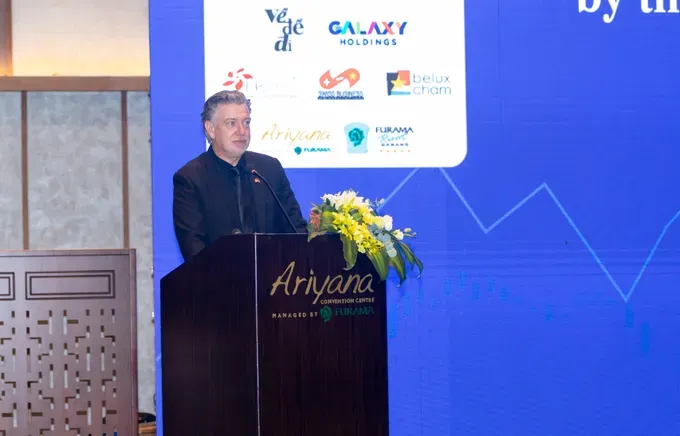
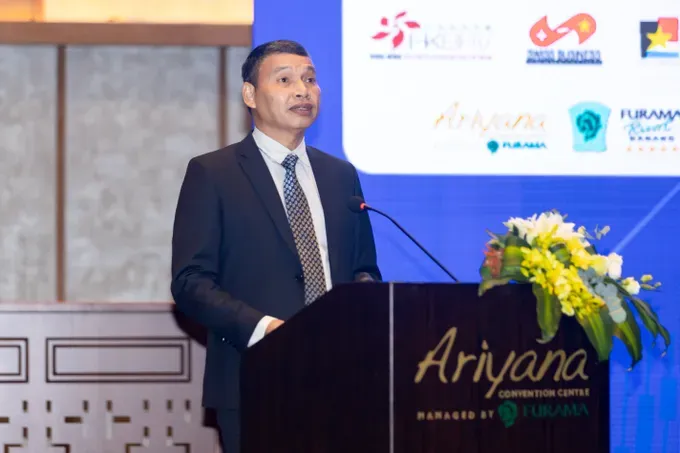
Standing Vice Chairman of the Da Nang People's Committee and Chairman of the Executive Authority of the Vietnam International Financial Center–Da Nang (VIFC-DN), Ho Ky Minh, said that for Da Nang, developing an international financial center is about far more than establishing another financial district. It is about creating a new institutional ecosystem that fosters innovation, accelerates digital transformation, and advances green economic growth. The city aims to develop a next-generation international financial center, with innovation, financial technology, and sustainable finance serving as its core pillars.
In its initial phase, Da Nang City will prioritize the development of five categories of financial products and services, including real-world asset tokenization, carbon credits and an international carbon trading market, investment funds and fund management companies, commodity exchanges, and bonds and other medium- to long-term capital-raising instruments.
An international financial center is built not only on infrastructure or policy incentives but also on trust, transparent institutions, a highly skilled workforce, advanced technology, and global connectivity, Mr. Ho Ky Minh said.
Meanwhile, Chief Executive Officer of the Vietnam International Financial Center (VIFC) in Ho Chi Minh City, Rich McClellan, said the question is no longer whether Vietnam is on the rise but how to enable international capital to flow into the country to support its next phase of economic growth.
According to Rich McClellan, the VIFC is neither a real estate project nor a special economic zone. Rather, it is a long-term national development strategy aimed at establishing internationally aligned legal frameworks, governance mechanisms, and market infrastructure. The VIFC will operate as a unified platform spanning Ho Chi Minh City and Da Nang, with the two cities playing complementary rather than competing roles.
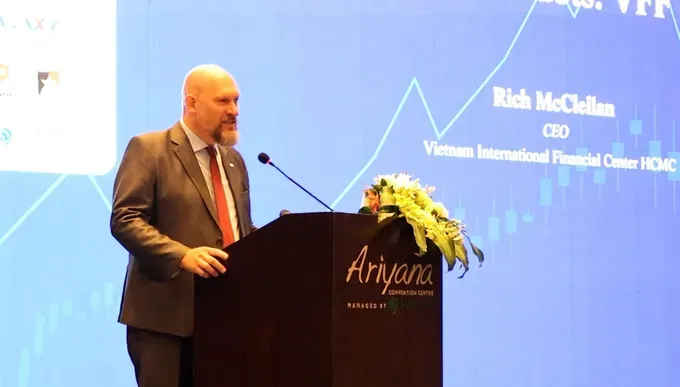
He said capital flows only when an appropriate market infrastructure is in place, while attracting global fund managers, financial professionals, and top talent depends heavily on private-sector participation. During its initial phase, the VIFC will focus on three areas where Vietnam holds competitive advantages, consisting of trade and supply chain finance, climate finance—energy, and digital assets.
“We are not here to sell the idea of the VIFC—we are here to build it together,” the Chief Executive Officer of the Vietnam International Financial Center (VIFC) in Ho Chi Minh City said. He expressed hope that the forum would lead to concrete commitments and partnerships that would help shape Vietnam's international financial center in the years ahead.