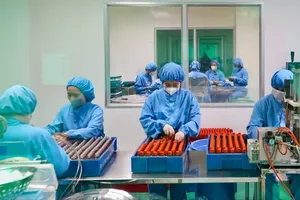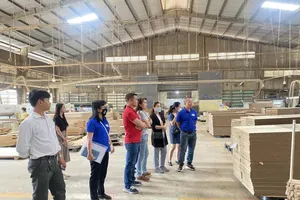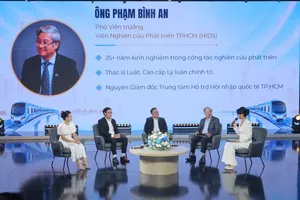
Global supply chains are increasingly prioritizing products that reduce emissions, conserve energy, and use resources efficiently. In response, Ho Chi Minh City is accelerating the transformation of its industrial parks into eco-industrial parks, promoting industrial symbiosis and connecting businesses with green technology solutions to enhance competitiveness and strengthen their position in global value chains.
Promoting industrial symbiosis
Hiep Phuoc Industrial Park in Hiep Phuoc Commune, Ho Chi Minh City, has participated since 2020 in the project "Implementation of Eco-Industrial Parks in Vietnam Based on the Global Eco-Industrial Parks Program." The project is jointly implemented by the United Nations Industrial Development Organization (UNIDO) and the former Ministry of Planning and Investment, with funding from the Swiss State Secretariat for Economic Affairs.
After several years of implementation, Giang Ngoc Phuong, Deputy General Director of Hiep Phuoc Industrial Park Company, said the park has recorded three major improvements. Environmental conditions across the industrial park and individual factories have steadily improved; businesses have become more aware of eco-friendly manufacturing practices and environmental compliance. Moreover, more than 100 industrial symbiosis opportunities have been identified among companies in the park through the sharing and exchange of input and output resources, including materials, energy, water, waste, and by-products.
Phu My 3 Specialized Industrial Park in Tan Phuoc Ward, covering nearly 1,000 hectares, is also being developed as an eco-industrial park based on circular economy principles. The park has completed its application to become Vietnam's first officially recognized eco-industrial park and has taken the lead in adopting smart management technologies, promoting industrial symbiosis, and pursuing a net-zero emissions target by 2050.
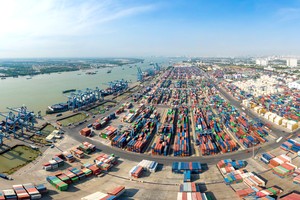
Ho Chi Minh City has one of Vietnam's largest networks of export processing zones and industrial parks, with 67 zones established and 58 currently in operation, achieving an occupancy rate of about 80 percent.
Tran Viet Ha, Deputy Head of the Ho Chi Minh City Export Processing and Industrial Zones Authority (HEPZA), said the city is actively transforming traditional export processing zones and industrial parks into eco-industrial and circular economy models. The initiative focuses on helping businesses optimize resource efficiency and promote industrial symbiosis. The model also reduces landfill waste, encourages the use of environmentally friendly technologies, and measures carbon emissions.
Connecting resources for the green transition
The circular industrial model also creates opportunities to access advanced technologies, green financing, and export markets with increasingly stringent environmental standards. This is one of the areas in which Ho Chi Minh City is strengthening cooperation with international partners.
At the recent Germany-Vietnam Business Forum on the circular economy in manufacturing, Andrea Suhl, Germany's Consul General in Ho Chi Minh City, said Vietnam's goal of becoming a high-income country by 2045 will require a transition to a circular economy model. Businesses, she said, will need to redesign products, manufacturing processes, and product use to extend the life cycle of materials.
"This is also an area in which Germany has extensive experience and is ready to support Vietnam through technology transfer, sharing management expertise, and promoting long-term investment cooperation," Suhl said.
Providing a practical perspective, Andre de Jong, General Director of Bosch Vietnam, said data, artificial intelligence, and smart factory technologies are fundamentally transforming manufacturing operations. He said the company is prepared to work with Vietnamese manufacturers through digital transformation assessments and by deploying smart factory solutions tailored to the specific conditions of each business.
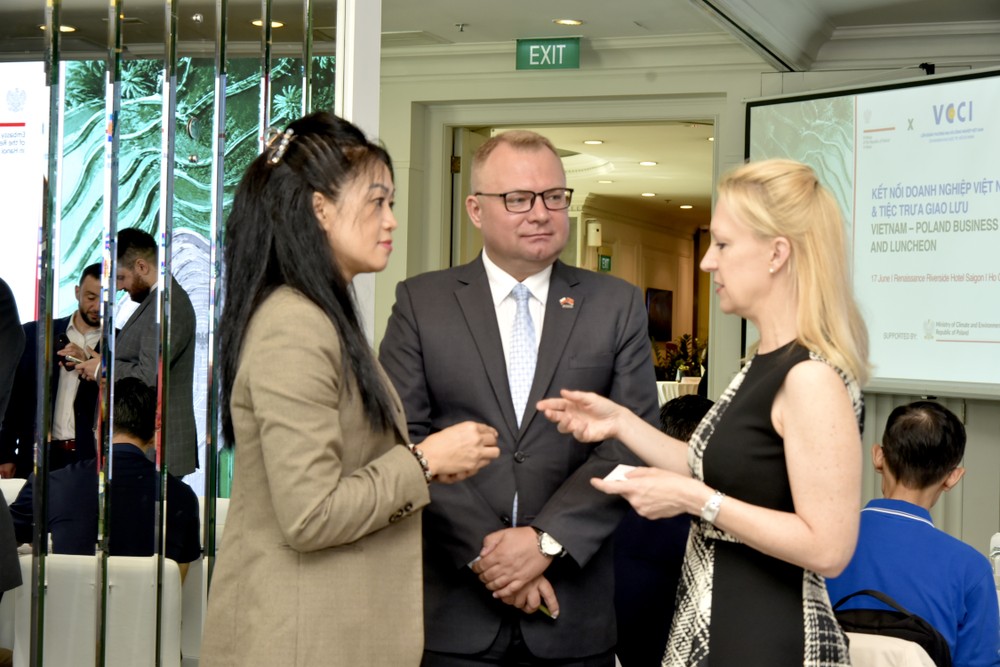
More recently, 12 Polish companies participating in the GreenEvo program visited Ho Chi Minh City to showcase technologies for reducing industrial carbon emissions, waste recovery, circular production, and recycling.
Bui Thi Ninh, Deputy Director of the Vietnam Chamber of Commerce and Industry's Ho Chi Minh City branch (VCCI-HCM), said GreenEvo is a program that supports the development and international expansion of Poland's environmental technologies. She said the initiative provides Vietnamese businesses with opportunities to access advanced green technology solutions that support the country's green transition and sustainable development goals.
Assessing Vietnam-Germany cooperation, Nguyen Trong Luat, Vice Chairman of the Ho Chi Minh City Supporting Industries Association (HASI), said the two countries still have significant potential to expand technology transfer through investment projects, joint ventures, research collaboration, and engineering training.
To accelerate that process, he proposed establishing Vietnam-Germany technical training centers, creating working groups to harmonize technical standards, setting up technology risk guarantee funds for small and medium-sized enterprises, and leveraging the network of Vietnamese engineers in Germany to support technology transfer.