Information from the Office of the Ministry of Agriculture and Environment on October 15 indicated that Deputy Minister of Agriculture and Environment Vo Van Hung has signed a document asking chairmen of people's committees of coastal provinces and cities with fishing vessels to strengthen fishing fleet management, control seafood exploitation activities, and trace the origin of harvested seafood.
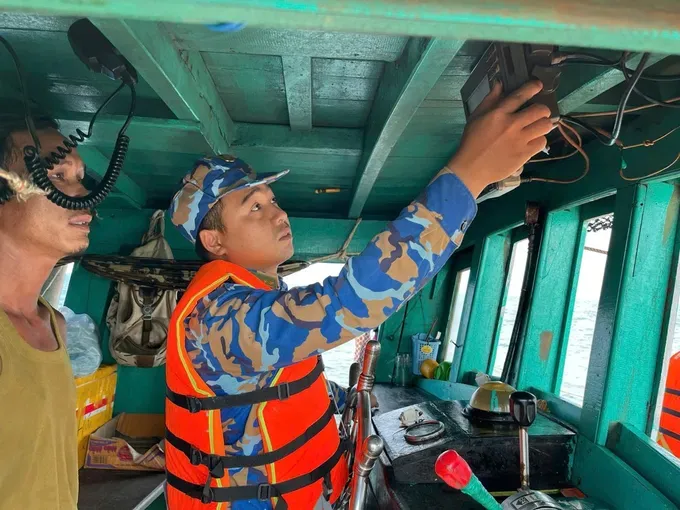
The Ministry of Agriculture and Environment requested localities to review and cross-check fishing vessel information in local management records against the national fisheries database (VNFishbase). Localities must fully and accurately update registration and inspection information for vessels mandatory for technical inspection, fishing licenses, vessel monitoring systems (VMS), and the operational status of each vessel.
From there, localities should clearly classify vessels into those eligible for operation, ineligible vessels, no-longer-operating vessels, and deregistered vessels. Localities need to assign specific agencies, units, and individuals to be responsible for monitoring each group of vessels, identifying causes, and handling missing, incorrect, or inconsistent data status.
In particular, local authorities must urgently review vessels without fishing licenses, vessels with expired licenses, or license information inconsistent with management records. For vessels ineligible for licensing, localities must closely supervise them to prevent continued illegal exploitation. Licensing procedures must be resolved strictly according to regulations without creating extra procedures, paperwork, or conditions outside of standard rules.
The ministry also requested strict control of fishing vessels entering and leaving ports. Fishing port management boards, fisheries management agencies, and functional forces must coordinate to inspect vessel information and fishing licenses, while fully and accurately recording data on vessels leaving and entering ports on the electronic seafood traceability system (eCDT). System data should be regularly cross-checked with port records and inspection results from functional forces.
Regarding seafood volume passing through ports, localities must cross-check actual unloaded volume against logbooks, VMS data, and eCDT data. Cases showing abnormal signs regarding time, fishing journeys, species, volume, or unloading locations must be inspected and verified.
Localities shall not confirm or certify the origin of harvested seafood for records that do not meet requirements. In cases of abnormal signs or inconsistent information, functional agencies must clarify matters before processing applications. Acts of incorrectly declaring output or legitimizing the origin of illegally harvested seafood must be detected, documented, and handled according to authority.
The Office of the Ministry of Agriculture and Environment stated that the above contents aim to address the European Commission's (EC) recommendations following its fifth inspection on combating illegal, unreported, and unregulated (IUU) fishing. The ministry requested localities to demonstrate implementation results with verifying documents and records alongside fully and accurately updated data on management systems.