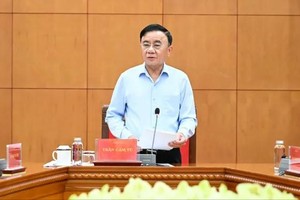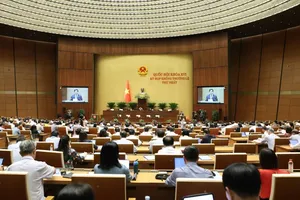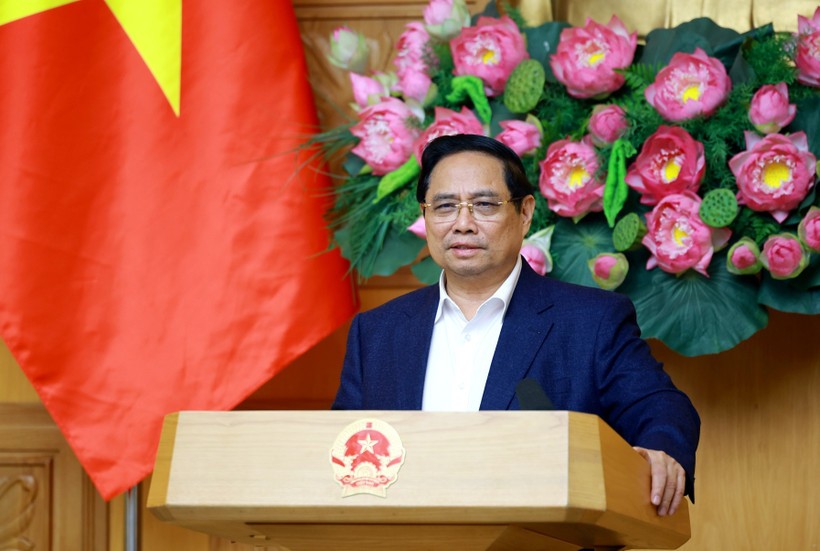
The meeting reviewed the implementation of real estate management and social housing development in 2025 and outlined tasks and solutions for 2026 and beyond.
According to the steering committee, since early 2025, the Government and the PM have issued six resolutions, one decision assigning social housing targets, three official dispatches, and one directive, along with around 15 notices and directives related to social housing development and real estate market management. The PM has also chaired six nationwide conferences on social housing and the real estate market.
Recently issued policies have had a strong impact on the market, particularly amid the Government’s decisive direction. Many real estate projects have seen legal bottlenecks removed, allowing them to resume implementation, unlock resources, and add new supply. In recent years, the construction and real estate sector has contributed about 11 percent to GDP, with real estate alone, directly and indirectly, accounting for around 4.5 percent.
Regarding social housing, under the scheme to build 1 million units, 698 projects nationwide are being carried out with a total of 657,441 apartments. Of these, 193 projects with 169,143 units have been completed; 200 projects with 134,111 units are being constructed; and 305 projects with 354,187 units have received investment approval.
By 2025, completed, commenced and approved units reached 62 percent of the scheme’s target. Nineteen localities met or exceeded their assigned targets, while 12 fell short.

However, challenges remain, including slow project implementation due to legal hurdles, insufficient attention to product structure and land plots for housing, especially social housing, and an imbalance in supply, which remains concentrated on mid- to high-end segments. Housing prices are still high compared to incomes, exceeding the affordability of most people.
Speaking at the meeting, PM Pham Minh Chinh noted that the real estate and housing market showed positive changes in 2025. With the engagement of the entire political system and society, Vietnam completed the elimination of temporary and dilapidated housing nationwide with more than 334,000 units, five years ahead of schedule. Nonetheless, continued efforts are needed to ensure no one is left without shelter.
On social housing, he highlighted breakthroughs this term, with the one-million-unit scheme reaching 62 percent of its target and exceeding the 2025 plan by 100,000 units. At this pace, the scheme could be completed by 2028, the leader said.
The PM called on localities to proactively allocate land and materials, streamline administrative procedures, swiftly remove obstacles, and accelerate social housing development, describing it as a highly humane policy that balances growth with social equity.
He also urged stronger price control, diversification of capital sources, promotion of preferential credit for social housing and young buyers, digital transformation for transparency, and the early establishment of a state-run real estate and land-use rights exchange so that housing demand and people’s right to accommodation are fully met.
The government leader urged businesses, especially major enterprises, to further engage in social housing development on the principle of "harmonizing benefits and sharing risks."