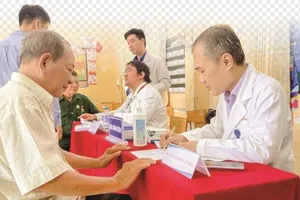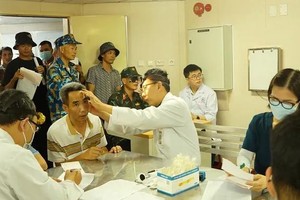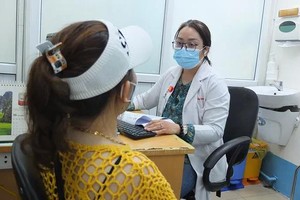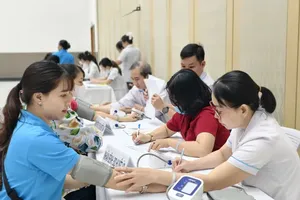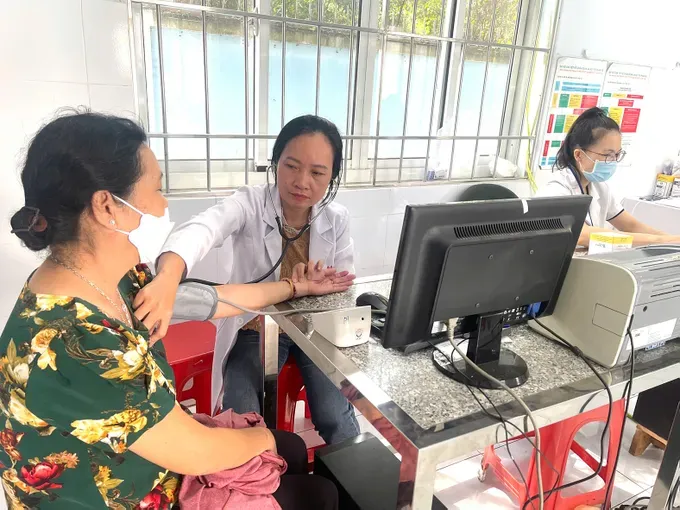
On the morning of January 6, Lam Ngoc Phuong from Phu Loi 5 Neighborhood visited Phu Loi Ward Clinic to inquire about kidney treatment for her 83-year-old mother. After dedicated consultation from the doctor, Phuong expressed satisfaction and said she would bring her mother in for an examination soon.
On the same day, Nguyen Phuoc Vinh from Tay Nam Ward visited this clinic for the pain in his leg joints, neck, and shoulder. Here, he was prescribed an ultrasound and medication. “The clinic is spacious and clean, and the medical team is enthusiastic, so I am very satisfied,” Vinh said.
These medical stations operate under a new model. Since early 2026, 38 regional health centers and 168 medical stations previously under the Department of Health have been reorganized into 168 commune, ward, and special zone clinics directly under commune-level People’s Committees. This move aims to bring medical services closer to the people and improve the quality of primary healthcare in HCMC.
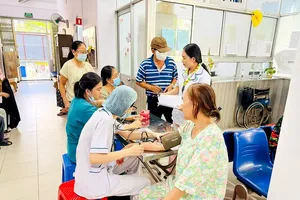
In the initial days of operation, the clinics provided smooth examination and treatment services. According to Deputy Head Vo Hong Tham of Phu Loi Ward Clinic, the station began working under the new model on January 5. In the first two days, the number of people coming for examination, treatment, and transfer procedures increased, averaging about 40-50 visits/day.
Currently, the station has 25 professional rooms. Although there are many difficulties in the early stages, the staff and doctors are striving to complete their tasks, aiming to improve healthcare quality and public satisfaction.
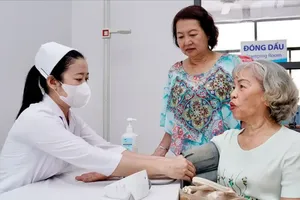
In Binh Chau and Long Hai communes, Con Dao Special Zone, as well as many other wards and communes in HCMC, the demand for periodic health checks is immense. Residents hope these checks can be performed locally while still meeting professional requirements. Therefore, the rearrangement of clinics has been wholeheartedly welcomed.
“Fishermen are very happy if annual free health checks are available right in the locality. If we are sick, we know early to treat it; if we are healthy, we can go to sea with peace of mind,” shared 52-year-old Nguyen Van Thoai from Binh Chau Commune.
Reorganizing local clinics under commune-level People’s Committees concretizes the targets of the 1st HCMC Party Congress Resolution (tenure 2025-2030). Secretary Nguyen Tan Ban of the Phuoc Thang Ward Party Committee stated that the ward identifies implementing the annual free health check program as a key task.
However, a major challenge is the limited facilities and human resources at ward clinics. Premises are cramped and the number of doctors does not meet requirements, while public healthcare demand is rising.
Therefore, immediately, the ward will coordinate with Vung Tau General Hospital to organize periodic health checks for different level-based areas. The ward is also consolidating its organization, supplementing personnel, and gradually investing in facilities to ensure sustainable, comprehensive healthcare.
Vice Chairman Doan Dinh Huu of the Phu Loi Ward People’s Committee also noted that the toughest challenge is limited grassroots medical resources. Consequently, the ward has petitioned the city to pay more attention and invest more strongly in grassroots healthcare to ensure conditions for universal health checks.
Assoc Prof Tang Chi Thuong, PhD MD, Director of the HCMC Department of Health stated that for a megacity of nearly 14 million people, organizing free health checks at least once a year for the entire population is a huge challenge.
Therefore, the HCMC health sector is proactively building an appropriate implementation strategy, investing in upgrading the network of ward, commune, and special zone clinics based on family medicine principles; and gradually perfecting facilities as well as essential equipment for screening and primary health management.
Concurrently, the health sector coordinates with localities and the Digital Transformation Center to collect data and digitize personal health records via the “HCMC Digital Citizen” app. Building a digital map of public health aims to update all examination data into electronic records, forming a unified health management system citywide.
The municipal Department of Health is also building a roadmap for phased implementation, prioritizing groups such as the elderly, students, workers, pregnant women, and high-risk groups. From there, it will gradually expand the scope to ensure feasibility and effectiveness, aiming not only to treat diseases but to manage and care for people’s health comprehensively and sustainably.
HCMC is arranging 38 regional health centers and 168 medical stations under the Department of Health to be under the administration of commune, ward, and special zone People’s Committees. This aims to make medical stations stick closer to people’s primary care needs, becoming the “first medical touchpoint” and the foundation of the city’s health system.
During the transition, medical stations continue to perfect necessary content to protect the rights of Health Insurance participants. Additionally, the HCMC People’s Committee has assigned HCMC Social Security to create conditions for Health Insurance cardholders to enjoy full benefits when visiting commune-level medical stations.